
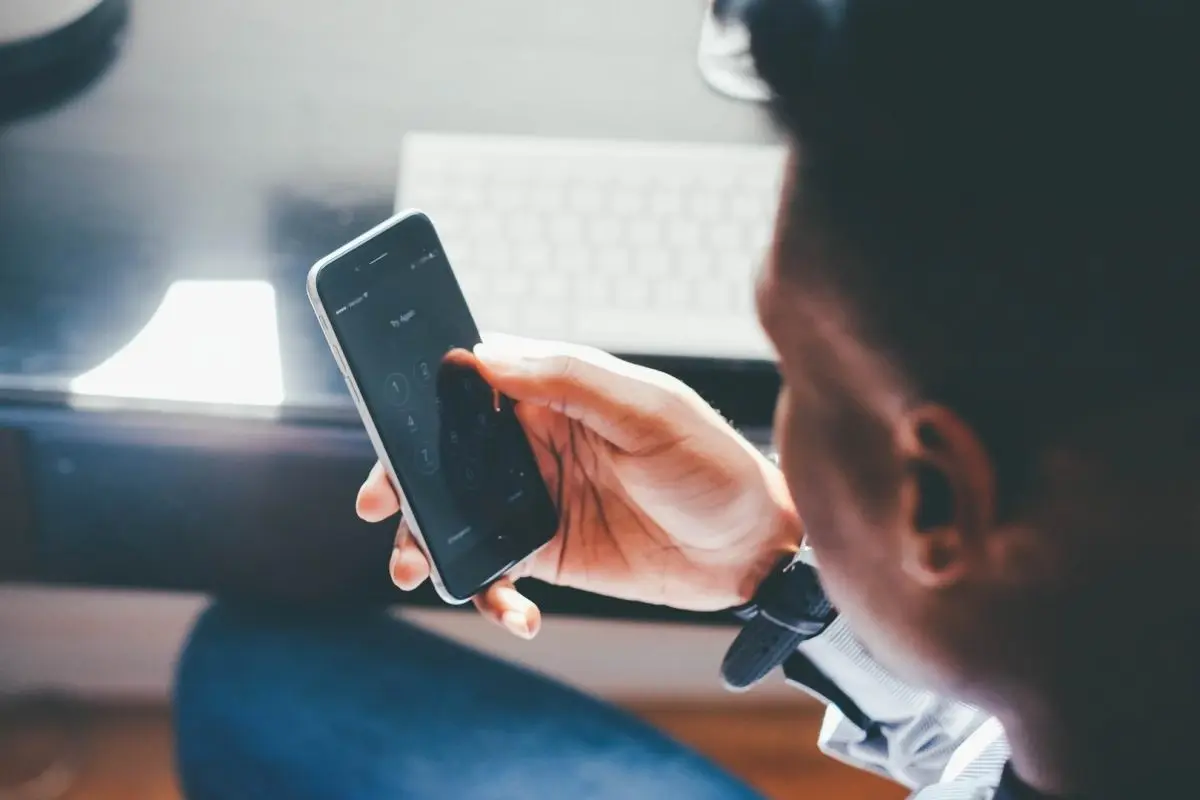
Passwords shouldn't be improved—they should be completely replaced with passkeys. You don't need to memorize them; they're stored directly on your smartphone, are more secure than passwords, and are resistant to phishing. PC-Welt is urging users to switch to this new technology.
When a passkey is created, a pair of keys is generated: a public key and a private key. The private key is stored on a smartphone, tablet, computer, a hardware key such as a YubiKey, or in a password manager. It is protected by the device’s biometric authentication, such as a fingerprint or facial scan. The public key is sent to the website for which it was created.
When a user logs into their account, the website sends a request to the device. After biometric verification, the private key generates a digital signature, which the service verifies. It is impossible to derive the private key from the public key, so data leaks from compromised websites become less dangerous. Phishing sites also cannot intercept the key, as it works only on the website for which it was generated.
The only significant drawback of this technology is the risk of losing access to your account along with your device if the key was stored only locally. The publication recommends having a backup device or a hardware key, as well as a reliable backup password with two-factor authentication. They suggest starting the transition with Google, Apple, Microsoft, Amazon, and services that store payment information.
No security questions or SMS codes
Google, along with Apple and Microsoft, supports the FIDO Alliance standard, on which access keys are based. Google security expert Christian Brand is convinced that the technology will replace not only traditional character combinations but also supplementary security measures: security questions, SMS messages, and authentication apps.
“Yes, access keys will replace passwords. But it goes even further than that. I’d say our vision isn’t just to get rid of passwords, but also to eliminate all the ‘workarounds’ the industry has come up with to compensate for their vulnerability,” Brand noted in a Google blog post.
The expert emphasizes that even a lost smartphone doesn’t give an attacker access to the owner’s accounts. “If someone gets your device, they won’t be able to do anything with your access key. And if you lose an old device with a key, you can easily generate a new key on a new device,” says Brand.
The FIDO Alliance emphasizes that a user’s biometric data never leaves the device and is not stored on central servers, from which it could be stolen. Services receive only public keys. Separate keys are created for each “device–website” pair, so websites cannot track a person’s activity on other sites, according to the FIDO Alliance website.