
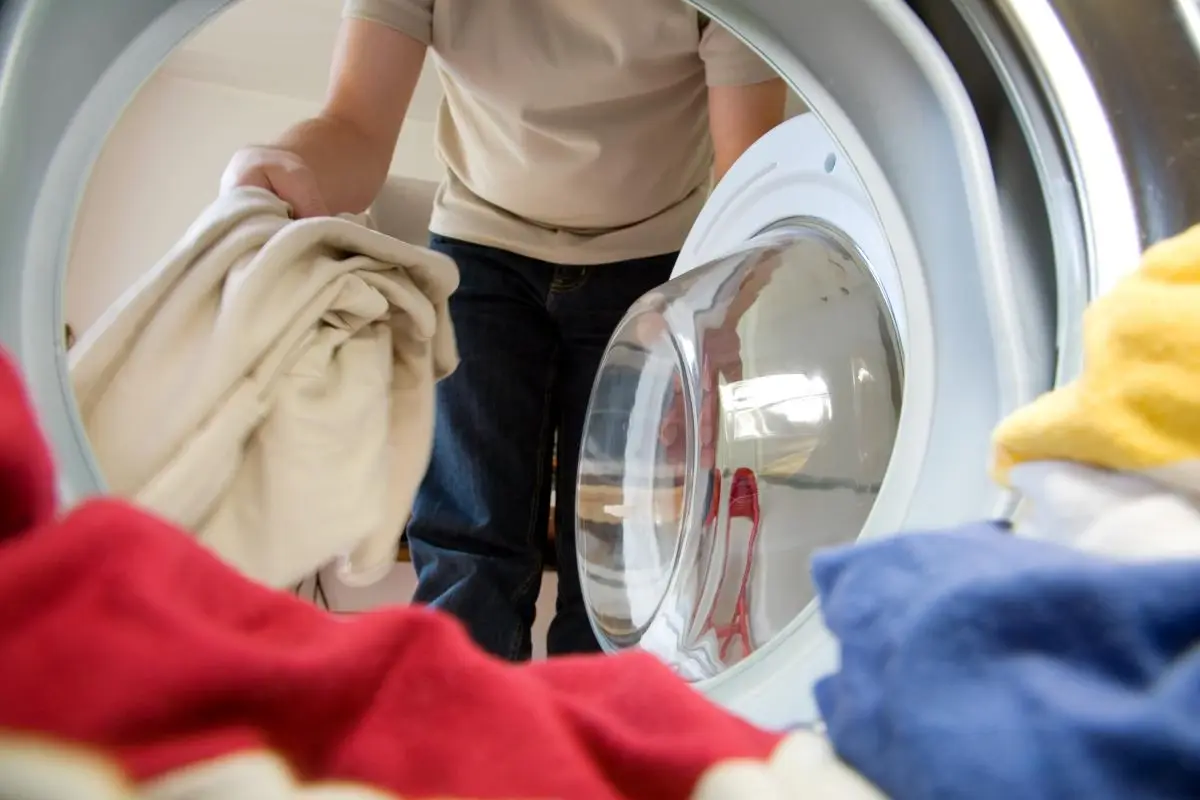
Freshly washed laundry often smells musty because of bacteria that multiply in dirty, damp clothes and inside the washing machine itself. This happens more often in the winter, when it’s cold and damp. Professor Benjamin Eiltz, an expert in applied cleaning and hygiene at the Albstadt-Sigmaringen University of Applied Sciences, provides these explanations and tips in an SWR3 article.
The risk increases if wet towels or clothes are left in the drum for a long time until the next wash. An unpleasant odor can also develop when items are washed only at low temperatures, the machine is overloaded, or too little detergent is used: in such cases, the water and detergent do not reach all the items.
A lot depends on what happens to the laundry and the machine once the cycle is complete.
“It’s really important to remove the laundry from the washing machine immediately after the cycle ends. And after that, always leave the machine open so it can air out properly: pull out the detergent dispenser and open the door,” Eiltz emphasizes.
The professor also advises paying attention to the cycle length, especially for very dirty items. “I recommend not relying solely on short cycles, but giving the detergent enough time to work,” he notes.
Vinegar, Baking Soda, and a Second Wash
If an odor has already developed, wash the items at a higher temperature, with a smaller load, or using more detergent. Adding 1–2 tablespoons of vinegar or citric acid to the detergent, or half a glass of baking soda to the drum, can also help. However, frequent use of acidic products can damage the seals.
Nathan Kila, a chemist at the University of Tasmania, explains that microbes in damp clothes release volatile organic compounds that people can detect even in minute concentrations. Residues from fabric softeners and liquid detergents contribute to the formation of biofilm in the machine, and cold washes are less effective at killing microbes. Therefore, he advises running a hot cycle from time to time and trying powder detergent, since many powders contain peroxide. Scented products, he says, merely mask the odor but do not eliminate the cause, according to ABC News.
What Scientists Found in Washing Machines
German researchers analyzed 16 household washing machines: eight that owners considered smelly and eight that were odorless. The door gasket was found to have the highest concentration of Moraxella osloensis, a bacterium associated with unpleasant odors. The bacterial composition in the two groups differed only slightly, and microbes from the detergent compartment showed the strongest association with the odor. The authors suggest that the decisive factor may be bacterial activity or subjective perception of the odor, according to an article on PubMed Central.