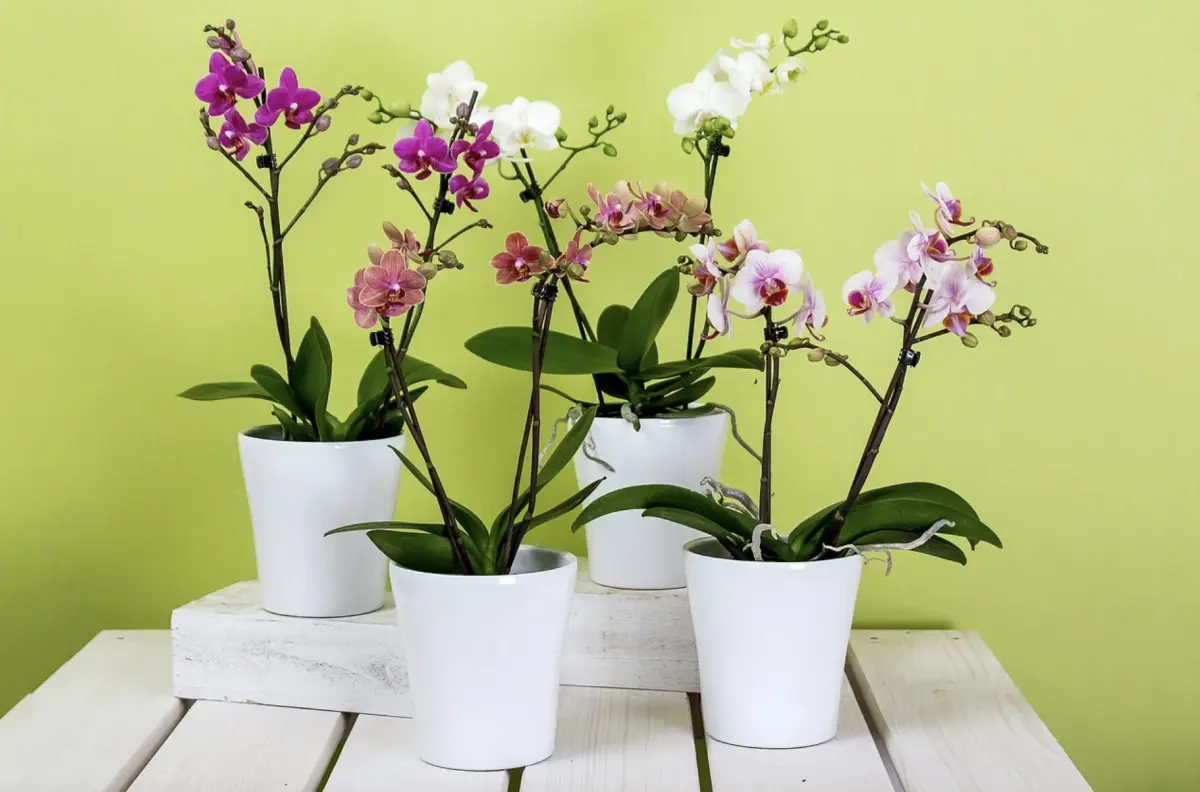
A wilted flower spike does not mean the orchid is dying: after blooming, the plant enters a dormant phase and, with proper care, can produce buds again in just a few months. The most important thing during this period is to prune the flower spike correctly and ensure bright, diffused light and cool nights in the fall, according to the Hungarian publication Kertészkedj.
These tips apply to Phalaenopsis, or the moth orchid. It is the most common houseplant species and the easiest to get to bloom again at home. During dormancy, the plant should still be watered, but less frequently. Healthy roots are silvery when dry and green after watering. Brown, soft, or hollow roots indicate overwatering, so they should be removed with clean scissors.
Where to Cut the Flower Stem
Cut off the withered and browned flower stalk at the base, as it will no longer produce flowers. According to the advice of the Royal Horticultural Society (RHS), a green stem should be shortened by 2.5 cm above the second node from the base—that is, the small ring on the stem. The plant will then often produce a side shoot and bloom sooner than if it were to grow a new flower spike.
The Chicago Botanic Garden notes that for small, young plants, it’s best to remove the flower spike entirely: until the orchid matures, you shouldn’t expect it to bloom again. Larger specimens, when pruned above the lower node, can bloom again in 8–12 weeks. If the stem is cut off at the base, a new flower spike should appear within a few months, according to the Chicago Botanic Garden.
Cool Nights as a Signal to Bloom
The key to new blooms is temperature. If you keep the plant at a nighttime temperature of around 13 °C for several weeks in the fall, this triggers the growth of a new flower stalk. According to the RHS, a night that’s just five degrees cooler is often enough. The easiest way is to move the pot to a less heated room at night—such as a bedroom—and return it to its usual bright spot during the day.
In winter, an east- or west-facing window is best. If the plant is on a south-facing window, shade it with a curtain, as direct sunlight will scorch the leaves. Do not place the pot in a draft or above a radiator, and the leaves should not touch cold glass. It is recommended to water the plant by submerging it for 10–15 minutes in warm, settled water, without leaving any water in the pot. Once a month, fertilize the orchid with a low-nitrogen fertilizer, applying it to the moist roots.
The Brooklyn Botanic Garden also recommends keeping the orchid at a nighttime temperature of up to 55 °F (about 13 °C) for about two weeks in the fall so that it begins to form flower spikes. At the same time, they warn that sudden fluctuations in temperature and humidity can cause buds that are ready to bloom to drop, according to the Brooklyn Botanic Garden.
A new flower spike appears in a few weeks or months. It’s easy to mistake it for an aerial root, but the tip of the flower spike is flat and resembles a mitten. Once the buds have formed, you shouldn’t rotate or move the pot. Your patience will be well rewarded: Phalaenopsis flowers last from two to six months.