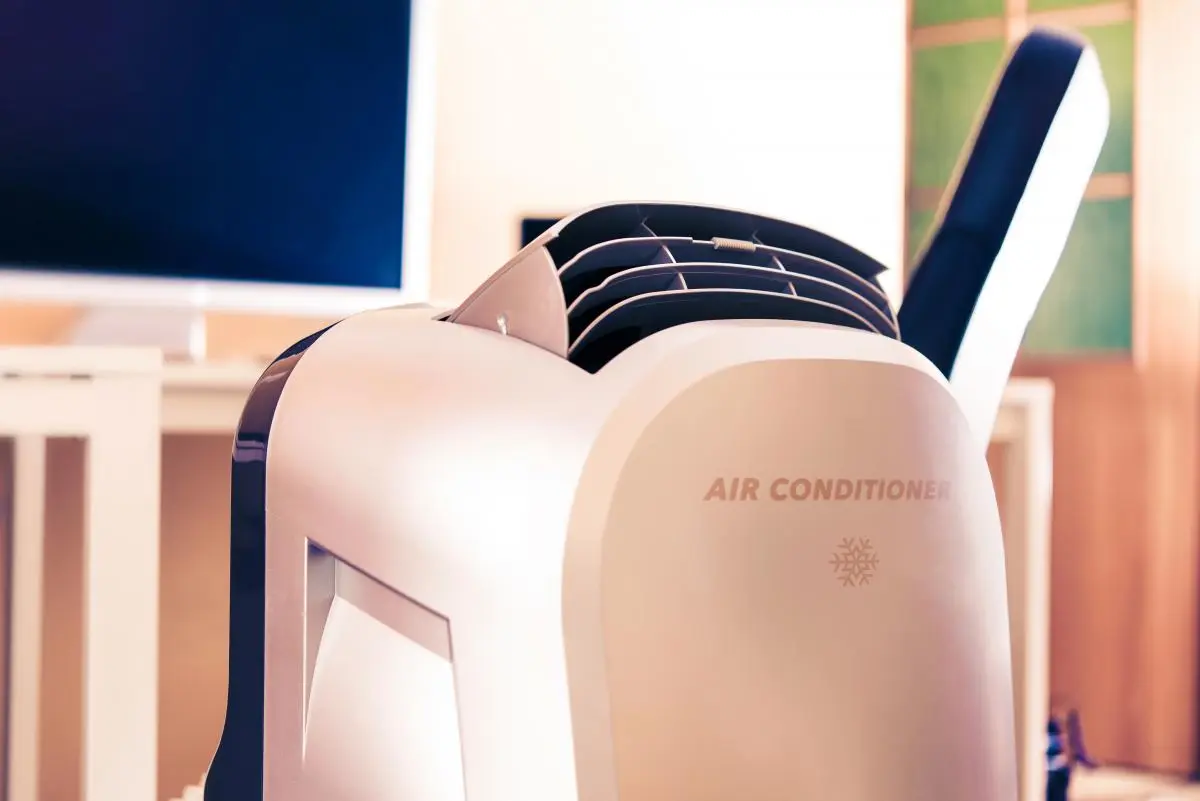
To help a heat pump air conditioner distribute heat more effectively in the winter, the louvers on the indoor unit should be directed toward the floor rather than the ceiling. This is the consensus among HVAC experts. If the unit has been running for a while but the couch still feels cool, it’s worth checking the direction of the airflow before raising the temperature, according to El Confidencial.
When switching from cooling to heating mode, the louvers are often left in their summer position. In the summer, they’re usually turned upward so that the cold airflow doesn’t blow directly on the people in the room.
A technician from SIT Granollers explained why this setting should be changed in the winter. The goal is for the heat to reach the lower part of the room first, where people are sitting.
“Why am I saying this? Warm air tends to rise, so if you direct it toward the ceiling, you won’t feel it where you’re sitting,” the specialist emphasizes.
Another problem arises when the indoor unit is mounted high on the wall and the heat accumulates near the ceiling. In that case, the unit’s sensor may detect that the set temperature has already been reached and reduce the output, even though it’s still cold down below.
What Temperature Is Sufficient?
The Spanish Institute for Energy Diversification and Saving (IDAE) recommends maintaining a temperature of 20–21 °C in the home when people are present and dressing appropriately for the season. Heating should be turned on only when someone is at home. In the evening, experts recommend lowering the blinds and closing the curtains to reduce heat loss through the windows.
According to the institute’s estimates, a temperature of 15–17 °C is sufficient for sleeping if a person is covered. In general, they advise turning off the heat at night, but acknowledge that in poorly insulated homes, it can be left at this level.
The IDAE also calculated the cost of each increase in thermostat settings.
“For every degree that the temperature in a building or home rises, energy consumption increases by 7%, as do heating costs and CO2 emissions,” the institute notes.
Why an Air Conditioner Heats More Efficiently Than a Boiler
Teresa Pistochini of the Institute for Energy Efficiency at the University of California, Davis, explains that a heat pump differs from a conventional air conditioner in that it has a reversing valve. This valve reverses the flow of the refrigerant, so in heating mode, the unit draws heat from outside and transfers it indoors. Since heat is not generated but merely transferred, the efficiency of such a system—depending on the weather and design—reaches 200–400%. By comparison, gas boilers have an efficiency of 80–96%, according to The Conversation.
These findings were confirmed by a large-scale British government test of more than 700 heat pumps. It showed that air-source heat pumps are three times more efficient than gas boilers, operate in cold weather, and are suitable for most types of homes, writes The Telegraph.