
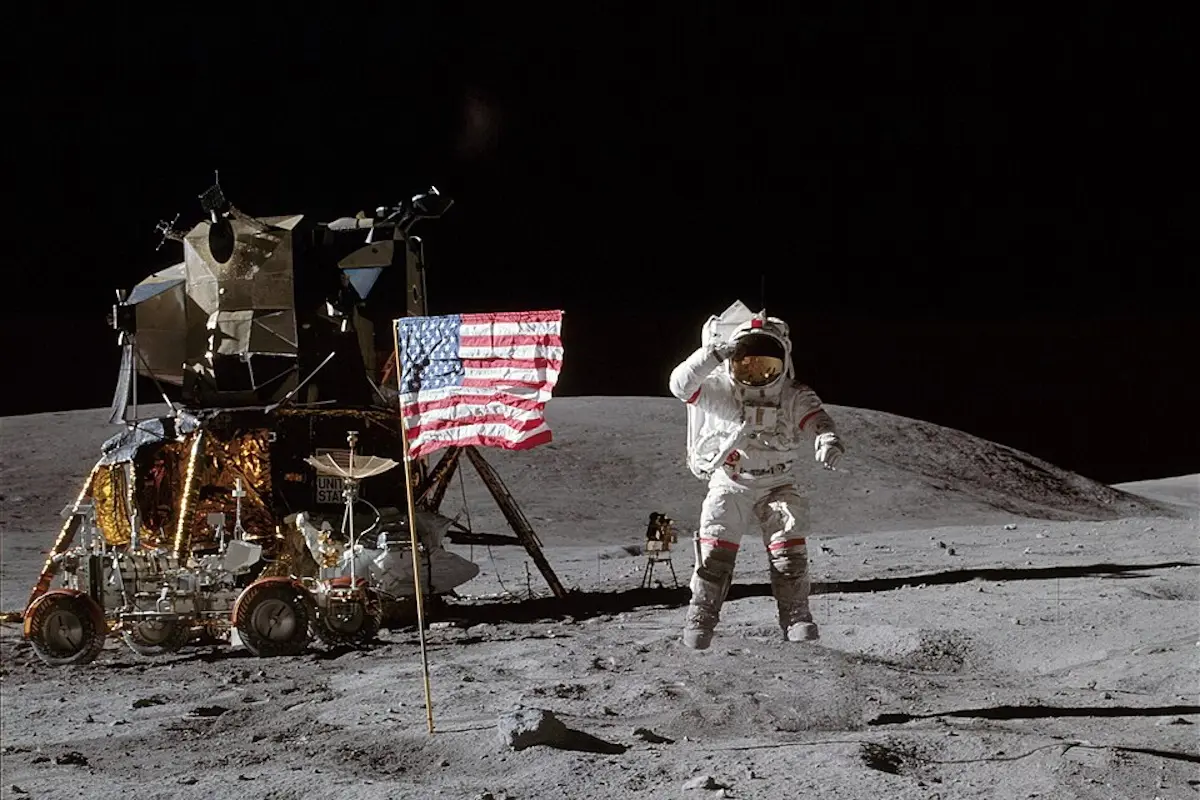
In April 1972, Ken Mattingly, the pilot of the Apollo 16 command module, retrieved a wedding ring he had lost in space at the beginning of the mission. The ring flew out through the spacecraft’s open hatch, bounced off the astronaut’s helmet, and fell back inside, where his colleague Charlie Duke caught it, according to Science et Vie.
Mattingly noticed the ring was missing on the second day of the 11-day flight. The crew did not find the ring either on the way to the Moon or during their extended stay in lunar orbit.
Duke, who worked on the Moon’s surface for three days alongside Commander John Young, recalled that the search continued throughout the entire expedition. According to him, on the eighth day of the mission, Mattingly was still spending every spare minute trying to find the ring.
“It just floated away somewhere, and none of us could find it,” Duke told Wired.
The resolution came on April 25, on the return trip. Mattingly stepped out into open space, and Duke, leaning halfway out of the hatch, spotted the ring slowly drifting outward. He tried to grab it with his glove but missed. The ring hit the back of Mattingly’s helmet, spun around, and flew back toward the hatch, where Duke caught it about three minutes later. Mattingley himself called this incident “a one-in-a-billion chance.”
The reason the hatch was opened
The astronaut left the spacecraft to retrieve film cartridges from cameras located in the service module. This spacewalk became the longest ever conducted in deep space: Mattingly spent 1 hour and 23 minutes outside the spacecraft, made two trips to the instrument compartment, and passed the film cartridges to Duke, who then passed them to Young in the cockpit. At that point, they were about 197,000 miles from Earth, according to NASA.
Without this operation, the images taken from lunar orbit would have been lost: the service module was jettisoned before landing and burned up. Only three people have ever performed spacewalks at a distance of about 270,000 kilometers from Earth—the command module pilots of Apollo 15, 16, and 17. No one has repeated this feat since.