
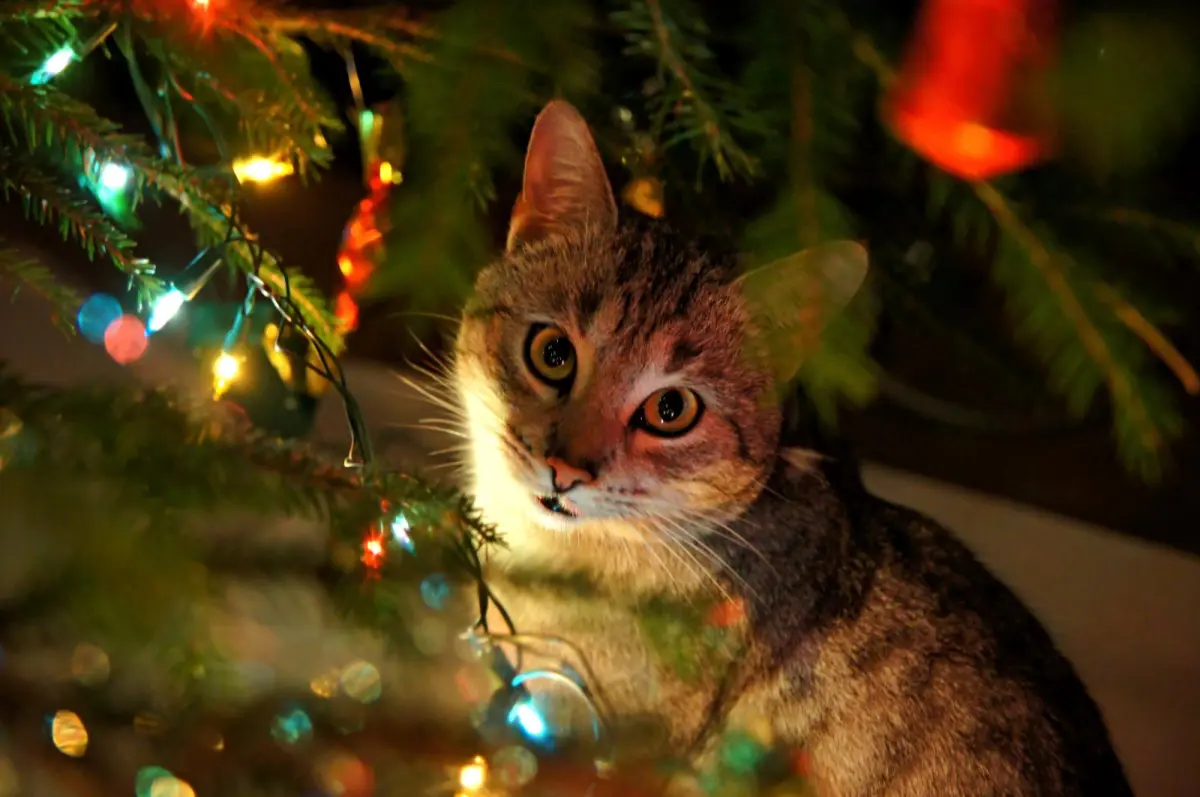
Veterinarians are urging cat owners to be cautious when setting up a Christmas tree: a falling tree, broken glass ornaments, chewed-through wires, and swallowed pine needles could result in an emergency trip to the clinic. The safest option is to choose a tree no taller than one meter, place it on a stable stand or sturdy furniture, and remove all ornaments from the lower branches, according to Grazia.
For a cat, a Christmas tree is simultaneously a scratching post, a workout machine, and a playground with shiny “prey,” so punishing the animal is pointless; it’s much more effective to organize the space properly. A live tree is dangerous because its needles can irritate a cat’s mouth and stomach, and cats often treat the soil in the planter as a new litter box. An alternative could be a few fir branches in a tall vase or a sturdy artificial tree without artificial snow.
Do not place the tree near shelves, tables, or sofa armrests, as the animal could jump from them. Weigh down the base with bags of sand, bricks, or books, and additionally secure the trunk with nylon fishing line to a wall or a hook on the ceiling.
At the bottom, only fabric bows, felt, wooden, or paper ornaments are appropriate, while glass ornaments and those that hold special sentimental value are best hung at the top. It’s recommended to choose LED garlands—preferably battery-powered—wrap them tightly around the branches, and hide the cables behind furniture. “Tinsel,” thin shiny threads, long ribbons, and edible decorations are off-limits.
The Dangers of Tinsel
The most serious danger comes from the shiny strings themselves. Pamela Perry, a veterinary behaviorist at Cornell University Animal Hospital, recalls that her cat, Chester, once swallowed tinsel from a Christmas tree. In other cases, it gets stuck in the digestive tract and must be surgically removed, according to the Cornell Feline Health Center.
“If a piece of tinsel wraps around the base of the tongue before the cat swallows it whole, it acts like a piano wire during digestion and perforates the intestines. This is life-threatening,” Perry warns.
Oranges, Foil, and Closed Doors
Dried orange slices on branches and fresh zest rubbed on the bottom tier, as well as a “barricade” of pinecones, baskets, and heavy gifts around the tree stand, will help deter your cat. Another effective trick: leave the tree undecorated for two or three days until the animal loses interest in it.
Leonie Richards of the U-Vet veterinary hospital at the University of Melbourne emphasizes that a fallen tree can not only create a mess but also break a cat’s paw. In her opinion, the wisest course of action is to keep the Christmas tree in a room with a door that can be closed, or to cover the floor around it with aluminum foil, which cats dislike standing on, according to ABC News.