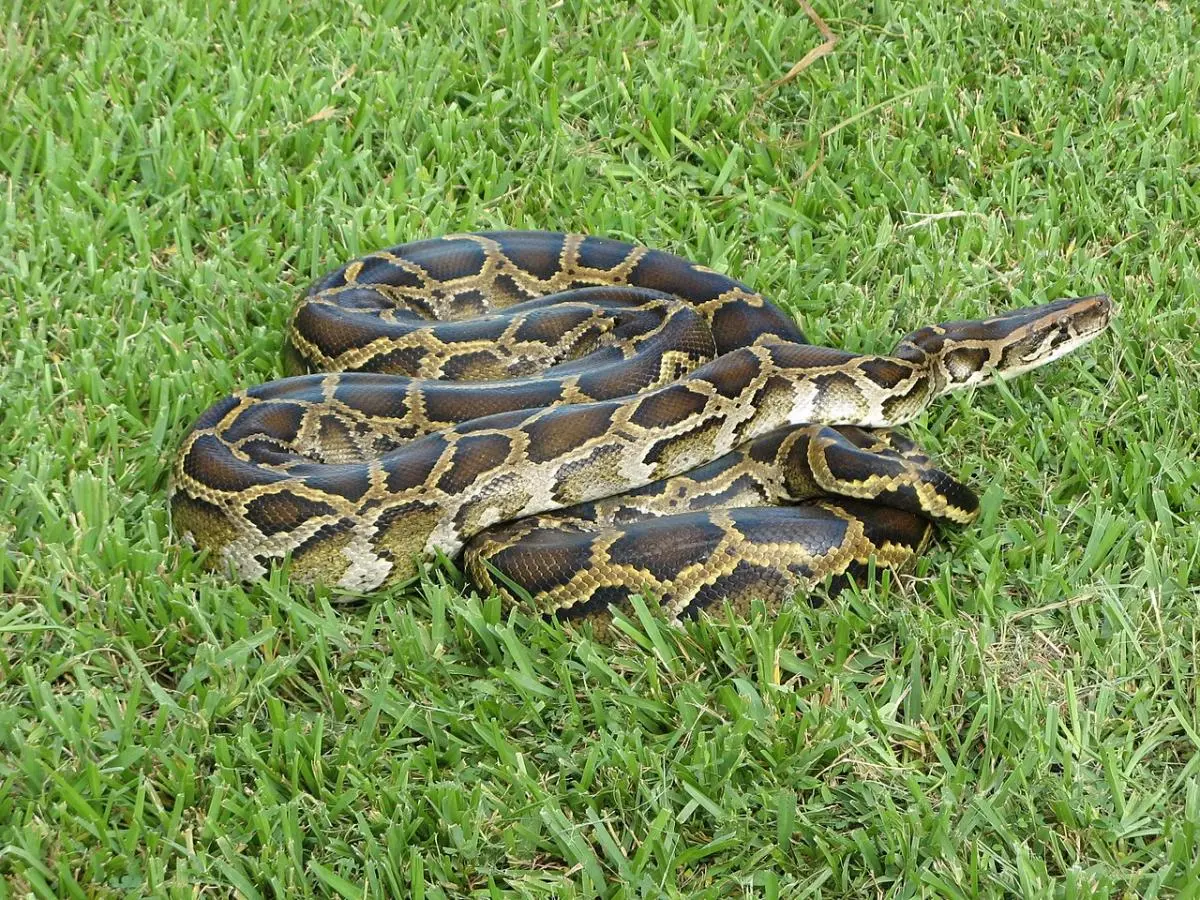
Researchers from the University of Florida and the South Florida Water Management District (South Florida Water Management District) have been testing robotic rabbits in the Everglades since 2025 to lure invasive Burmese pythons out of their hiding places. To do this, ordinary plush rabbits have been equipped with technology that mimics the behavior of a live animal, according to GameStar.
Inside the decoys are motors that move the toy, heating elements that simulate body temperature, and scent dispensers. Solar panels provide power, and cameras monitor approaching pythons. The robots do not catch the snakes themselves; they merely lure them to a specific location, where a team of hunters can then be called in. Adult pythons can grow to over six meters in length, but their camouflage makes them difficult to spot in the vast swamps. Since government trapping programs began in 2017, more than 19,000 snakes have been removed from the wild.
Why Not Real Rabbits?
Live rabbits in secure enclosures have already proven capable of attracting pythons, but the animals require care, and the enclosures must be checked regularly. The scent alone turned out to be insufficient. During an 84-day field experiment in 2022 across 21 pairs of plots, cameras recorded 11 pythons: seven near the control plots with soil and only four near the decoys containing rabbit feces, urine, and fur. The study’s authors suggested combining several stimuli: heat, appearance, and movement, according to a publication by the U.S. Geological Survey.
“A Needle in a Haystack”
The new version of the decoys features multiple scents, vibration, and remote-controlled heating. The project has already received approximately $330,000 in funding, but the first generation of robots has yet to yield a single documented python capture. Researcher McCleary acknowledges that the snakes’ reaction to the artificial rabbits is not as strong as their reaction to live ones, according to WTSP.
“We’re searching a vast area, looking for a needle in a haystack. And we’re not succeeding,” McCleary emphasizes.
Another bottleneck is data transmission. Currently, about 90 trail cameras are installed in the Everglades, taking high-resolution photos every minute, but transmitting that many photos via cellular networks is too expensive. That’s why the team is developing low-power Bunny Eyes cameras equipped with a filter that captures light reflected off a python’s scales. According to the researcher, the built-in artificial intelligence identifies the snake with about 95% accuracy and sends an alert.
“We want to find a scalable solution for whatever is slithering up to these robot crawlers and put it in the hands of people who can actually do something about it,” notes McCleary.
Researchers are also considering a floating version of the decoys, since part of the Everglades is submerged throughout the year. McCleary is convinced that efforts should focus on preventing pythons from spreading further north. According to him, there is currently no data indicating a recovery of the local fauna.