
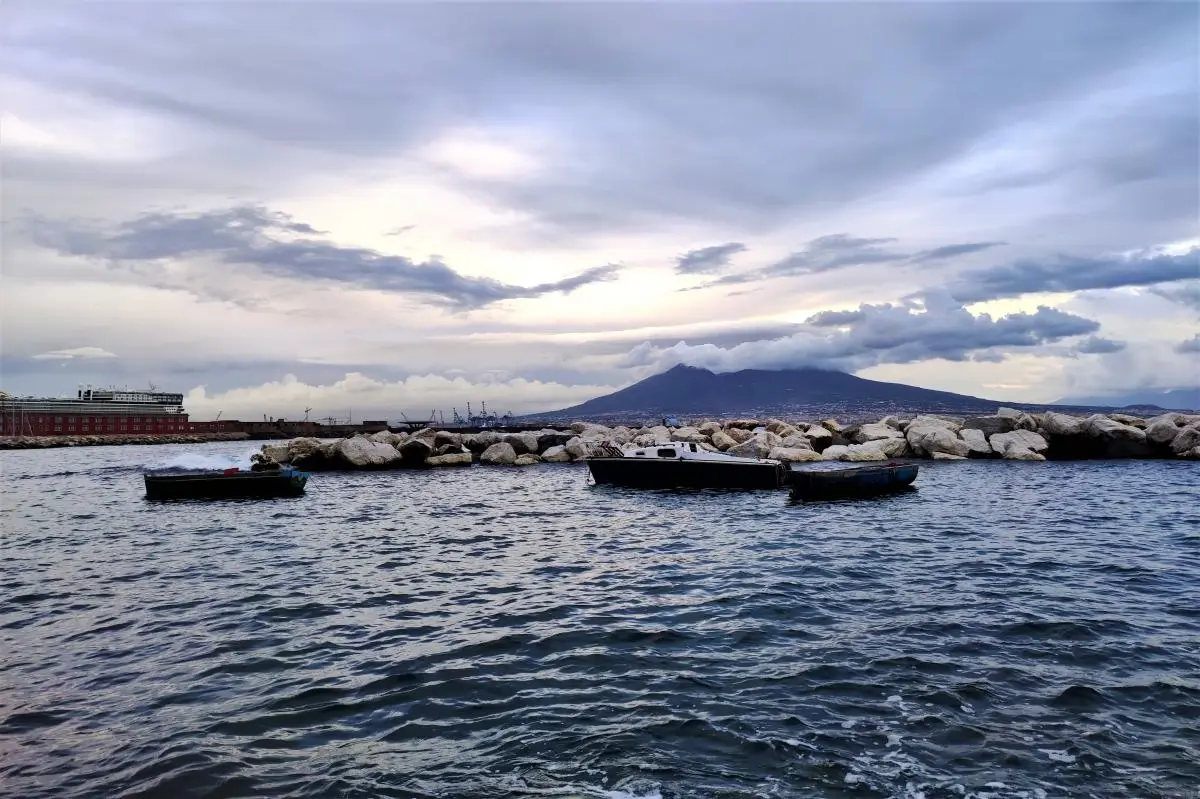
Naples has become safer, cleaner, and more tourist-friendly than ever before, but it remains Italy’s most enigmatic city. This is the conclusion reached by the author, who has been visiting the city for over 30 years, in a three-day itinerary for travelers, according to Condé Nast Traveler.
According to him, the city’s culinary scene has been revitalized, there are more lodging options, and museums and landmarks have been restored and reorganized. In 2027, a Rocco Forte hotel is set to open in Naples, and the America’s Cup sailing regatta will take place there.
Three days in a city like this call for a packed schedule.
“You could easily spend two weeks in Naples and still not see everything. But if you only have three days, start early and be ready to pack in as much as possible; you can relax when you get home,” the author advises.
From the Royal Palace to the Greek Quarters
The author suggests starting the first day with an espresso at the historic Gran Caffè Gambrinus, followed by a tour of the Royal Palace and the San Carlo Opera House. The author calls the Toledo metro station, featuring a mosaic by Oscar Tusquets Blanqui, one of the most impressive in the “Art Stations” project: for the price of a ticket—just over $2—you can see them all. The afternoon route winds through the neighborhoods around Spaccanapoli, the heart of Roman Naples: the Sansevero Chapel with its 1753 sculpture “Christ in the Shroud,” Caravaggio’s painting “The Seven Works of Mercy,” and the excavations of the Greco-Roman city beneath the Church of San Lorenzo Maggiore.
This part of the city is a UNESCO World Heritage Site. The rectangular grid of streets, laid out as far back as the Greek city of Neapolis, is still evident in the layout of the historic center, according to UNESCO.
The second day is devoted to the waterfront stretching from Castel-dell’Ovo, the Chiaia district with its boutiques and bars, and the Certosa di San Martino monastery on the Vomero hill, which offers a panoramic view of the Gulf of Naples.
Sanità: a former no-go zone
The author dedicates the third day to the Sanità district, where until recently tourists dared not venture. He recommends the 2,400-year-old Hypogeum dei Cristallini, which was recently restored, the Fontanelle Cemetery, and the Catacombs of San Gaudioso. After lunch, the itinerary leads to the National Archaeological Museum, which houses collections from Pompeii and Herculaneum: if you’re going to visit just one museum, this is the one.
The Ipodgeo dei Cristallini is part of a Greek necropolis that was in use from the late 4th century BCE. Four tombs with frescoes and sarcophagi carved from tuff lie nearly 12 meters below street level.
“Ancient Greek painting has been almost completely lost—even in Greece, almost nothing remains of it. Even though it is decorative rather than figurative painting, it is very refined. So this is a very unusual context, a rarity, and of great value,” emphasizes restorer Federica Giacomini, according to Smithsonian Magazine.