
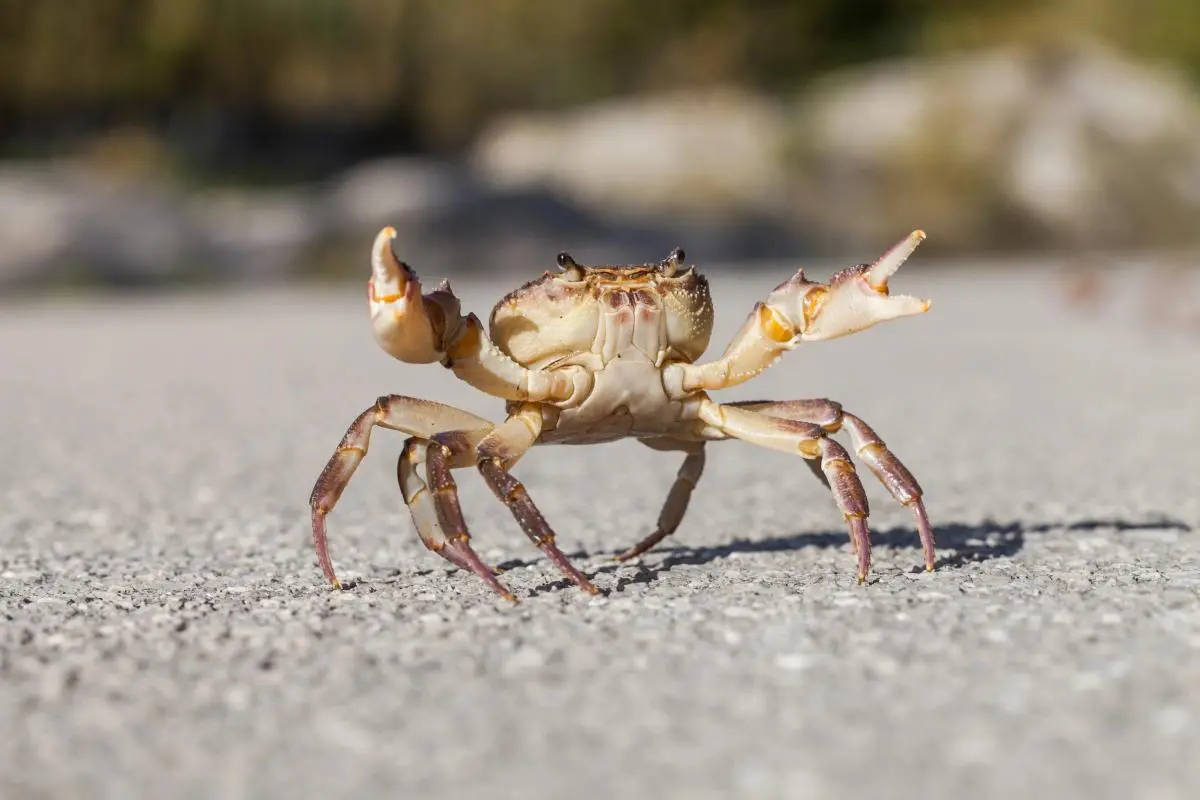
More than 100 million red crabs have begun their annual migration on Christmas Island in the Indian Ocean: the crustaceans are leaving the forests of this Australian territory and heading to the sea to reproduce. This was reported by Ouest-France.
On their way to the coast, the crabs cross forests, roads, and bridges. The timing of the migration depends on lunar cycles: the animals aim to lay their eggs before dawn, during low tide after high tide, in the last quarter of the moon. Conservationists prepare for this event for months.
According to Chris Chartres, director of Christmas Island National Park, people come from all over the world to witness the migration. He considers red crabs a key species for the island and attributes their recovery primarily to years of conservation efforts.
“Ongoing conservation efforts have been crucial to the species’ recovery, particularly measures to combat the yellow crazy ant, one of the greatest threats to the red crabs. When the crabs are doing well, the entire ecosystem benefits,” Chartre emphasizes.
Roadblocks and rakes in front of cars
The island is located 2,600 km northwest of Perth, and the first rain of the wet season signals the start of the migration. This year, Parks Australia launched its first-ever live online stream so viewers around the world could follow the crabs’ journey, according to ABC News.
For local residents, the migration turns the island into an obstacle course for several weeks. Some roads are closed, drivers drive slowly and go around the animals, and volunteers use rakes to sweep the crabs out of the way of oncoming traffic. A special “crab bridge” was built to ensure a safe crossing over the busy highway.
National Park Program Manager Mark Bennett calls the crabs “the biggest troublemakers,” but acknowledges that they are skilled at planning their route.
“They can count backward from the spawning date. So they know that in the last quarter of the month, at low tide before dawn, they’ll lay their eggs,” Bennett notes.
Acid-Spitting Ants
Yellow crazy ants, which were accidentally introduced to the island in the first half of the 20th century, form supercolonies of up to 1,000 individuals per square meter. They defend themselves by spraying formic acid, which kills land crabs: since the late 1990s, these invasive insects have killed tens of millions of animals. To curb the ant population, Parks Australia, in collaboration with La Trobe University, is releasing micro-wasps that deprive the colonies of their primary food source, according to Parks Australia.