
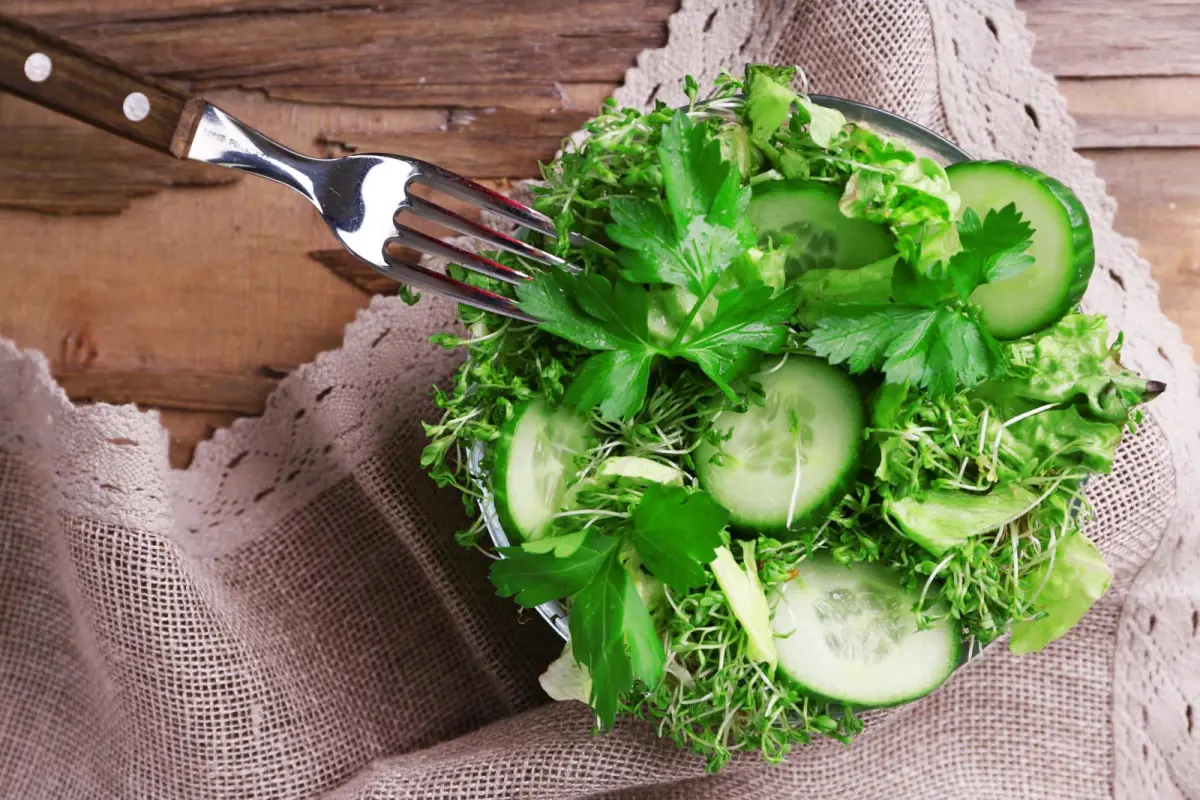
Watercress topped the list of the most nutritious fruits and vegetables, compiled based on a study published in the journal of the U.S. Centers for Disease Control and Prevention (CDC). Kale and Brussels sprouts, which are usually considered the gold standard of healthy eating, were surpassed by 14 other crops, according to Chowhound.
Watercress received a perfect score of 100. It was followed by Chinese cabbage (91.99), Swiss chard (89.27), beet greens (87.08), and spinach (86.43). The list of top performers also included chicory, leaf lettuce, parsley, romaine, collard greens, turnip greens, mustard greens, endive, and chives (54.8). Kale scored 49.07 points, and Brussels sprouts scored 32.23. Dandelion greens, red bell peppers, arugula, broccoli, and pumpkin fell between them.
Among the leaders, vitamin K levels are particularly high: one serving of Swiss chard provides 477% of the daily value, and beet greens provide 581%. Mustard greens become even more nutritious after cooking: their vitamin A content rises from 9% to 96% of the daily value, and their vitamin K content from 120% to 690%.
How the Scores Were Calculated
The study was conducted by Jennifer Di Noya of William Paterson University in 2014. She analyzed 47 foods and classified those that, on average, provide at least 10% of the daily value for 17 nutrients per 100 kcal as “superfoods.” These nutrients include potassium, fiber, protein, calcium, iron, zinc, and a number of vitamins. Forty-one foods met the criteria. Raspberries, tangerines, cranberries, garlic, onions, and blueberries did not make the list. The author acknowledges that the assessments do not account for phytochemicals and therefore do not reflect the full health benefits of the foods.
What Dietitians Recommend
Rachel O’Connor, a dietitian at NewYork-Presbyterian/Columbia University Irving Medical Center, believes that when discussing healthy eating, people often prioritize the wrong things.
“When it comes to healthy eating, I see a lot of focus on which foods to avoid. In my opinion, it’s actually more important to include a variety of nutritious whole foods in your diet,” O’Connor emphasizes.
She recommends eating about three servings of vegetables a day and four to five servings of cruciferous vegetables a week. One serving is approximately half a glass of cooked vegetables or one glass of raw vegetables. According to the dietitian, frozen vegetables are just as good as fresh ones, and very few nutrients are lost during cooking. “Of course, nutritional value is important, but enjoyment is just as important,” O’Connor notes.