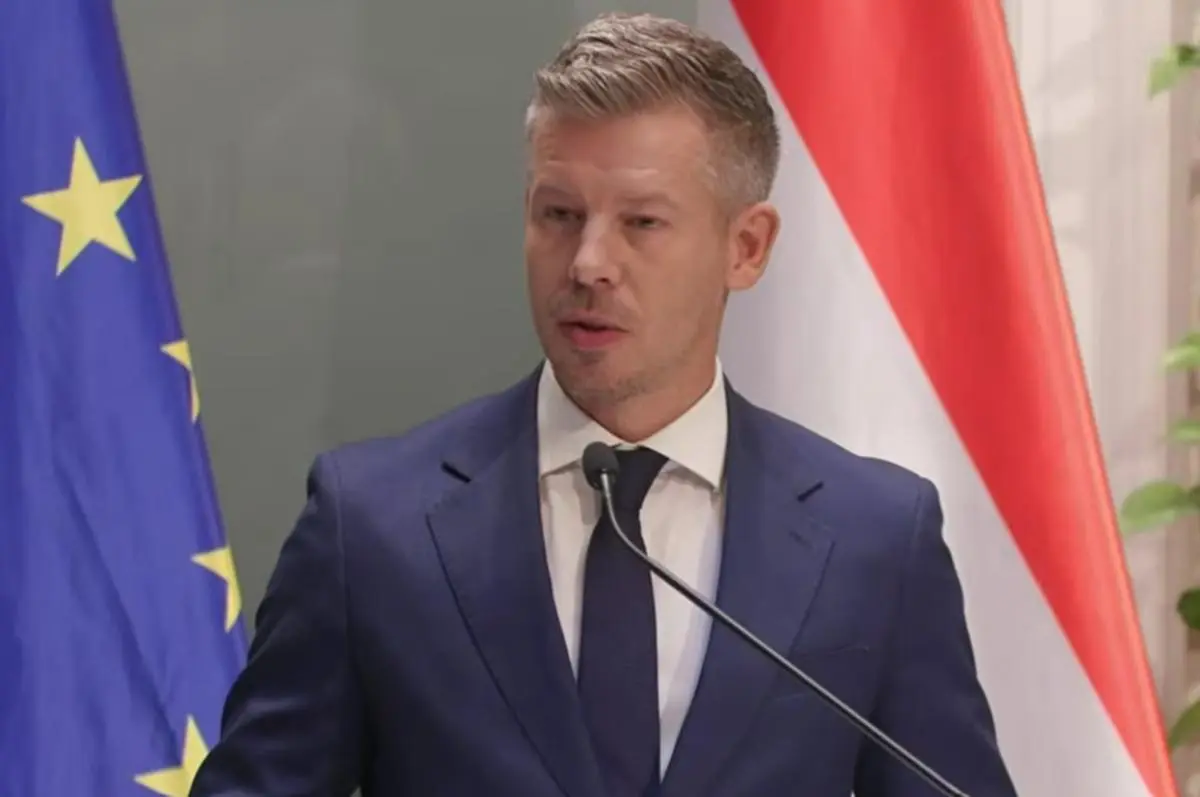
Hungary is ready to lift its veto on opening the last two negotiation clusters regarding Ukraine’s accession to the European Union (EU). Budapest was expected to announce this decision at a meeting of EU ambassadors on Friday, November 20, according to Euronews, citing two diplomatic sources.
András Biro-Nagy, Hungary’s State Secretary for EU Affairs in the Prime Minister’s Office, signaled this move on the eve of the EU General Affairs Council meeting in Brussels. He spoke during a discussion on EU enlargement.
Once Budapest confirms its position, Ukraine and Moldova will have to open all negotiation clusters, including the most sensitive chapters on the environment and agriculture. Moldova’s accession is linked to Ukraine’s application, which is why the Hungarian veto has long held up Chisinau’s process as well.
From Blockade to Compromise
Hungary’s position began to shift after Péter Magyar ousted Viktor Orbán, who had led the country for 16 years. The first negotiation cluster for Ukraine was opened in June, the second in July, and two more in October.
Last month, Kyiv and Budapest reached an agreement on the rights of the Hungarian minority in western Ukraine, which was subsequently approved by the Verkhovna Rada. Despite this, the Hungarian government delayed the opening of the final clusters for several more weeks: years of anti-Ukrainian rhetoric during the Orbán era made this step politically difficult within the country.
Péter Magyar and Ukrainian President Volodymyr Zelenskyy held their first bilateral meeting on October 16 on the sidelines of the European Council summit in Brussels. It was seen as another step toward a thaw in relations between the neighboring countries.
Agricultural Issues and the Long Road Ahead
Agriculture remains the most sensitive issue for Kyiv. Under pressure from countries such as Poland and France, the European Commission has proposed restricting access to EU funding and the European market for certain Ukrainian agricultural products.
Ukrainian Prime Minister Serhiy Koretskyi emphasized that Kyiv cannot agree to the permanent exclusion of Ukrainian farmers from the European market. In his view, such measures should be transitional and proportionate.
The opening of clusters is just the beginning of the negotiations. Next, candidate countries must align their legislation and practices with EU standards, and member states can veto progress more than 100 times throughout the process.