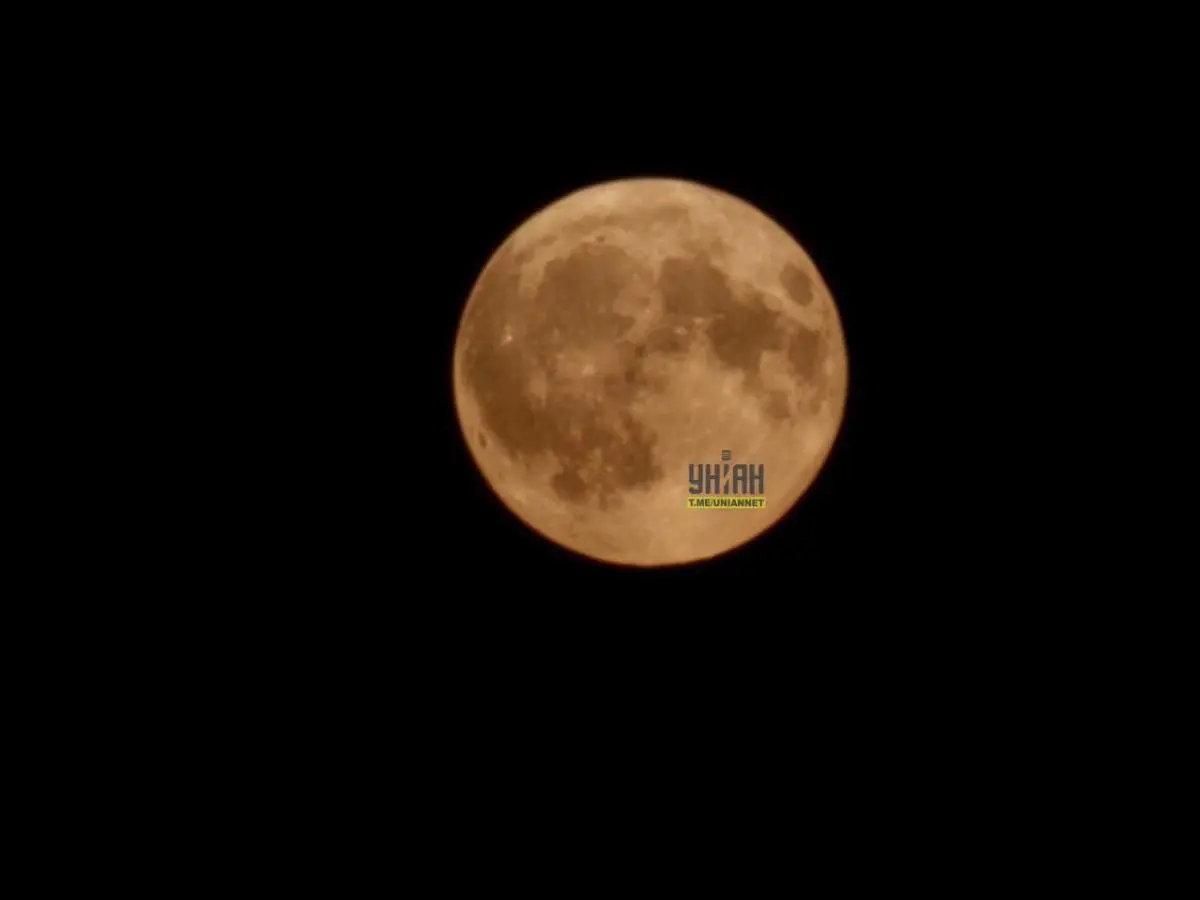
Tomorrow, Tuesday, November 24, the November full moon—known as the “Beaver Moon”—will rise in the east at dusk. It will kick off a series of three consecutive supermoons. This is the third and final full moon of fall in the Northern Hemisphere, and the Christmas supermoon in December will be the closest full moon to Earth since 2018, according to Live Science.
The Moon’s orbit is a slightly elongated oval, so the distance between it and Earth is constantly changing. When a full moon occurs during a period of closest approach, the Moon appears slightly larger and brighter than usual. Following the November supermoon, the next ones will occur in December and January, NASA notes.
An Almost Imperceptible Difference
During each orbit, the distance to the Moon varies on average from about 363,000 to 404,000 kilometers. “Supermoon” is not an official astronomical term. Scientists call this phenomenon a perigee syzygy: the Sun, Earth, and Moon line up in a straight line, and the Moon is at or near the point in its orbit closest to us, according to National Geographic.
Don’t expect anything unusual from this full moon, warns Devon Salasin, chief astronomer at Stargazing Moab.
“Although the Moon appears slightly larger and brighter in the sky during a supermoon, the difference is almost imperceptible to the naked eye,” Salasin emphasizes.
The Moon may appear enormous near the horizon, but this is an optical illusion: buildings, trees, or hills in the foreground trick the brain into perceiving the Moon as much larger than it actually is.
When and How to View It
The full moon will peak on November 24 at 14:53 UTC (16:53 Kyiv time). It’s best to observe the Moon after sunset on the evening of November 23 or 24: on those days, it will appear nearly full. You don’t need a telescope for this, but even a small pair of binoculars will allow you to make out details of the Moon’s surface, and you’ll be able to see the Pleiades star cluster near the Moon. If clouds get in the way, the next opportunity will be in a month: December will bring the year’s largest supermoon.
The name “Beaver Moon” comes from the fact that in November, beavers hide in their lodges, having stocked up on food for the winter in advance. It was first recorded in print by the traveler Jonathan Carver in his 1778 book, and the name gained popularity thanks to almanacs, according to Owaves.