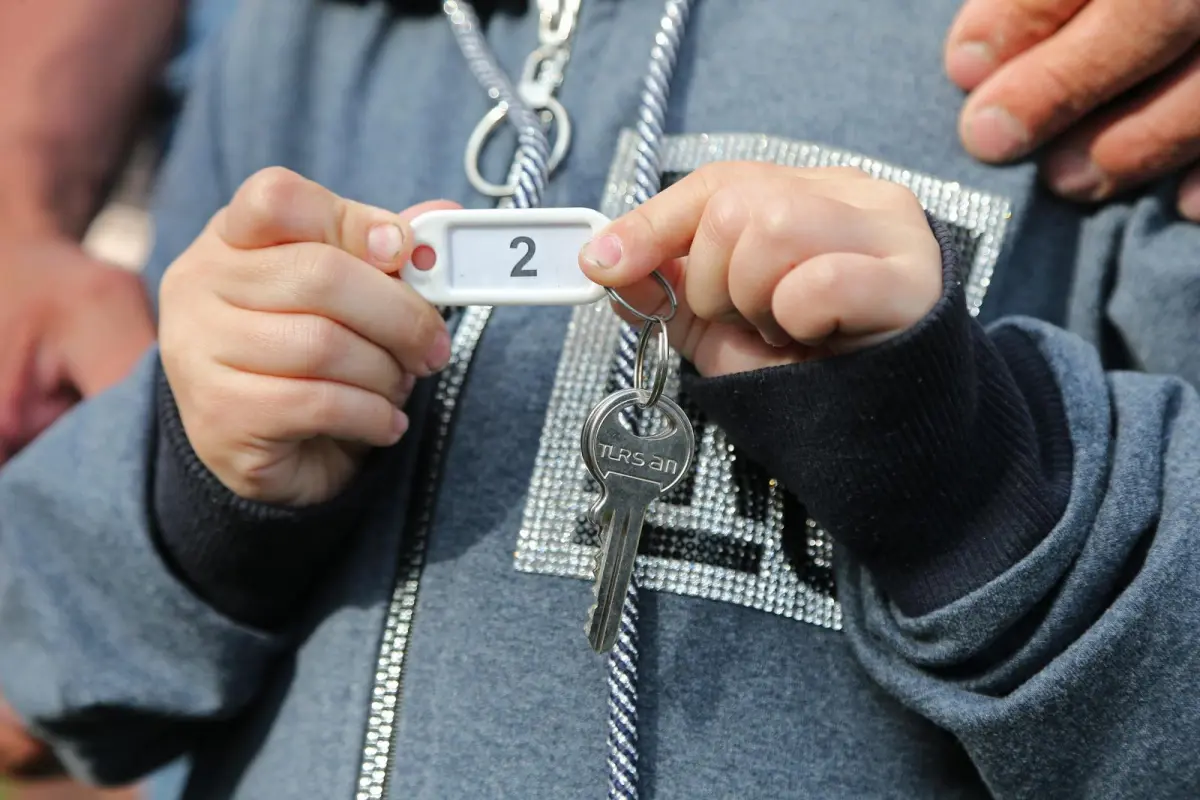
Wrapping a key for a car with keyless entry in several layers of aluminum foil can help prevent so-called “relay theft,” in which thieves unlock and start the car without a physical key. This household method has a completely scientific basis, according to El Cronista.
Keyless entry fobs constantly emit a short-range radio signal. The car detects the signal and allows the doors to be unlocked and the engine to be started. A metal wrapper that completely encloses the key acts as a Faraday cage and blocks radio waves. If the car doesn’t “detect” the key fob, the attack won’t work.
For this protection to be effective, the key must be completely wrapped, with no gaps or exposed areas. Simply placing it on a sheet of foil is not enough. It’s best to do this at night or when the car is parked for an extended period. Before driving, you’ll need to remove the key from the foil.
How Thieves Operate
Criminals usually work in pairs. One holds a transmitter near the front of a building and searches for the key fob’s signal, while the other stands by the car with a receiver. The car “thinks” the owner is nearby and unlocks. In the UK, insurers paid out a third more for car thefts this year than they did the previous year, according to inews.
Richard Billiard, technical director of Thatcham Research, which advises British auto insurers, attributes criminals’ interest to the value of these vehicles.
“When a potential target for them is a car worth 30, 40, or 50 thousand pounds, they’re highly motivated to find ways to circumvent the technology,” Billiard emphasizes.
Manufacturers are already responding. They are embedding motion sensors in key fobs that deactivate the key after a few minutes of inactivity. Tesla has introduced a “driving PIN” feature: the car won’t move until the owner enters a code on the screen.
Aluminum foil works, but a refrigerator doesn’t
Aluminum foil does indeed block the signal. However, the popular advice to store the key in the refrigerator or a cookie tin is a myth: not all refrigerators are made entirely of metal, and some tins can even amplify the signal, warns BikeSocial.
The publication advises choosing high-quality RFID covers, as cheap ones wear out quickly. During a test conducted by the TASSA association, one such cover stopped protecting against a relay attack after just a short time, and the owner didn’t even realize it. It’s also a good idea to keep your keys as far away as possible from exterior walls and windows, and, if possible, disable keyless entry in your car’s settings altogether.