
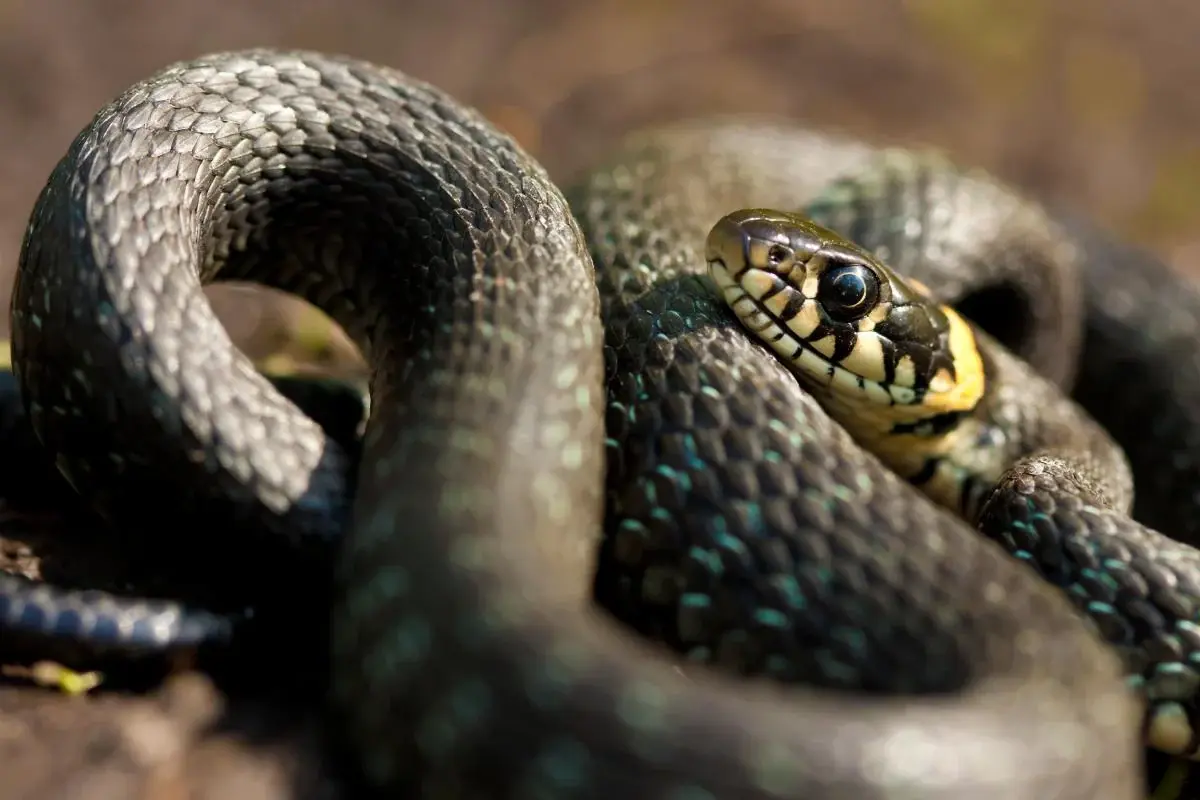
Starting in November, snakes go into hibernation and hide in rodent burrows, basements, cracks in walls, stumps, piles of firewood, and rocks—in other words, often very close to people. At the same time, due to milder winters, reptiles are increasingly being spotted out in the open even during the cold season, according to Linternaute.
Snakes are ectotherms: their body temperature depends on external heat, so their metabolism slows down in the cold. However, on sunny days, they may briefly leave their hiding places to warm up. A threshold of 8°C is often cited, but in reality, it depends on the species and weather conditions.
A 2024 Spanish study recorded 27 sightings of Montpellier grass snakes in the fall and winter, from November 2021 to March 2024, in northwestern Spain. Some snakes were seen during rain and at temperatures below 8°C. Winter activity of this species has also been recorded in Mediterranean wetlands in France.
Climate Is Shifting the Timeline
A study on the emergence from hibernation of 182 reptile species was published in the journal *Global Ecology and Biogeography*. According to its projections, by 2100, the spring emergence of these animals could occur 17 days earlier if global temperatures rise by 4.3°C. This is a more pessimistic scenario than current estimates of a 2.8°C warming. The study did not determine whether snakes will enter hibernation later.
In northern regions, snakes gather in winter roosts below the frost line. Several hundred individuals can overwinter in such a roost, tightly coiling their bodies together to stay warm. During this period, they do not eat, absorb moisture through their skin, and remain sluggishly active, according to the Carnegie Museum of Natural History.
What Attracts Snakes to Backyards
Stephen Price, a herpetologist at the University of Kentucky, notes that in the fall, despite the cooling temperatures, reptiles are noticeably active because each one is searching for a reliable shelter for the cold months. Rattlesnakes, for example, usually return to the same shelter and are capable of traveling one and a half kilometers or more to reach it.
“They head to a specific spot where they like to hibernate,” Price told the Lexington Herald-Leader.
According to the scientist, snakes are attracted to areas near homes by dense vegetation, piles of firewood or junk—where rodents also tend to live—as well as roofing sheets. He advises clearing out such areas when it gets colder and the snakes become less active. On a sunny day with a temperature around 18°C, it’s quite possible to encounter a snake even in winter: Price has seen water snakes active even on New Year’s Day.
If a venomous snake appears near your home, you should call in experts and keep your distance until they arrive. Do not attempt to catch the animal on your own.
“That’s exactly how most people end up getting bitten by these animals,” warns Price.