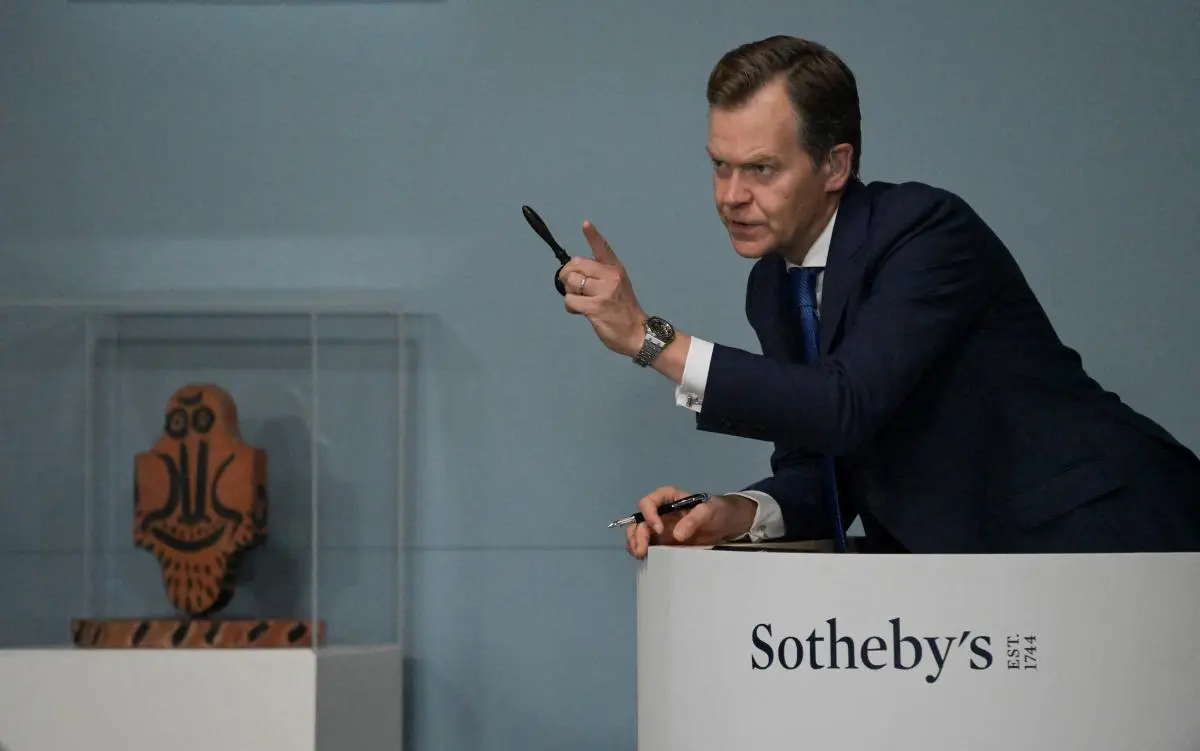
Vincent van Gogh's painting "Châtaigniers en fleurs" (Chestnut Trees in Bloom) sold at a Sotheby's auction for a record $190.4 million. The auction took place following a dispute between the sellers and the heirs of the Jewish owner, who was forced to part with the painting during the Nazi era, according to The Guardian.
The work, painted in 1890 in Auvers-sur-Oise, became the most expensive auction lot by the Dutch Post-Impressionist and the most expensive work of the current season. According to The New York Times, it was purchased by art dealer William Acquavella, head of Acquavella Galleries.
Van Gogh’s previous auction record stood at $117.2 million. That was the amount paid in November 2022 at Christie’s for his 1888 painting “Orchard with Cypresses.” At the same time, according to the NYT, another painting by the artist from the same year, “The Zouave,” was sold less than a year ago for approximately $190 million in a private transaction through Christie’s.
A Debt to the Fischer Family
German publisher Samuel Fischer purchased the painting in Paris in 1909, and his family sold it in 1936. The heirs insisted that the family parted with it solely because of the financial losses it suffered under the Nazis. The Argentine Blakier-Arrieta family had owned the work since 1975.
On Tuesday, the day before the auction, Sotheby’s announced an agreement between the Blakier-Arrieta family and all the legal descendants of Hedwig and Samuel Fischer. Gunnar Schnabel, the Berlin-based attorney for the heirs, believes that the significance of this story extends far beyond a single settlement.
“The family hopes that the significant public interest in this case and its swift, honest, and fair resolution may offer some support to other families who suffered persecution during the Nazi era,” Schnabel stated. At the same time, he noted that the atmosphere at the auction was anything but festive.
A Week of Auction Negotiations
Negotiations lasted from Monday morning until the early hours of Tuesday, and the auction house did not disclose the terms of the agreement, according to The Boston Globe. The painting was part of a collection of 12 works that the Blakier-Arrieta family had amassed thanks to their fortune from the sugar business in Argentina.
Schnabel came across a photo of the painting on November 7 while reading an article about the upcoming auction. He had previously helped the Fishers recover a painting by Camille Pissarro. On November 12, the lawyer demanded that Sotheby’s prove that the 1936 sale was not a forced sale; otherwise, he said, “no auction can take place.” The auction house had announced the sale as early as September 30, and some restitution experts were surprised that Sotheby’s had not contacted the heirs in advance.
“The fact that Sotheby’s has a restitution department is commendable. They are obligated to conduct their own research into the provenance of the works. I think this case simply slipped under the radar,” noted Christopher Marinello, founder of Art Recovery International.