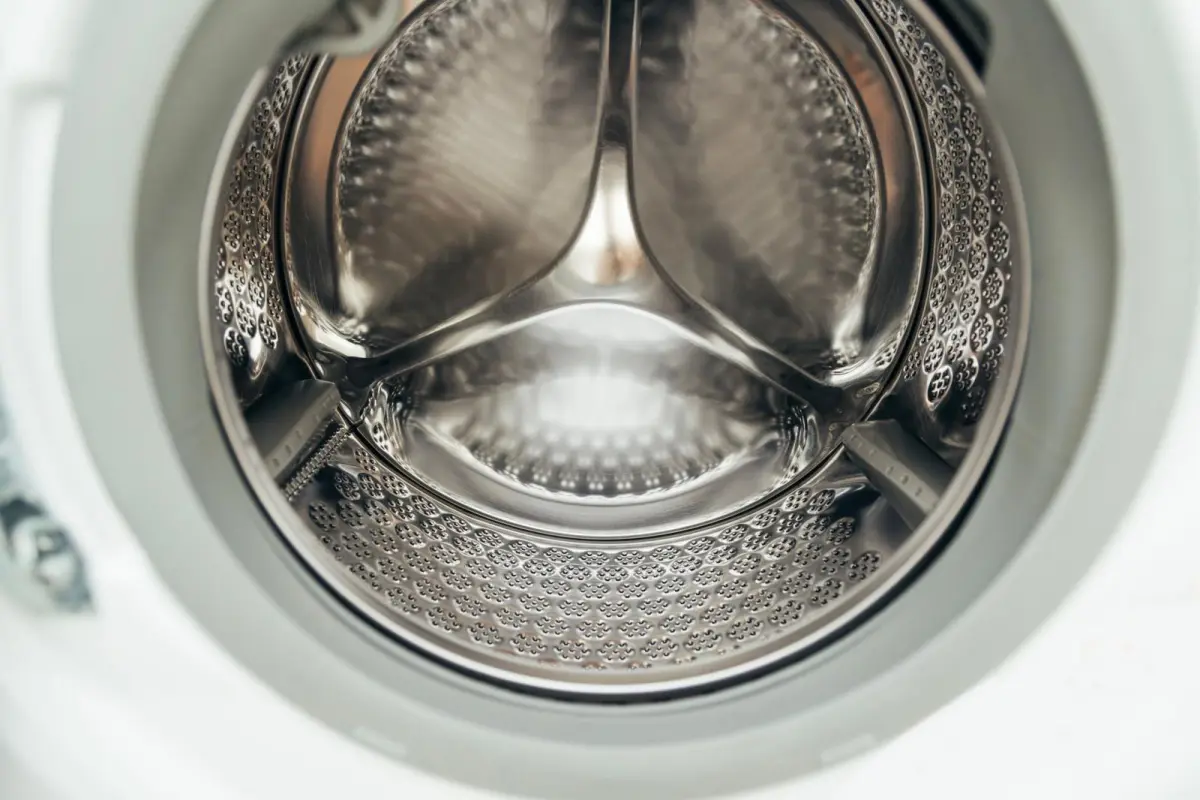
You can get rid of sticky residue and unpleasant odors inside your washing machine without taking it apart: just run the self-cleaning cycle with an empty drum. On some LG models, all you need to do is press two buttons at the same time, according to Deccoria.
This applies to machines with the Tub Clean feature. Hold down the Intensive and Crease Care buttons for three seconds until “tCL” appears on the display, then confirm your selection with the Start/Pause button. Bosch, Electrolux, and Samsung models often have a separate button or setting on the control panel, such as “Drum Clean” or “Eco Drum Clean.” For older and simpler models, manufacturers recommend running a regular wash cycle at a high temperature without any laundry.
Deposits are formed by fabric lint, dirt from clothes, and residues of detergent and fabric softener, which settle in the drum and on the rubber seals. Frequent washing at low temperatures does not remove these deposits, so bacteria multiply inside, mold grows, and odors develop—which can even transfer to clean clothes.
During the cycle, add a descaling agent or a special washing machine cleaner to the main wash compartment. Regular detergent and fabric softener in an empty drum can cause excessive foaming. If you mostly wash at low temperatures, you should run the self-cleaning cycle at least once a month, and you should also regularly wipe down the rubber door seal and the detergent dispenser.
How long does the self-cleaning cycle take?
Samsung specifies that the Self Clean cycle, or Pure Cycle, lasts about an hour in top-loading machines and approximately four hours in front-loading ones. Adding detergent isn’t necessary, but if there’s a musty odor, the company recommends using bleach. The indicator prompts you to run a cleaning cycle after 20 washes in top-loading models and after 40 in front-loading models, according to Samsung.
Habits That Clog Up the Washer
In the Consumer Reports lab, washing machines look almost brand-new after hundreds of test cycles. The publication’s expert, Rich Handel, attributes this primarily to the fact that the team strictly measures everything they put in the drum, according to Consumer Reports.
“Using too much detergent has several side effects. In some cases, the machine can’t rinse out the excess. Detergent residue ends up on your clothes and in your machine,” Handel warns.
These residues attract lint and dirt and create a breeding ground for mold. Experts recommend using about 1.5 ounces (approximately 44 ml) of detergent for a standard load and skipping the fabric softener. After the last wash of the day, wipe down the door, gasket, and detergent dispenser with a microfiber cloth, then leave them open until they are completely dry—provided that small children and pets do not have access to the laundry room.