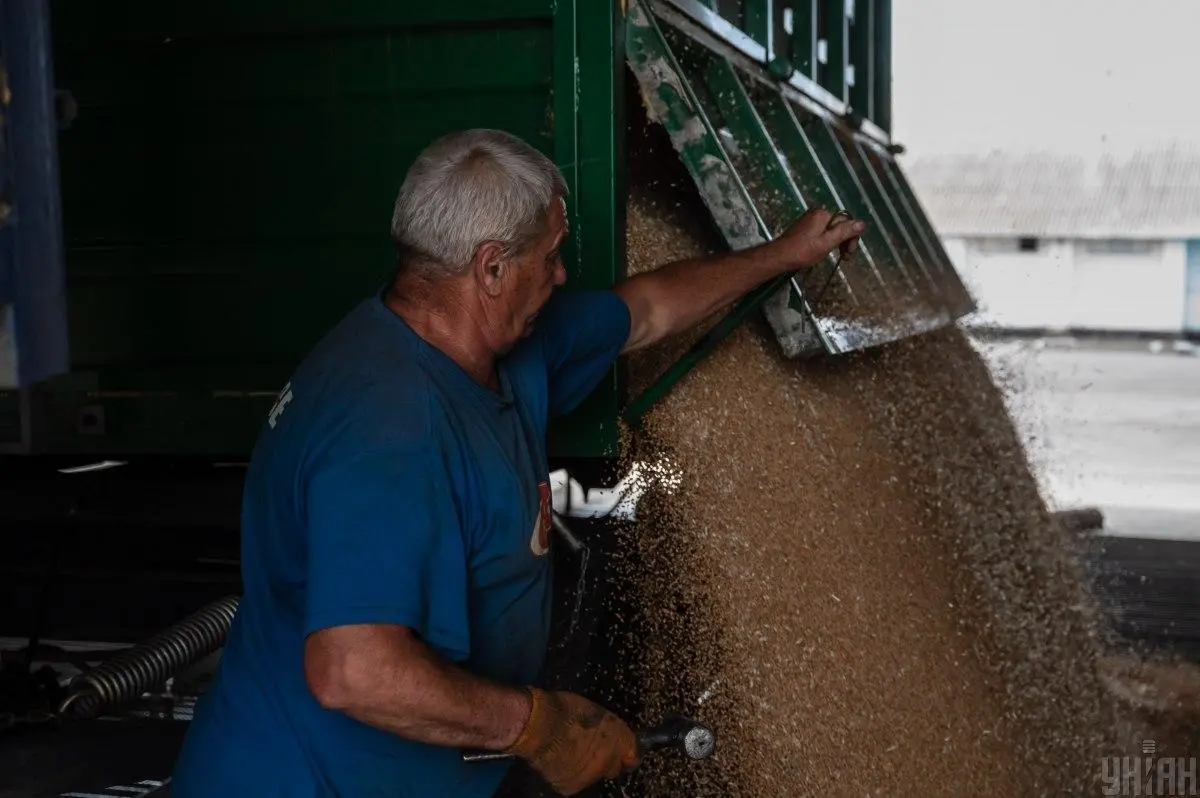
Ukraine is negotiating with Hungary regarding the transit of grain to Western Europe. The Ministry of Agrarian Policy has already contacted the relevant Hungarian agency. According to Minister of Agrarian Policy Taras Vysotsky, the parties are now set to hold separate talks on this issue, and Kyiv’s next steps will depend on the outcome of those talks, USI reports.
This issue was discussed at the heads-of-state level on October 16 during the European Union summit. Ukrainian President Volodymyr Zelenskyy proposed that Poland, Romania, Slovakia, and Hungary allow Ukrainian agricultural products to pass through their territories without being sold on local markets. He held separate talks with Hungarian Prime Minister Péter Magyar regarding the delivery of corn to Western Europe by rail in sealed railcars.
“This method of transportation makes it possible to clearly separate transit cargo from products intended for the domestic market,” the statement said.
After the meeting, Magyar stated in an interview with RTL that he sees no obstacles as long as the products do not remain in Hungary. No final agreements have been reached yet. For Budapest, control is of fundamental importance: in May 2026, the Hungarian government reinstated a ban on imports of Ukrainian food products.
Kyiv needs alternative routes due to the collapse of maritime exports. Since July 22, transshipment at the ports of Greater Odesa has fallen by more than 15 times, and the Black Sea corridor—through which about 90% of agricultural exports previously passed—is effectively non-operational. In early October, Poland and Romania refused to expand transit of Ukrainian grain, so the Hungarian route could provide exporters with an additional overland route to buyers in Europe.
Full Warehouses and Empty Coffers
The impact of the blockade on the agricultural sector is now the most severe since the start of the full-scale war. Over the summer and fall, Russia intensified its strikes on targets in the Black Sea, making it impossible to insure commercial vessels. In August, Ukraine exported 981,000 metric tons of grains and legumes, which is about 58% less than a year earlier, according to CNBC.
Oleksandr Chumak has been growing various crops in the Odesa region for 11 years. According to him, about 80% of his grain cannot currently be sold at a profit, and he has run out of working capital. Due to the collapse of domestic prices, farmers have virtually no incentive to plant crops for the 2027 harvest.
Andriy Dikun, chairman of the All-Ukrainian Agrarian Council, notes that farms can no longer meet their basic financial obligations.
“This is very difficult for farmers because we have to pay taxes and rent for the land, but right now we can’t do that because we can’t sell anything. The only crops we can sell are rapeseed and sunflowers. But the volumes are still insufficient... So why should we plant if we’re not making any profit today?” says Dikun.
Banks are seeing a sharp increase in demand for loans. From June through August, PrivatBank provided the agribusiness sector with 1.53 billion hryvnias in working capital financing. This is more than double the 718 million hryvnias provided during the same period last year. Small and medium-sized producers account for 70% of the bank’s agricultural loan portfolio.
Yevhen Zaigraev, Director of Corporate, Small, and Medium-Sized Business at PrivatBank, warns that farmers are increasingly feeling the pinch of a liquidity shortage.
“Funds are effectively tied up in grain stocks, while farms still need to cover their current operating expenses and secure financing for the fall and spring planting seasons,” Zaigraev noted.
According to him, some clients are selling their harvest early, even at unfavorable prices, while others—especially those with their own storage facilities—are postponing sales and waiting for more favorable prices. Grain and oilseed production is projected to reach 85 million metric tons, compared to 80 million metric tons this year, and carryover stocks from last season are already straining storage facilities and logistics. Farmers are gradually shifting toward oilseeds and niche crops, whose prices are less dependent on logistics costs. “Chumak,” for example, will significantly reduce its acreage, completely abandon corn and barley, and opt for crops that require fewer fertilizers. Fertilizers are also in short supply on the global market due to the conflict between the U.S. and Israel with Iran.
Land transport cannot replace sea transport
Benoît Fayot, an analyst at Expana, considers detour routes via rail, road, and river to be “complicated and slow.” Low water levels are hindering navigation on the Danube, and a key bridge from Ukraine has been damaged. Routes through the Baltic states and Georgia can cover only a small fraction of the usual volumes. At the same time, according to Fayo’s assessment, the resumption of operations at Black Sea ports will flood the market with huge volumes of cheap products and could “quickly turn the market upside down” with virtually no warning.
Risks to the global food market are mounting. Before the war, Ukraine and Russia together accounted for more than half of global sunflower oil production, nearly one-fifth of barley, and 14% of wheat. Europe is expecting a particularly poor corn harvest, and the harvest in the U.S. is also worse; however, the impact is being mitigated for now by better wheat and barley harvests in Canada, Australia, and Argentina.
The Agricultural Council is convinced that, in terms of logistics costs, no land route can compete with sea transport.
“It will always be cheaper for us—even for farmers on Ukraine’s western border—to sell grain through Black Sea ports, because it’s much more profitable than selling it across the border to the European Union. So without the Black Sea ports, this simply won’t work for us,” Dikun emphasized.