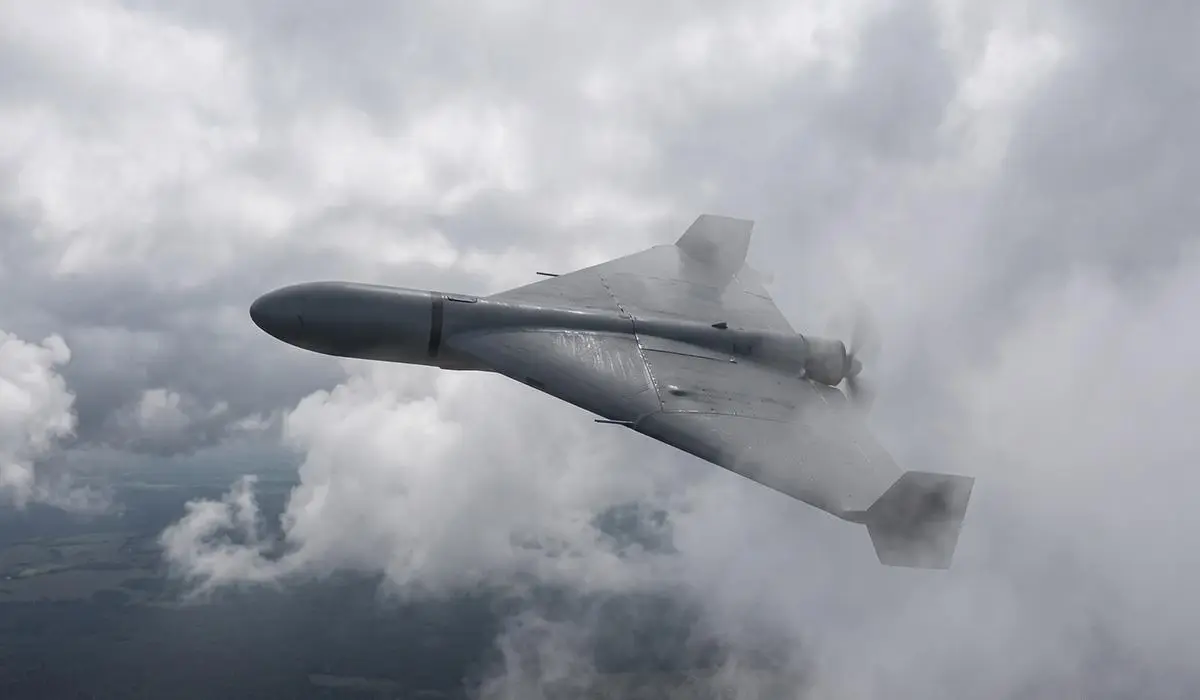
New Chinese export restrictions on drone components, which took effect on November 18, did not cover some of the key parts that Russia uses in its Geran-2 and Geran-4 strike drones and reconnaissance UAVs. Ukrainian experts reached this conclusion after comparing Beijing’s list with Chinese parts found in the wreckage of downed “Shaheds,” cruise missiles, and reconnaissance UAVs, according to Defense Romania.
This refers to Decision No. 49, which was adopted on October 19 by the Ministry of Commerce of the People’s Republic of China, the General Administration of Customs, and the Armaments Development Department of the Central Military Commission. From now on, it is prohibited to export turbojet engines with a thrust of 400 N or more and aircraft engines for drones with a power output exceeding 16 kW without authorization. The restrictions also apply to radio modules with a transmission power of 30 dBm or more, or capable of controlling more than ten drones simultaneously; high-power brushless motors; electronic speed controllers; and a range of UAV development and manufacturing technologies, according to an announcement by the Ministry of Commerce of the People’s Republic of China.
The document does not impose a complete ban: exporters must obtain special licenses. The actual effectiveness of these restrictions will depend on Beijing’s political will and the strictness of customs inspections, as shipments could otherwise be routed through intermediary firms.
Antennas and servo drives were left off the list
Vladislav Vlasyuk, the Commissioner for Sanctions Policy, thanked China for the new measures but pointed out significant gaps. CRPA antennas for electronic warfare protection—which are installed on the Geran-2—as well as navigation modules, HARXON antennas, gimbal-mounted cameras, and Chinese-made servo drives used in the Geran-4 remain off the list, according to the Kyiv Independent.
“This is only part of what matters for Russian weapons, but it’s a start. We have shared detailed information about these components and their Chinese manufacturers and expect strict controls on these exports,” Vlasyuk emphasized.
Jet-powered “Shaheds” are much harder to shoot down than older piston-engine drones, and Russia is rapidly ramping up their production. According to Prime Minister Serhiy Koretsky, in November, Russia is capable of launching up to 6,500 such drones against Ukraine—roughly twice as many as the 530 launched in August.
Components are routed through China and Hong Kong
An OCCRP investigation previously revealed the Russian defense industry’s dependence on imports: hundreds of foreign components were found in the Geran-2, of which only a few dozen were of Russian origin. From January 2024 to March 2025, Russia received 672 shipments of sanctioned parts from European manufacturers. These were shipped by 178 companies, primarily from China and Hong Kong, according to OCCRP.