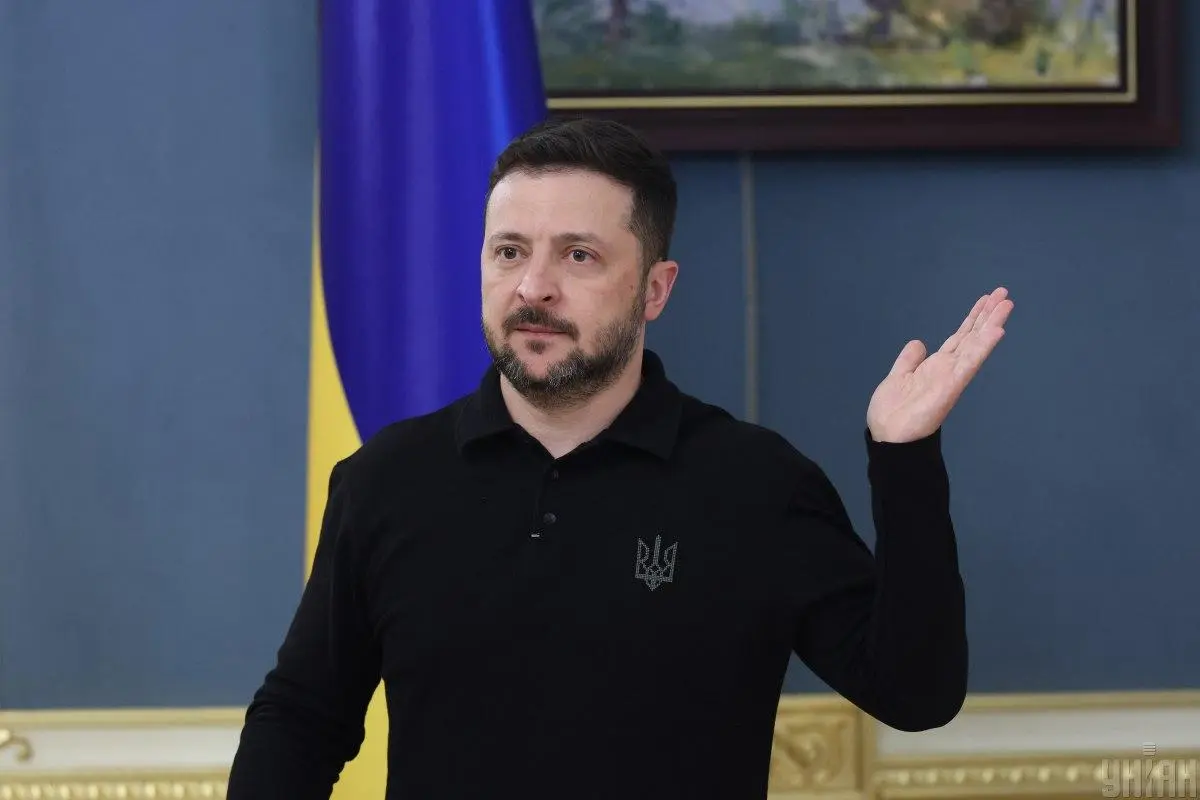
Ukrainian President Volodymyr Zelenskyy stated his readiness to immediately conclude a peace agreement to end the war, but categorically rejected the possibility of recognizing the occupied territories as Russian. The head of state emphasized that Kyiv is ready to cease hostilities along the current front line, where the enemy currently controls 19.3% of Ukrainian territory, according to RBC-Ukraine.
During the interview, the president stressed the need for the country’s leadership to take a firm stance in the face of external pressure and a shortage of military aid, particularly the critically low volume of Patriot missile deliveries. He also noted that, despite strained relations with Washington, he remains candid in his dialogue with the American side, ABC News reports.
“In this situation, I have to be strong. Ukraine cannot afford a weak president right now. Perhaps after the war—any war... But right now, if Ukraine wants to survive, it needs a strong army, a strong president, and a strong people... That’s why our response is so tough. That’s why I will, of course, respond to any pressure directed at me. Otherwise, they’ll devour us… It’s easier for Russia because we’re smaller… But with us—the people of Ukraine—it’s not that simple. That’s why sometimes I might not be very polite,” Zelenskyy noted.
Diplomatic Challenges and Security Guarantees
According to experts, the current intensification of the negotiation process may be driven by domestic political interests in the U.S. ahead of the midterm congressional elections. Experts warn that Russia may use diplomatic contacts as a tool to delay sanctions and intensify attacks on Ukraine’s energy infrastructure, Espresoreports.
At the same time, the international community continues to insist on the inviolability of Ukraine’s borders, condemning any attempts to annex territories as a gross violation of the UN Charter. Most United Nations member states support Ukraine’s sovereignty and emphasize that the path to lasting peace cannot be achieved through concessions to the aggressor, according to the UN.