
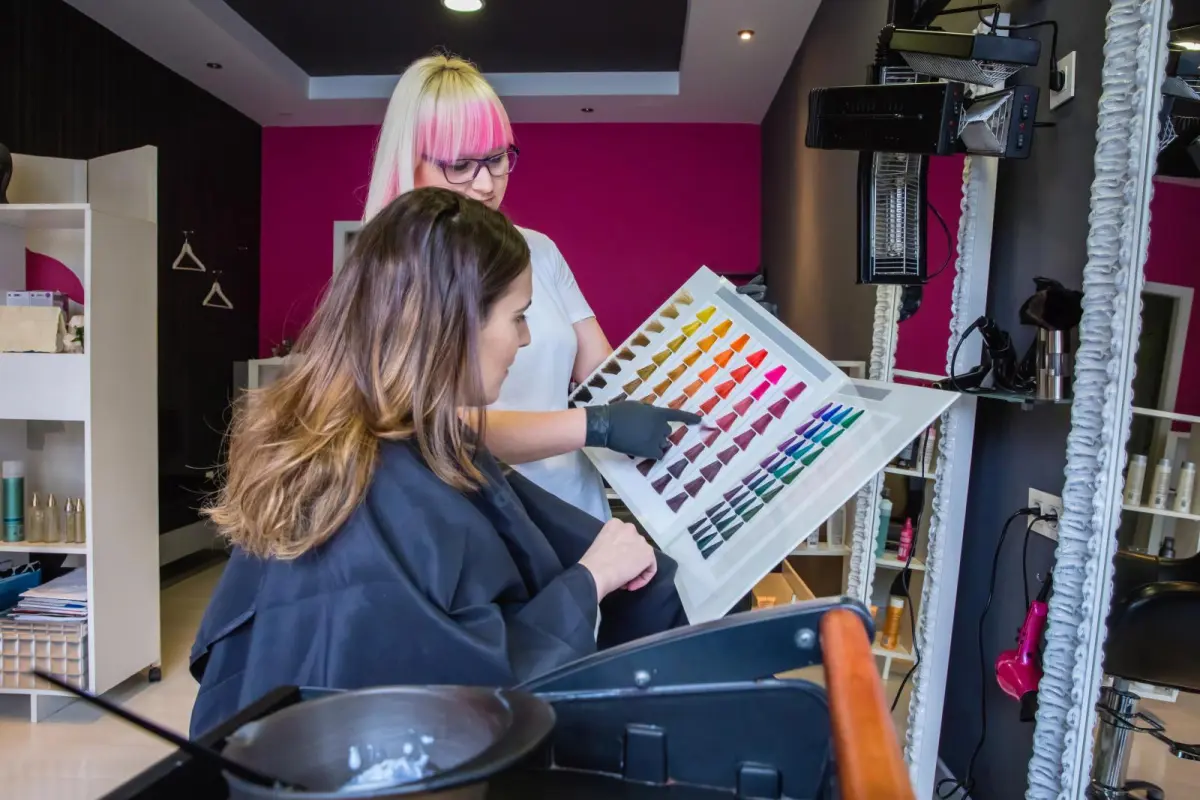
Regularly dyeing your hair with permanent oxidative dyes cannot be considered beneficial to your health, as it always involves chemical interference with the hair’s structure. However, the extent of the damage depends on the product, technique, and frequency of the treatments, according to German hairstylist and hair care expert Tom Hannemann, as reported by CHIP.
During permanent coloring, the developer converts dye precursors into large pigment molecules directly within the hair shaft. Direct-action toners merely deposit ready-made pigments on the surface and do not lighten the natural color, so they are generally gentler. However, intense toners often contain a developer as well.
“I wouldn’t say that oxidative hair coloring is inherently healthy. That said, modern hair dyes have been significantly improved and, when applied professionally, can be relatively gentle,” Hannemann emphasizes.
Roots are usually touched up every four to six weeks. The expert advises applying the mixture only to the regrown roots, as repeated treatment of the hair length increases chemical stress. The greatest caution should be exercised with bleaching: strands that have already been lightened should not be lightened again unless absolutely necessary.
Allergies pose a separate risk. They can occur even with ammonia-free dye, and even when a person has used the same product for years without any problems.
“Severe burning, itching, or pain are not normal side effects that you should simply endure. In such cases, you should stop applying the dye immediately and rinse it off thoroughly,” warns the hairstylist.
The “ammonia-free” label does not guarantee a gentler effect, as manufacturers often replace ammonia with other alkaline substances. Plant-based dyes like henna do not lighten the hair and can also cause intolerance. To refresh the color, Hahnemann recommends glossing, and techniques such as balayage allow you to avoid contact between the dye and the scalp.
The main allergen is found in dark shades
Dermatologist Rosemary Nixon of the Skin and Cancer Foundation in Melbourne notes that the main substance causing allergies is paraphenylenediamine (PPD), which is found primarily in dark hair dyes. The reaction usually appears not on the scalp itself, but along the hairline, on the face, eyelids, and neck. When choosing henna as a safer alternative, it’s important to check the ingredients, as PPD may be hidden in the mixture, according to ABC News.
What the Data Says About Cancer Risks
A large-scale study published in the BMJ included 117,200 American nurses who were followed for 36 years. The researchers found no link between the home use of permanent hair dyes and the risk of most types of cancer or cancer-related mortality. At the same time, women who dyed their hair had a slightly higher risk of basal cell carcinoma, and the total number of dyeing sessions correlated with the risk of certain hormone-negative forms of breast cancer and ovarian cancer. The authors emphasize that these results require further study, according to the BMJ.