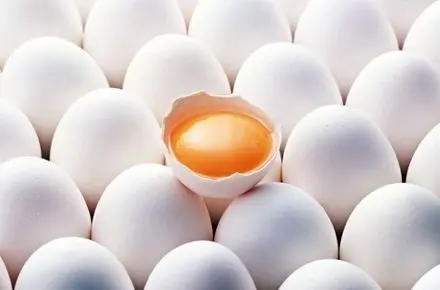
The color of a chicken egg’s yolk depends primarily on the hen’s diet, rather than on the nutritional value or quality of the product. The rich orange hue, which shoppers often consider a sign of a better egg, is caused by pigments in the feed, according to Cronista.
According to the U.S. Department of Agriculture (USDA), the color is determined by natural pigments—carotenoids and xanthophylls—found in certain vegetables and grains. Chickens that eat feed rich in yellow-orange pigments—such as yellow corn or marigold petals—lay eggs with darker yolks. If there are few of these substances in the feed, the yolk becomes lighter.
The University of Illinois adds that darker yolks can also be found in chickens that have access to green plants or are fed corn and alfalfa. However, the color itself does not indicate that the birds were raised under better conditions.
Are orange yolks healthier?
Both yellow and orange egg yolks contain proteins, fats, vitamins, and minerals. A diet high in carotenoids can increase the concentration of lutein and zeaxanthin, which have antioxidant properties, but this does not mean the egg contains more protein, vitamins, or minerals.
The USDA also warns that you cannot determine the freshness or safety of an egg based on the color of the yolk. When choosing eggs, consider their freshness and storage conditions; to reduce the risk of food poisoning, eggs should be cooked until the white and yolk are firm.
From pale white to pink
The range of yolk colors around the world is much broader than what’s found on the shelves of American supermarkets. Scott Beyer, a poultry specialist with the Kansas State University, emphasizes that the shade depends almost entirely on what the birds are fed, and farmers concerned about eggs that are too pale periodically consult him about this, according to NPR.
“If you feed the birds yellow corn, that gets into the egg. But if the birds are fed white corn, the yolk can be white,” Beyer noted.
Han Jianlin, a geneticist at the International Livestock Research Institute, explains that most consumers worldwide prefer bright-colored yolks, which is why lutein is often added to commercial feed. In Tanzania, chickens are fed sorghum, which contains significantly fewer pigments than yellow corn, and the yolks there are almost white. In contrast, in parts of South America, chickens peck at annatto seeds, and the yolks take on shades ranging from dark orange to pink.
Both scientists are convinced that the notion of higher nutritional value in darker egg yolks is a misconception: feed affects the composition of the egg, but the color of the yolk says nothing about this.