
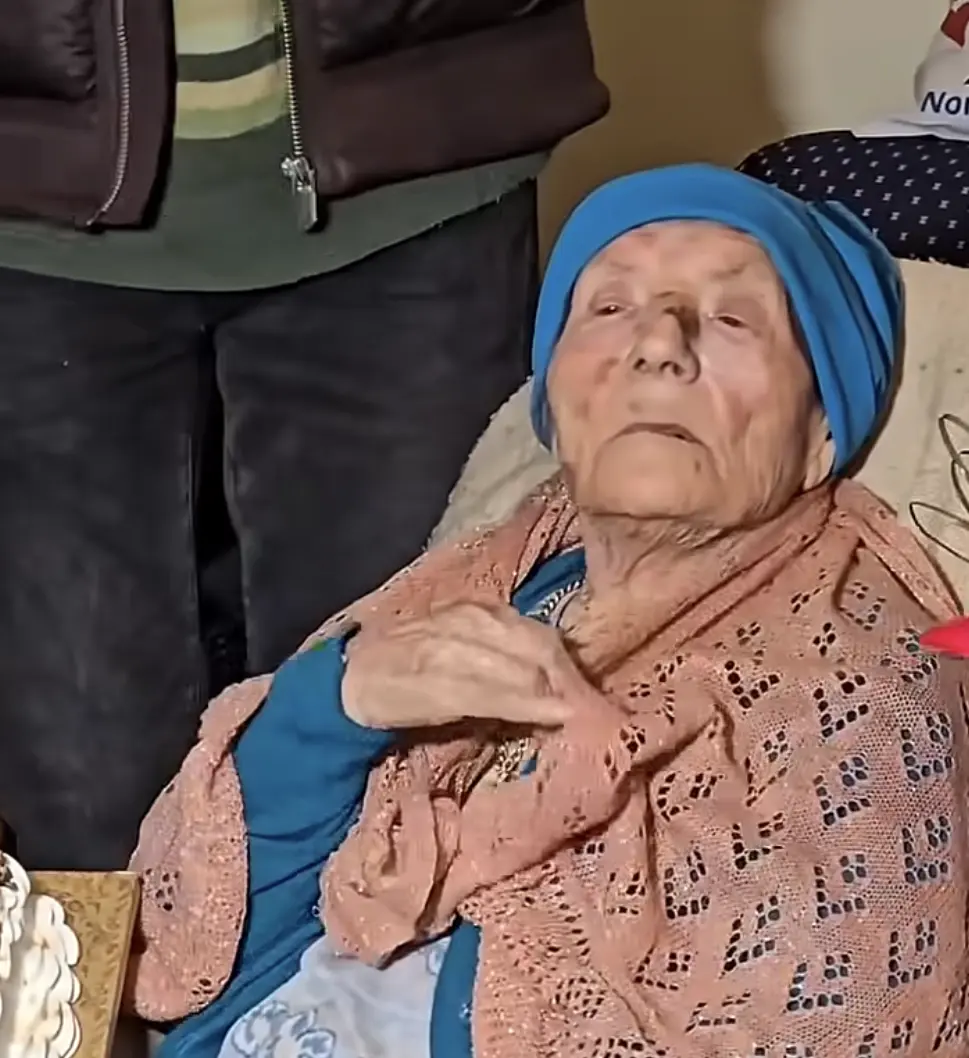
Lucia Laura Sangenito, an Italian woman known to her fellow townspeople as “Grandma Laurina,” celebrated her 116th birthday on November 22 in the town of Storno, near Avellino. She is the third-oldest verified living person in the world, after Ethel Catherham of the United Kingdom (117 years old) and Naomi Whitehead of the United States (116 years old), according to Focus.
During her lifetime, Sangenito has lived through two world wars, Italy’s transition from a monarchy to a republic, and the 1980 Irpinia earthquake. The centenarian’s milestone was celebrated by her family, the community, and the entire region.
The residents of Storno consider Laurina a symbol of their town. Storno Mayor Di Leo congratulated her on social media.
“116 years is not just a number. It is a vast legacy of memories, experiences, and a life well-lived. It is more than a century of history, intertwined with the history of our country and the history of Storno,” Di Leo wrote.
The mayor also highlighted the birthday celebrant’s modesty, wisdom, and willingness to help others. In his view, a community that knows its roots and listens to its elders can look to the future without losing its identity.
Italy’s Oldest Woman
Sangenito was born in Storno on November 22, 1910. In 1946, she voted for the republic in the institutional referendum. She was widowed around 2010, and at age 107, she underwent surgery for a fracture resulting from a household accident, according to the Gerontology Research Group.
Her age was officially confirmed in 2023. Sangenito became Italy’s oldest living person on December 24, 2024, following the death of 114-year-old Claudia Baccarini. She is currently the second-oldest person in Europe and the fourth Italian woman to reach the age of 116. The centenarian lives with her daughter Maria, and even at age 115, she was still able to get around with a walker.
What Scientists Know About Centenarians
Swiss researchers from the SWISS100 project analyzed more than 700 proteins in blood plasma. In people aged 100–105, the levels of 37 of these proteins were similar to those of 30–60-year-olds and differed significantly from the profile of people aged 80–90. These proteins are associated with the regulation of inflammation, metabolism, and protection against oxidative stress.
Swedish studies involving more than 170,000 and 274,000 people showed that centenarians get sick less often and develop health problems more slowly over the course of their lives. By age 85, only 4% of those who later lived to be 100 had suffered a stroke, whereas among people who lived to be 90–99, the figure was about 10%, according to The Conversation.