
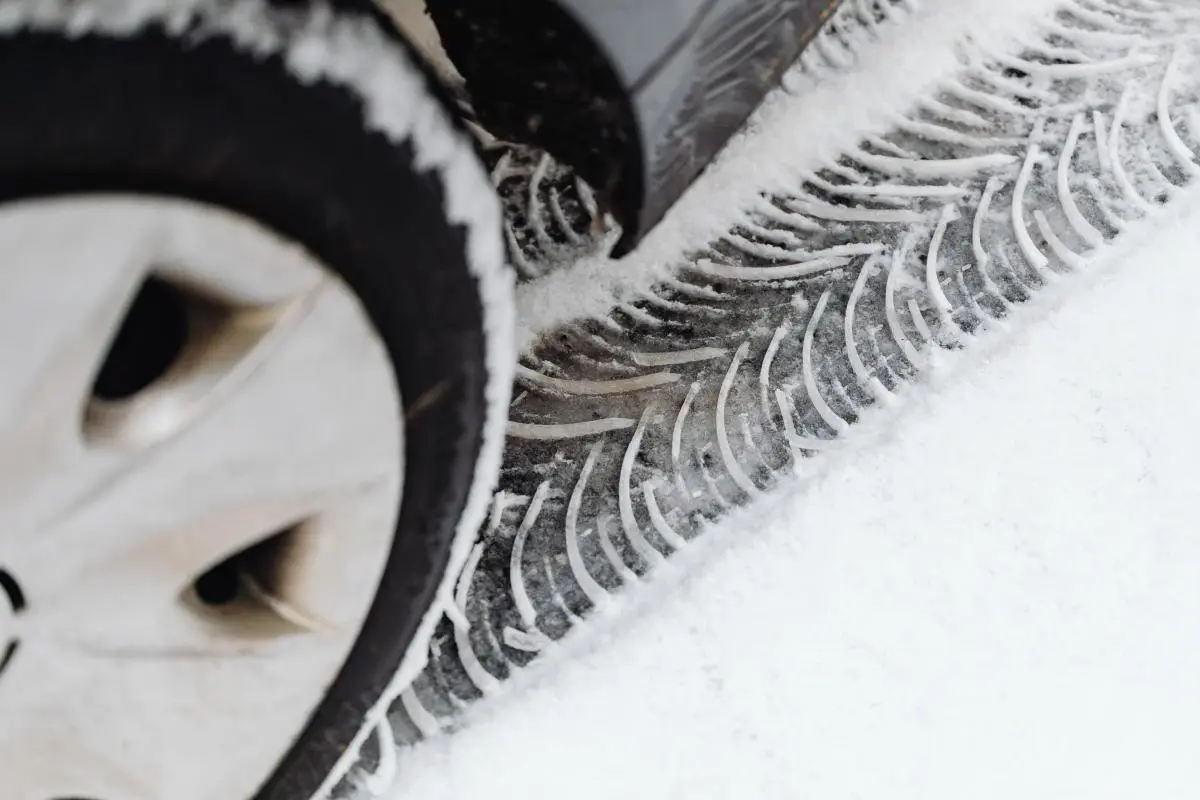
All-season tires marked M+S, M.S., or M&S are legally permitted on snowy and icy roads in Romania; however, compliance with legal requirements does not guarantee the same level of safety as specialized winter tires. The Romanian Automotive Registry (RAR) reminds drivers of this. Tests conducted by the German automobile club ADAC in 2026 showed that some all-season models received penalty points for long braking distances and insufficient traction when driving on snow, according to Alba24.
In Romania, there is no mandatory deadline for switching to winter tires: appropriate tires are required when the road is covered with snow, ice, or black ice. The commonly cited +7 °C threshold is merely a guideline from manufacturers, not a legal requirement, so drivers will not be fined for using summer tires in cold but dry weather.
Experts advise looking for the 3PMSF symbol—a mountain with three peaks and a snowflake. Unlike the M+S symbol, it certifies that the tire has passed standardized tests on snow. The ADAC also recommends avoiding driving on snow and slush if the tread depth is less than approximately 4 mm, although the legal minimum is 1.6 mm.
A snowflake on the sidewall doesn’t automatically make a tire a winter tire
A comparative test by the American retailer Tire Rack confirms these caveats: the 3PMSF symbol does not turn an all-season tire into a winter tire. On a Toyota Camry sedan, the Bridgestone Blizzak WS90 winter tire came to a stop on snow from a speed of 40 km/h in approximately 17.5 m and accelerated to 19 km/h faster than any other tire in the test. In the overall snow performance rankings, winter tires scored 8.25–8.33 out of 10, the all-season Michelin CrossClimate2 scored 6.25, and the standard all-season Michelin Defender2 scored only 4.67, according to Tire Rack.
Why Tires Make All the Difference
Consumer Reports reached similar conclusions. In tests on an ice rink at speeds of about 16 km/h, a car on winter tires stopped an average of 1.8 m sooner—roughly half a car length. The reason lies in the rubber compound, which remains soft in the cold, while the rubber in all-season tires hardens like a hockey puck, reports The Globe and Mail.
“An all-season tire is sort of like a Swiss Army knife among tires: it’s good at many things, but not particularly skilled at anything specific. In winter, it won’t perform as well,” notes Ryan Pszczolkowski, tire program manager at Consumer Reports.
The expert warns that the letters “M+S” appear on most all-season tires and describe only the tread pattern. “That doesn’t necessarily mean it’s good on snow—or in mud, for that matter,” Pszczolkowski emphasizes.
According to him, even inexpensive winter tires generally provide better traction on snow and ice than most all-season models.