
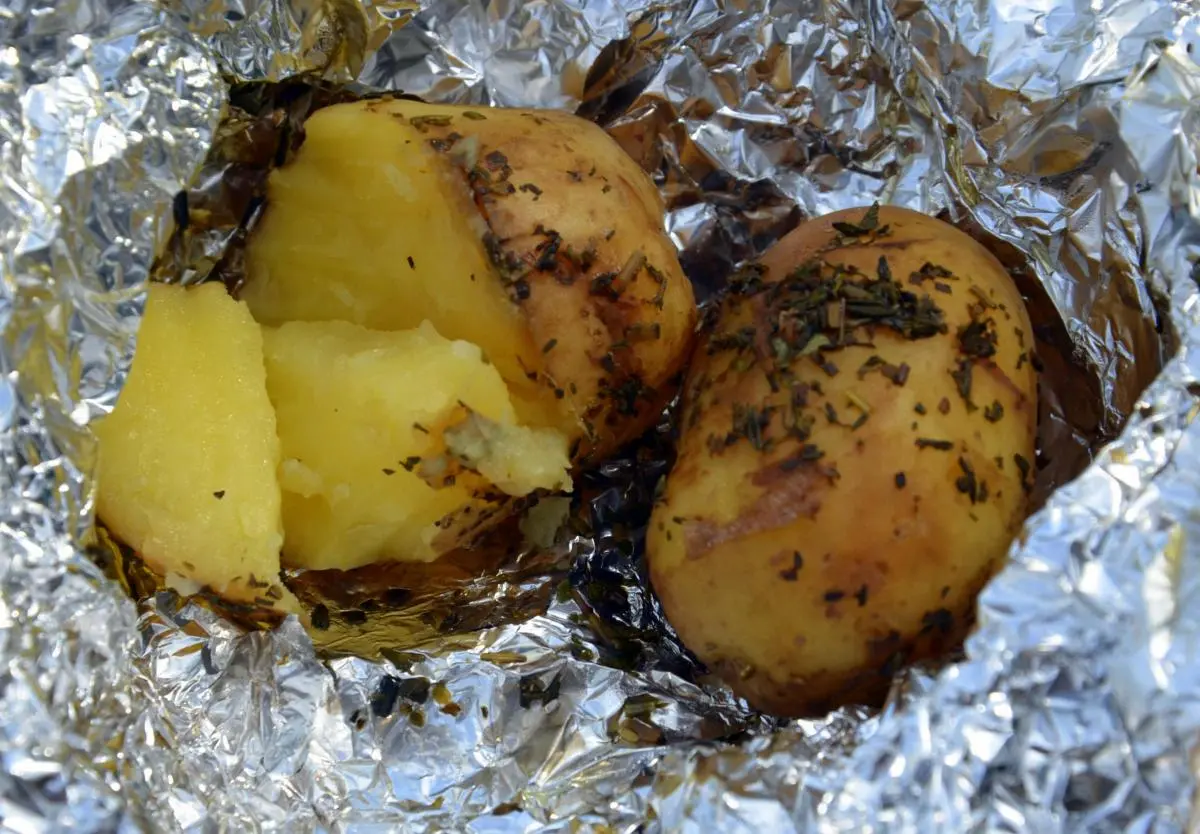
Wrapping potatoes in foil before baking changes the texture of the skin: the foil traps the steam released by the potato during cooking, so the skin retains more moisture and remains soft. These explanations come from the Idaho Potato Commission, according to El Cronista.
The choice of method depends on the desired result. Chefs Giada De Laurentiis and Emeril Lagasse use foil in their stuffed potato recipes. De Laurentiis pricks the skin with a fork, wraps each potato, and bakes it for about an hour at a temperature of around 175 °C, then makes a slit on top for the filling. Lagasse uses foil only during the first baking, until the potatoes can be easily pierced with a fork.
Jim Primo, chef at Halls Chophouse, notes that foil-wrapped potatoes turn out slightly moister than those baked uncovered. In contrast, Brian Mooney, chef at Tre Luna Bar & Kitchen, prefers to bake them uncovered to achieve a crispy skin.
Crispy Skin or a “Boiled” Taste
For a crispy crust, the Idaho Potato Commission recommends baking the potatoes uncovered so that steam can escape. Even more emphatic is Isaac Toups, chef and owner of the New Orleans restaurant Toups’ Meatery, who considers this technique one of the most common mistakes made by home cooks.
“I see a lot of people wrapping potatoes in foil, but that’s a big no-no, and it makes the skin get mushy!” Toups emphasized in a comment to TODAY.
According to him, the foil traps moisture and essentially steams the potatoes, giving them the taste and texture of boiled potatoes. Instead, the chef recommends rubbing the potatoes with olive oil, seasoning them with salt and pepper, piercing them with a fork, and baking them on an uncovered baking sheet for about an hour at 200 °C, flipping them halfway through. If the cooked potatoes need to be kept warm for more than 10 minutes before serving, aluminum foil will actually help prevent the skin from shriveling.
The Hidden Risk of Botulism
Potatoes baked in foil are among the new sources of foodborne botulism, along with minced garlic in oil and canned cheese sauce. Such potatoes should be kept at a temperature of 60 °C or higher until served, or refrigerated at 4 °C or lower with the foil loosened to allow air circulation, according to the U.S. Centers for Disease Control and Prevention (CDC).
The CDC warns that the toxin that causes botulism cannot be seen, smelled, or tasted, and even a small amount in food can be fatal.