
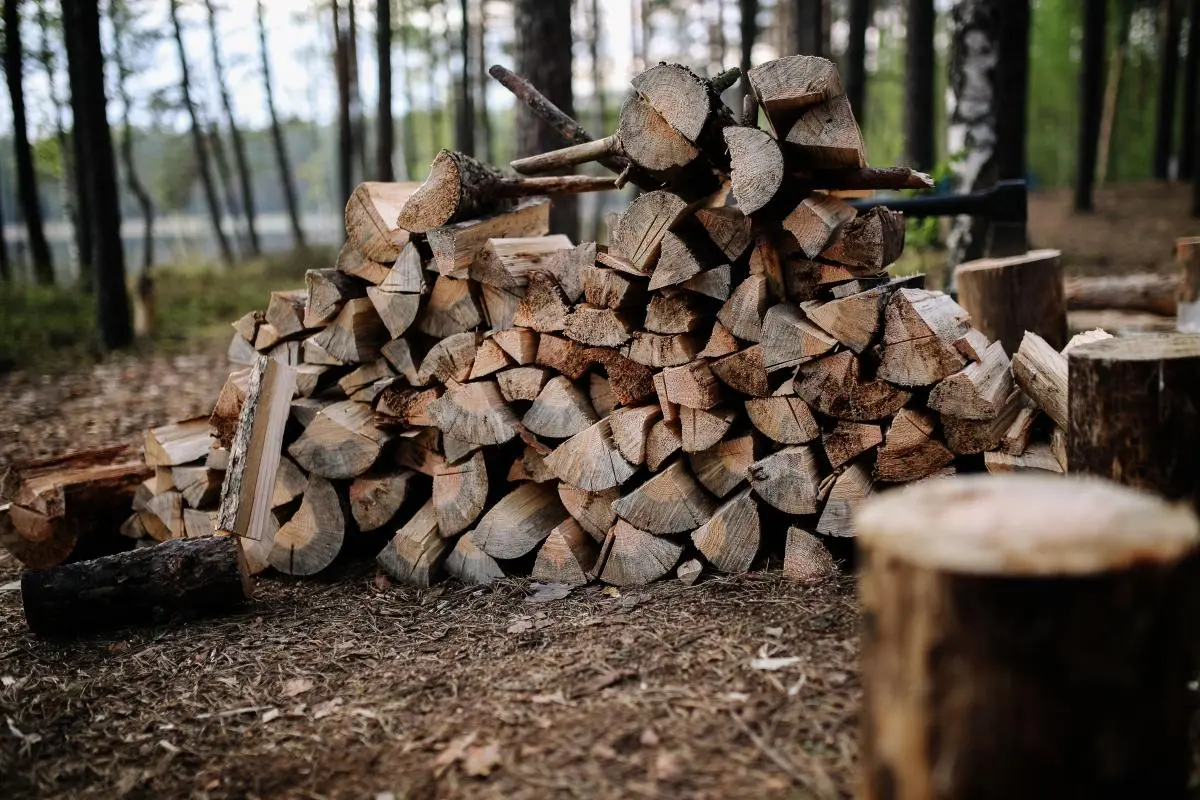
Hungarian peasants once followed strict rules regarding firewood: they would cut down fir trees for construction only during the waning moon, let the wood dry for at least one summer, and never throw trash into the fire so as not to cause a fire. Agrofórum highlights these forgotten folk practices. The publication notes that in recent years, wood heating has become popular again, partly out of necessity due to economic circumstances.
Hardwood species are best suited for heating. Well-prepared birch, beech, Austrian oak, or common oak can rival even brown coal in terms of calorific value. It is crucial that the wood be air-dried to a moisture content of about 10 percent: at that point, its heat output can be twice as high as that of freshly cut wood.
Firewood was mainly harvested in the winter, when there was no field work to be done. Nothing was wasted: thin twigs were used for weaving baskets and fences, and logs that could still be split with an axe were thrown into the stove. They were also used to pay helpers.
A Fire That Might Complain to the Neighbors
In Hungarian folk tradition, the fire and the stove were considered “sacred,” as they provided warmth and ready-to-eat food. According to the eight-volume *Hungarian Ethnography*, one was not allowed to comb one’s hair or place a brooding hen on the stove, because “God’s body is baking” in the oven.
It was forbidden to throw trash into the fire or spit into it. It was believed that otherwise the fire would go and complain to the neighbors about the offense and bring a fire upon the community. At the same time, “pure and holy” food that could not be thrown away—such as Easter eggs or leftover Christmas dishes—was permitted to be burned. If the fire “growled,” people would sprinkle flour or salt into it to prevent quarrels in the home.
What Modern Experts Say
The practice of letting firewood age for a long time aligns with foresters’ recommendations. According to the British organization Forest Research, freshly cut wood contains about 50–60% moisture, whereas wood-burning stoves and boilers require 15–25%. It is recommended to stack logs on pallets, off the ground, in the sun, and with the ends facing the wind. The most important factor here is good air circulation.
Michael Jacobson, a forest resources specialist at Pennsylvania State University, also advises choosing dense hardwood species and not rushing to light fresh wood.
“Firewood burns best when its moisture content is 20% or less, and this requires a year or more of drying under a roof and off the ground,” Jacobson emphasizes. According to him, burning wood that hasn’t been properly seasoned wastes energy because the moisture must evaporate before combustion can begin, and split firewood dries faster, according to Penn State University.