
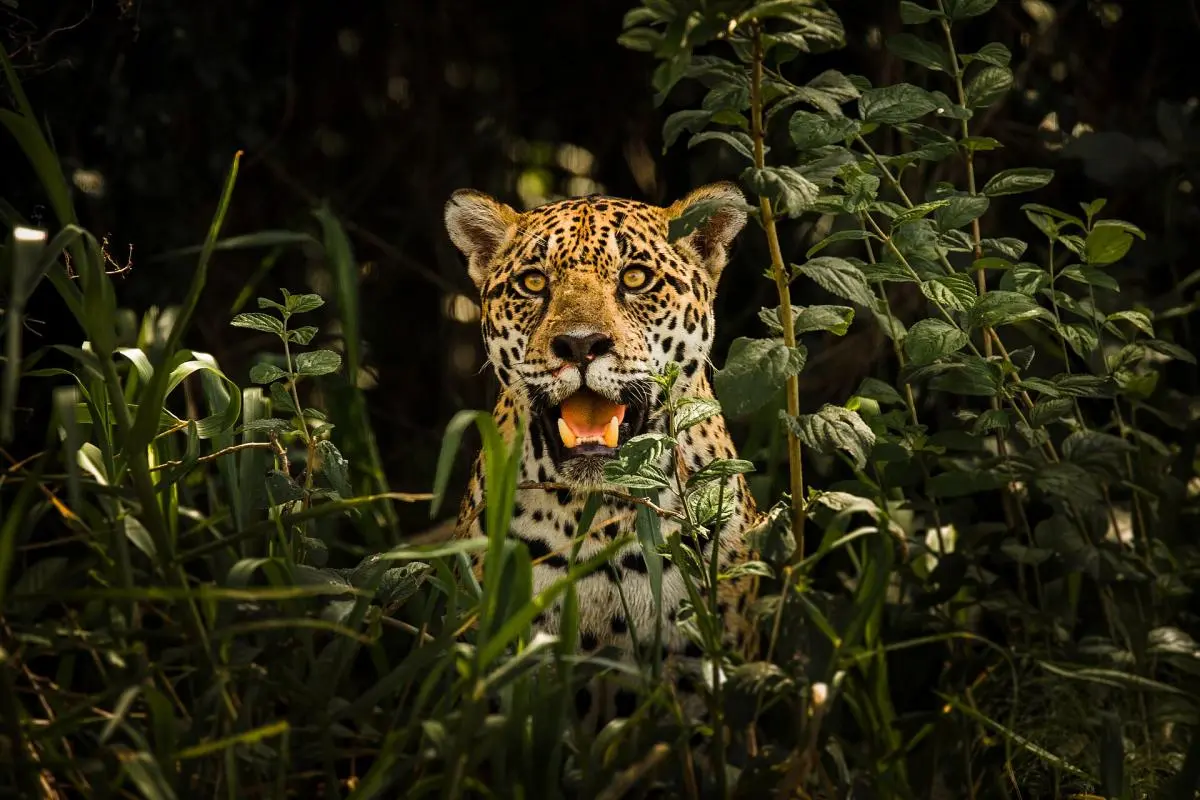
Jatay, a black jaguar, traveled 2,100 km across Brazil to meet a male selected for her by a government species conservation program at a nature reserve in the Cerrado savannas. The genetic diversity of the Atlantic Forest jaguars—which are on the brink of extinction—depends on the offspring of this pair, according to Xataka.
The nearly 90-kilogram melanistic female set out on November 10 from the Bela Vista Biological Refuge, which is maintained by the company Itaipu Binacional in Foz do Iguaçu (state of Paraná). The two-day road trip ended at the Pirasema Nature Reserve in the municipality of Almas (state of Tocantins). The relocation was approved by the Chico Mendes Institute for Biodiversity Conservation (ICMBio) to produce offspring and expand the species’ gene pool, according to Itaipu Binacional.
Jatay holds special significance for the sanctuary’s staff.
“There, she will meet another animal, specially selected by ICMBio to form a pair. Jataí is very special to us because she was born along with her sister Arapua on International Jaguar Day (November 29), and this species is a symbol of Brazil’s biodiversity,” said Itaipu veterinarian Pedro Teles.
The Cost of Isolation
In the Green Corridor on the border between Argentina and Brazil, there are now between 25 and 53 adult jaguars, which is about 7.5 times fewer than in the early 1990s. The animals are scattered across isolated forest fragments, increasing the risk of inbreeding. That is why experts are planning breeding pairs. Zhatai’s parents, Nena and Valente, were rescued from the wild, and their genes are particularly valuable for the captive breeding population.
In total, it is estimated that fewer than 300 jaguars live in the Atlantic Forest. The region has lost about 85% of their habitat, and poachers are decimating the deer and peccaries that the predators feed on, according to Mongabay.
“If you have a population of 20 individuals, its long-term viability is practically zero if we do nothing,” warns Adriano Chiarello, a biologist at the University of São Paulo.
A New Home in the Cerrado
The 5,000-hectare Pirasema Nature Reserve was established in 2016. It is the first legal wildlife breeding center in Tocantins and one of the country’s leading jaguar breeding centers. During the breeding season, Jatai will live in an enclosure covering more than 600 square meters amid natural vegetation, with round-the-clock access to water from a waterfall.
“She will become part of our group of jaguars that help preserve biodiversity through captive breeding. Jatai is very important to us because of the genetic diversity she represents,” emphasizes reserve administrator Felix Scorsolini.
At the same time, the birth of the cubs does not eliminate the main threats to the species, which include habitat loss and hunting. Releasing animals raised in captivity back into the wild also carries risks.