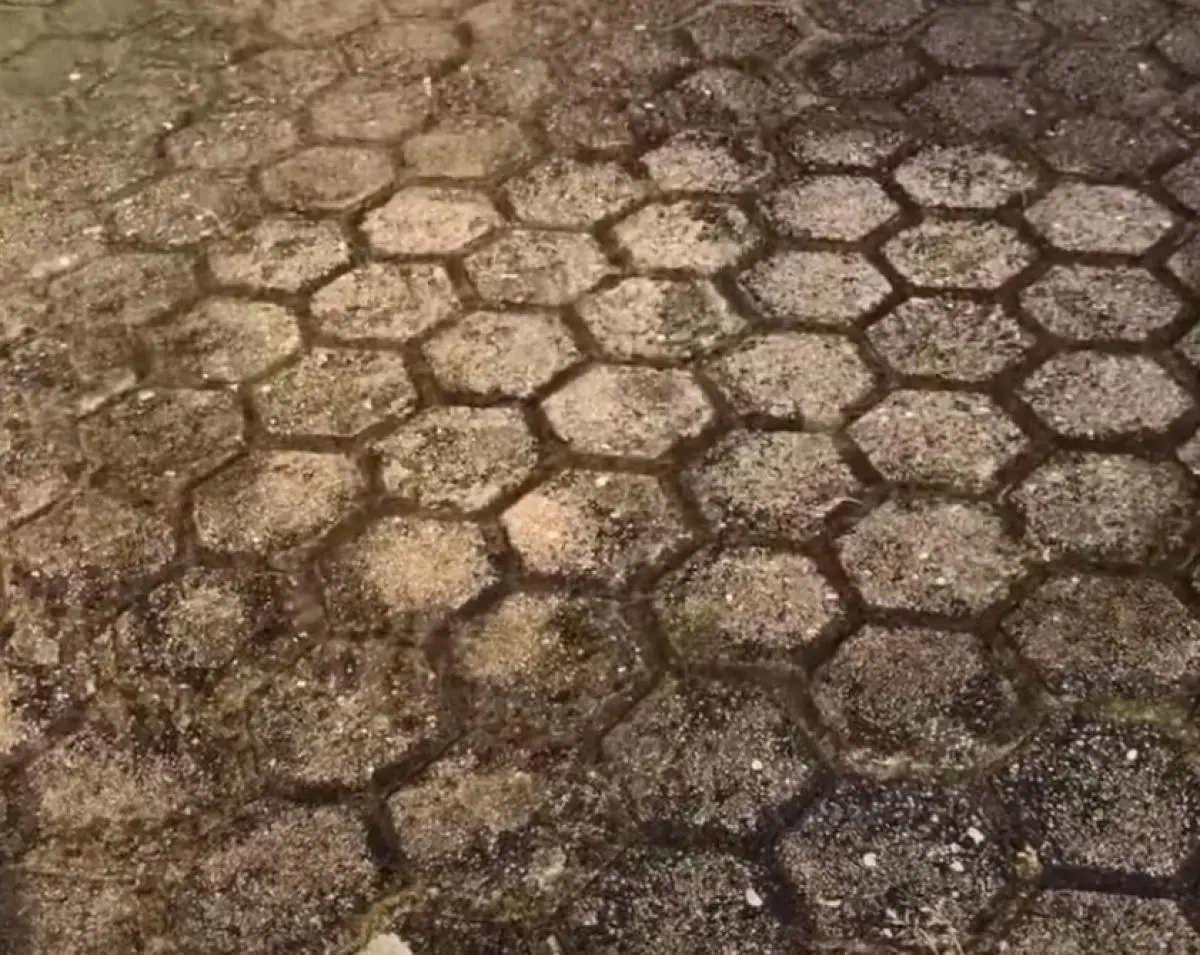
For about 240 years, Japanese gardeners have been removing moss from paths and stone slabs without using harsh chemicals or power tools. Their tool of choice is plain white vinegar. According to the publication, this method—which first appeared in 1782 in the gardens of the Ryoan-ji Temple in Kyoto—is now being increasingly adopted by French garden owners, reports Mon jardin ma maison.
The effectiveness of the remedy stems from its chemical composition. Mei Chen, a botanist at the University of Tokyo, offers this explanation.
“Acetic acid alters the pH of unwanted moss without harming nearby plants, provided it is applied carefully,” Chen notes.
The process is simple: apply a 5% solution to the moss-covered areas, wait an hour, and then gently scrub with a brush. According to the researcher, the results are evident not only in the garden’s appearance.
“I’ve seen gardens that have been transformed not only aesthetically but also ecologically thanks to this method. It is the gentleness of this approach that gives it a truly Japanese spirit,” emphasizes Mei Chen.
Ryoan-ji Temple itself was once a country villa belonging to an aristocrat and became a Zen Buddhist temple in 1450. Its garden, created around the middle of the 15th century, is known worldwide as an example of kare-sansui, or “dry landscape”: 15 stones in five groups on white gravel, according to the Kyoto City Administration’s website.
Vinegar Has a Downside
Tom, a British master gardener who advises readers, acknowledges that white vinegar is indeed toxic to moss. When sprayed on hard surfaces and walls, it kills moss in about 10 minutes. However, the expert warns that the solution can seep into the soil and harm plants the owner wishes to preserve, according to The Telegraph.
“If you use vinegar, try not to apply it where other plants are growing, or remove the moss mechanically after 10 minutes so that the vinegar doesn’t seep into the soil,” the gardener advises.
He also notes that moss is resistant to many store-bought products, so he considers a hand rake one of the simplest ways to combat it. In flower beds, moss can be worked into the soil or covered with compost mulch, and regular pruning of plants allows more light and air to reach the area.
Bamboo Rakes Instead of Harsh Methods
The Japanese don’t limit themselves to vinegar either. Using bamboo rakes or thin, often handmade tools, they selectively and carefully aerate the soil only where necessary. This approach improves drainage, does not disrupt the soil’s microbial balance, and preserves the moss colonies that adorn the garden.