
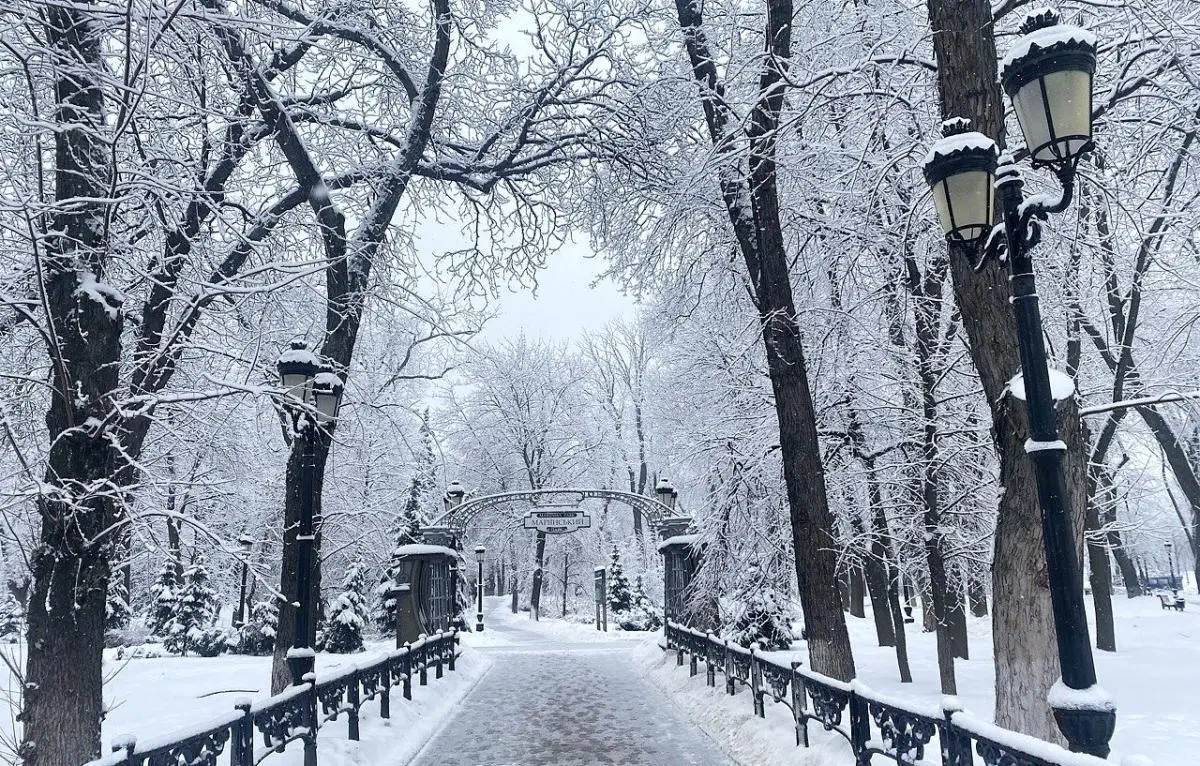
Snowfalls that blanketed much of France have forced gardeners to find ways to protect trees from heavy, wet snow. A French publication recommends the Japanese technique of yukitsuri: a conical structure made of poles and ropes that evenly distributes the weight of the snow across the branches. This was reported by Mon jardin ma maison.
According to the publication, snowfall is expected to intensify over the weekend, and several departments, including Île-de-France, are preparing for road disruptions. Wet snow is particularly dangerous for gardens: it puts heavy pressure on fragile branches and young shoots.
A sturdy central pole is installed next to the tree, and ropes are stretched fan-shaped from its top to the main branches. Fragile branches can be additionally propped up at the base. An alternative is a wigwam-shaped structure made of branches or wood. Young shoots can simply be covered with a snow net. The materials should not damage the bark, and the fastenings should be checked regularly.
Ropes That Have Become a Symbol of Winter
The name “yukitsuri” translates to “snow suspension.” Such structures are most commonly found in the prefectures of Toyama, Ishikawa, and Fukui along the Sea of Japan coast, where the snow is so wet that even a thin layer can break branches. The most famous place where yukitsuri are installed is Kenrokuen Garden in Kanazawa. The oldest known record, dating from the late Edo period, instructs Kenrokuen’s gardeners to “tie up the trees to prevent damage from snow.” Garden director Toshiaki Yonebayashi said that every winter his team ties up about 300 trees. Experienced craftsmen can set up the structure over a medium-sized tree in about two hours, according to The Japan Times.
The most complex structure in Kenroku-en is installed over the 10-meter-tall Karasaki pine: about 800 ropes hang in cones from five poles. The yukitsuri are taken down in mid-March, and for local residents, this is considered a sign of spring’s arrival, notes Japan’s government portal.
Scientific Confirmation of Effectiveness
Korean researchers have also confirmed that snow poses the greatest threat to tree canopies. They simulated the load on a thousand-year-old zelkova tree, which is designated as a natural monument. The greatest stresses and branch deflections occurred under the weight of snow. On a supported branch, the stress decreased by 84–92%, and the displacement by 30–42%. In contrast, no reduction was observed on an unsupported branch, according to the study published in BioResources.