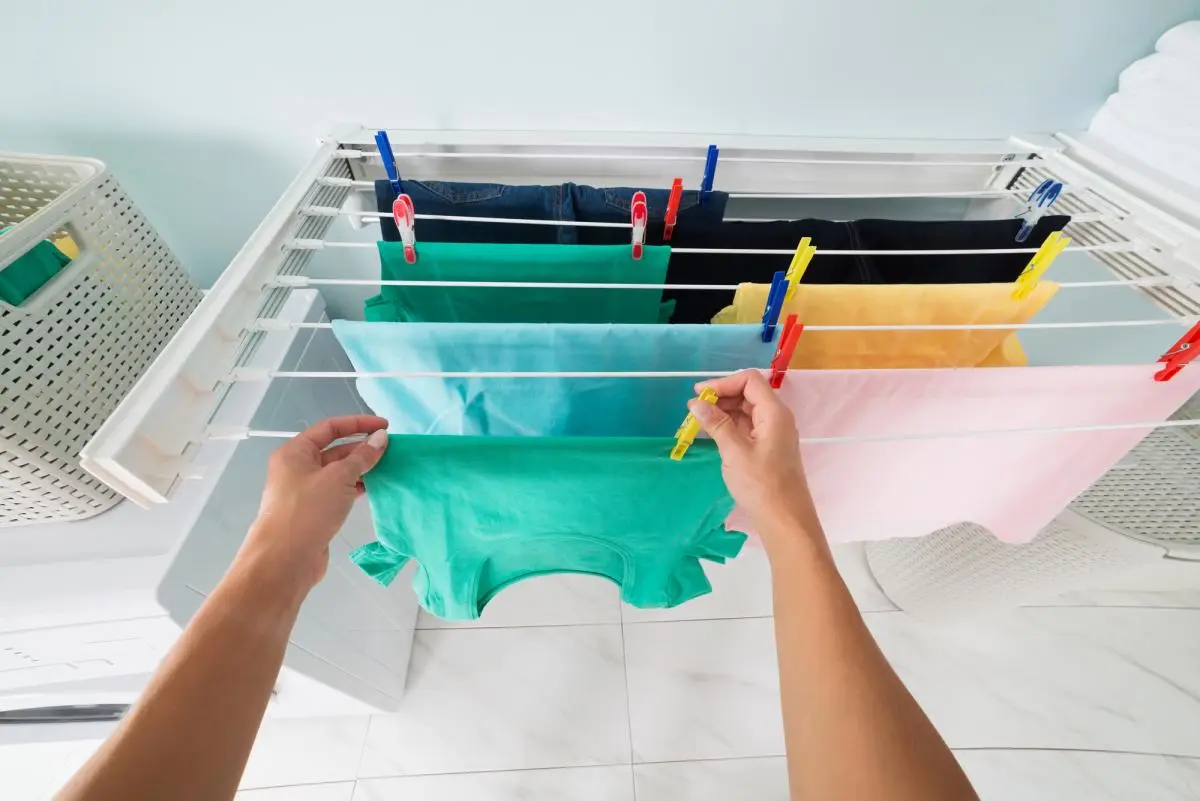
The fastest and safest way to dry laundry at home in the winter is in a single, closed room with ventilation—and ideally, in a bathroom with an exhaust fan. This is the conclusion reached by all the energy and home appliance experts surveyed, according to Express.
A single load of wet laundry releases about two liters of water into the air. This moisture settles on cold windows, walls, and furniture, causing condensation and mold. At the same time, a dryer drives up utility bills: the cap on electricity rates in the UK is 26.32 pence per kWh, and it will rise to 32.69 pence starting in January 2027.
George Penny, a residential energy efficiency expert at The Solar Co, identified the best place to dry clothes.
“The bathroom is usually the best choice, provided it has an exhaust fan or a window that opens. It’s already designed to handle moisture, and the fan can draw the damp air outside before it spreads throughout the rest of the house,” Penny noted.
He considers a utility room with an exhaust fan or an empty bedroom with the door closed and a window slightly open to be alternative options. Living rooms and bedrooms where people spend time are not suitable for this purpose. Chris Michael, co-founder of Meaco, advises drying clothes in a small, closed room if you have a dehumidifier. In this case, the windows should also be closed. Without a dehumidifier, it’s better to choose a warm room with good ventilation.
Radiators aren’t helpful
Drying speed depends largely on preparation. Experts recommend selecting the highest spin speed allowed for the fabric. Penny suggests wrapping heavy sweaters and towels in a dry bath towel and pressing them firmly to remove excess water.
Separately, Michael warns against a common mistake in winter.
“Heating alone doesn’t remove moisture released into the air. Combine heat with ventilation or a dehumidifier. If you simply raise the thermostat, that moisture will remain in your home,” Michael emphasized.
Michael and Salah San from Beko advise against hanging wet clothes on radiators. Penny suggests instead heating the area near the dryer locally while ventilating the room, rather than heating the entire house.
Home maintenance expert Andy Simmins from MyBuilder.com explains that moisture evaporates too quickly on radiators, causing a sharp increase in indoor humidity. In addition, this drying method poses a fire hazard. He also advises opening windows wide for at least five minutes every day, regardless of the weather—as is customary in Germany, according to National World.
How Long Does It Take?
According to Penny’s estimate, in a well-ventilated room with a fan and moderate heat, light shirts and T-shirts dry in four to six hours, while jeans and towels take 12 to 24 hours. In Meaco’s tests, 13 T-shirts dried in less than two hours using a dehumidifier and fan. To prevent mold, Michael recommends maintaining relative humidity at around 55% during the colder months.
This is a problem for a significant portion of Europeans. According to a study published on ScienceDirect, between 1 and 3 kg of water is released into the air when drying a single load of laundry. Only about half of European households have dryers, and in winter, more than 60% of laundry in Poland, Hungary, the Czech Republic, and Finland is dried indoors.