
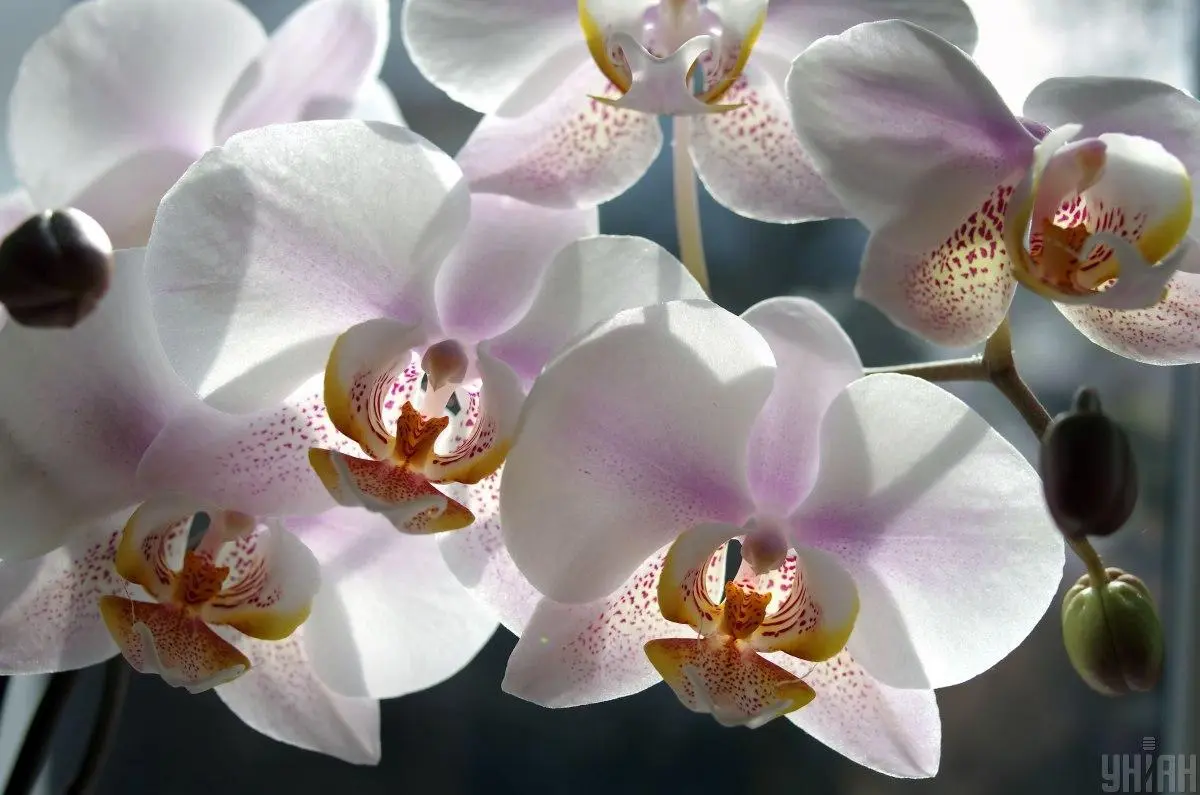
You don’t have to buy special fertilizers to feed orchids: you can make your own at-home fertilizer using what you have on hand. However, according to Gazeta Lubuska, even fertilizer won’t help the plant bloom profusely if you don’t follow the basic care guidelines.
Orchids are considered undemanding, but they need a bright spot out of direct sunlight. The growing medium should be light and well-draining. Most often, bark, coconut fiber, or a mixture with expanded clay is used for this purpose.
The best way to water the plant is by immersion: submerge the pot in warm water for 10–15 minutes, then wait for the excess moisture to drain off. In the summer, repeat this procedure every 7–10 days; in the winter, once every two weeks is sufficient. The main rule is not to overwater the plant, but also not to neglect it for too long.
Fertilizer Won’t Force It to Bloom
The timing of fertilization matters. Renata Gossen, a consultant at Just Add Ice Orchids, advises applying fertilizer during the vegetative phase, when the orchid is growing leaves and roots and forming buds. During full bloom, you can skip fertilizing, writes Martha Stewart.
Many buyers hope that the right fertilizer will speed up the appearance of flowers, but the expert dispels these expectations.
“No fertilizer can trigger orchid blooming, no matter what it says on the bottle,” Gossen emphasizes.
According to her, most tropical orchids bloom in response to temperature changes. For Phalaenopsis, the trigger is a nighttime temperature drop of about 3–6 °C, so in winter, the pot should be placed on a windowsill. Gossen also warns that over-fertilizing causes salt buildup and root burn. To avoid this, alternate watering with fertilizer with watering with plain water.
Foliar Feeding
Researchers at Padjadjaran University in Indonesia found that, as an epiphyte, Phalaenopsis absorbs nutrients poorly through its roots and obtains them primarily through its leaves. During a greenhouse experiment conducted from June through December 2022, the plants were sprayed with a foliar fertilizer high in nitrogen. Two conditions yielded the best results: at 60% shading and a concentration of 2 g per liter, leaf area and root length increased; at 70% shading and a concentration of 4 g per liter, leaf area, root number, and chlorophyll content all increased. The study’s authors caution that an excess of fertilizer is harmful to orchids, while a deficiency inhibits their growth, according to an article on SciELO.