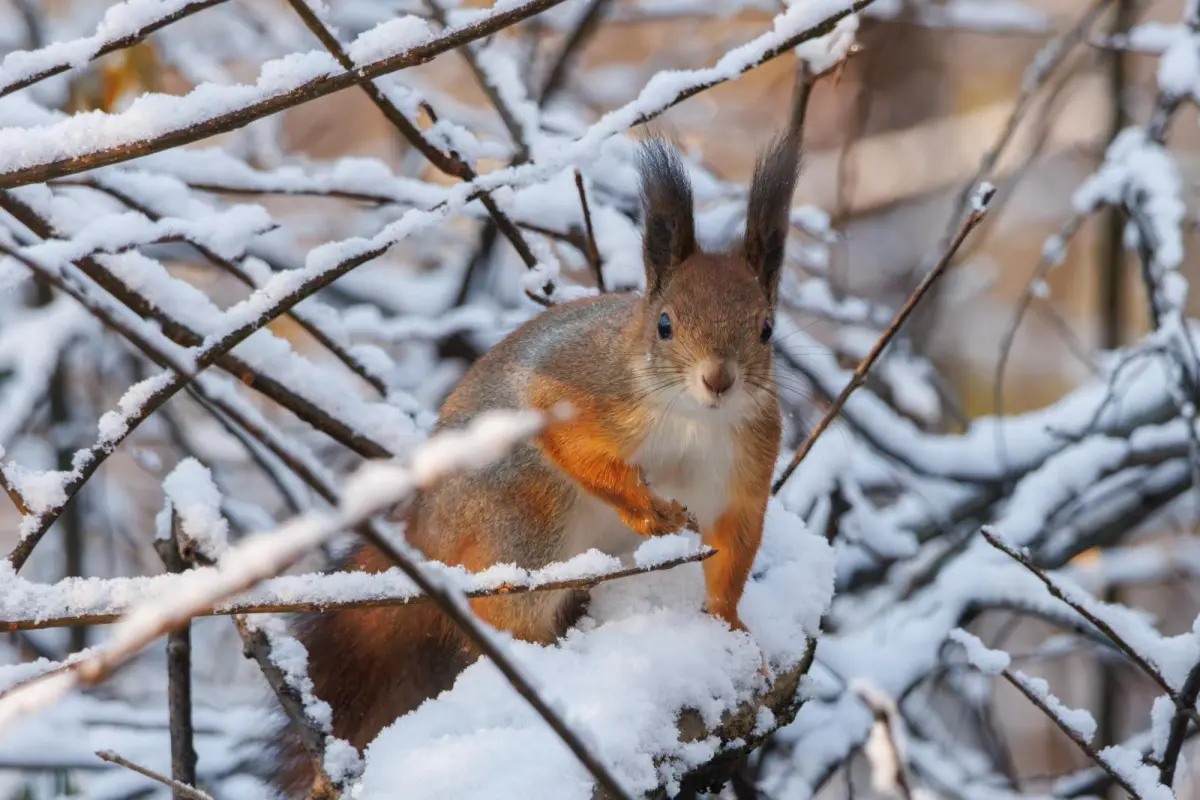
Squirrels do not hibernate. In cold weather, they spend the night in the same nests they use in the summer, and when natural shelters are scarce, they move into attics, chimneys, or sheds. To prevent the animals from taking up residence in your home, experts advise sealing off all entry points in advance, according to Martha Stewart.
According to David Mizeevski, a naturalist with the National Wildlife Federation, tree squirrels sleep among branches or in tree hollows. Their nests, called dreys, are woven from leaves and twigs and lined with moss, shredded bark, or fur. Chipmunks, groundhogs, and ground squirrels spend the winter in underground burrows.
Seasonal changes in their bodies and group behavior help these animals survive the cold. Before winter, they store fat and become fluffier.
“As mammals, squirrels are covered in fur, which helps protect their bodies from the cold; ground-dwelling species escape the frost by hibernating underground, while tree squirrels huddle closely together in nests lined with dry leaves to share body heat,” notes Mizeevski.
Eastern gray squirrels do indeed sometimes share nests for warmth. According to researcher Lucia Jacobs, nestmates sometimes include unrelated individuals, so scientists still need to figure out how the animals choose their companions. Squirrels also use their fluffy tails to keep warm in the nest, reports KQED.
A dangerous crack the size of a coin
Dag Ellie, a former licensed human-wildlife conflict resolution agent in Maine, advises checking the roofline, soffits, and vents and sealing any gaps with sturdy mesh rather than plastic or caulk. Tree branches should be trimmed to at least 3.7 meters away from the house, as red or gray squirrels can jump 1.8–3 meters.
“Once on the roof, a squirrel will scout out and use any opening the size of a half-dollar coin—for storing food, nesting, or as a temporary shelter from predators or bad weather,” warns Ellie.
The longer the animals stay in such places, the more actively they gnaw their way through to create a wider passage, damaging wooden structures and electrical wiring. Nests in the chimney pose a fire hazard, so the expert recommends installing a protective steel mesh over it and plugging small cracks with steel wool. Bird feeders should be placed 4.5–6 meters away from the house, and trash cans and pet food should be securely covered.
If squirrels have already taken up residence inside, Ellie advises contacting your local wildlife agency, as setting traps is regulated by law in many states. Before sealing off occupied nests, it’s a good idea to consult a biologist, since squirrels breed several times a year.
How to Help Squirrels Survive the Winter
Mizeevski suggests not raking up all the leaves in the fall—which squirrels use to insulate their nests—and installing a wooden house high up on a tree trunk as an alternative to an attic. Experts advise feeding the animals unsalted nuts in their shells, acorns, or sunflower seeds away from the house, placing a shallow bowl of fresh water, and avoiding the use of poisons and harsh chemicals on the property.