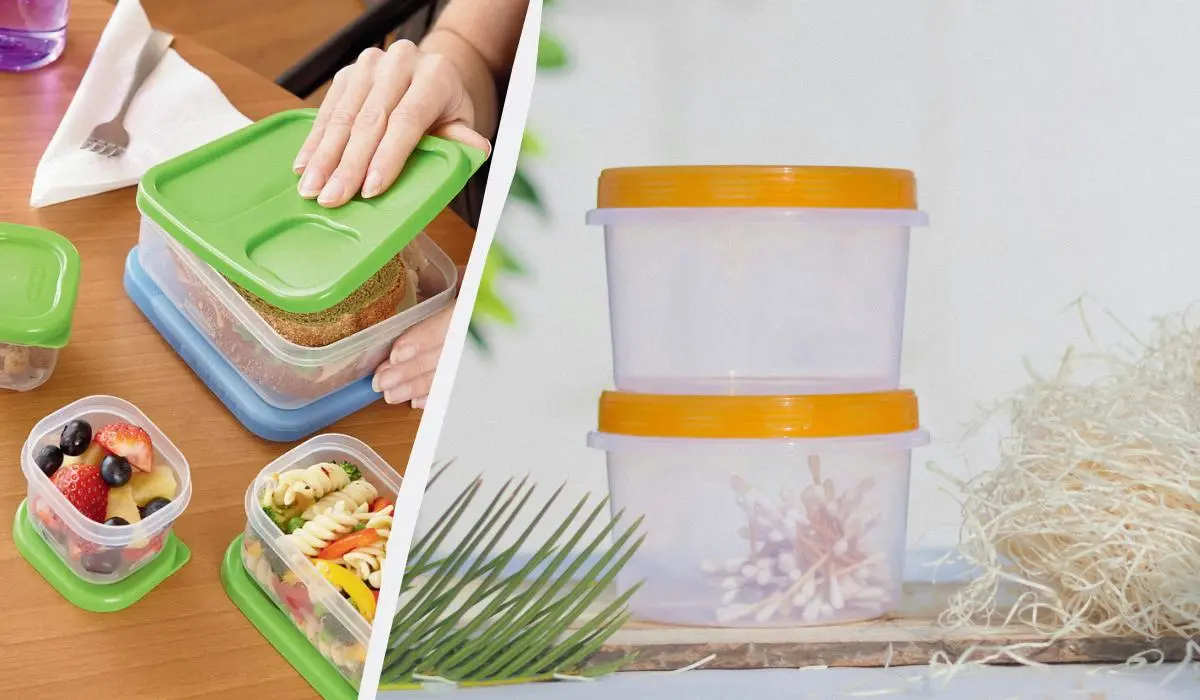
Food safety experts recommend replacing plastic food storage containers with heat-resistant glass, canning jars, and ceramic containers. According to Martha Stewart, plastic breaks down over time due to heat, wear and tear, and certain foods, and chemicals can leach into food.
Experts do not consider plastic containers dangerous in and of themselves: in the U.S., they are regulated by the Food and Drug Administration (FDA) and the Department of Agriculture (USDA). The risks arise from improper use.
“Probably the greatest risk associated with plastic containers arises when people use them in ways not intended by the manufacturer. Such creative uses and reuse of containers can lead to increased migration of toxins, bacterial growth, and deterioration of food quality,” — emphasizes Jared Gibbard-Swanson, director of the food safety program at Oregon State University.
Stephanie McCurdy of Purdue Extension draws attention to disposable takeout containers: they are designed for short-term use, not for reheating or repeated washing. Fatty or acidic foods also gradually break down the plastic, and heating such containers can increase the risk of bisphenol A (BPA) leaching into the food.
Glass, Jars, and Ceramics
Heat-resistant glass is the experts’ top choice: it’s safe for both reheating and freezing food without the risk of chemical contamination. Glass doesn’t absorb odors, doesn’t stain from food, and is easy to clean. Canning jars are suitable for a wide range of temperatures, including the freezer, and are also affordable. Ceramics do not release chemicals and retain heat well, but they are fragile and not suitable for very high temperatures.
When choosing an alternative, it’s recommended to look for non-porous materials that are easy to clean, airtight lids, and shallow containers for hot dishes: food cools and reheats more quickly and evenly in them.
Millions of Particles in Three Minutes
Research also confirms the risks of heating plastic. Scientists at the University of Nebraska–Lincoln found that reheating food in a microwave causes the greatest release of micro- and nanoplastics into food. Some containers released up to 4.22 million microplastic particles and 2.11 billion nanoplastic particles per square centimeter of surface area in just three minutes. Millions and billions of particles also leached into food during storage in the refrigerator or at room temperature for more than six months, according to an article in the journal *Environmental Science & Technology*.
Cassandra Rauert, a researcher at the University of Queensland who studies the effects of micro- and nanoplastics on humans, also believes that glass is the better choice for the microwave. According to her, the health effects of microplastics have not yet been thoroughly studied, although they are linked to inflammatory processes, particularly in the stomach lining, ABC News reports.
“The research we’re conducting here in the lab has shown that when you heat food in plastic containers, they leach plastic into the food inside. When I reheat something, I try to do it in glass rather than plastic,” Rauert notes.