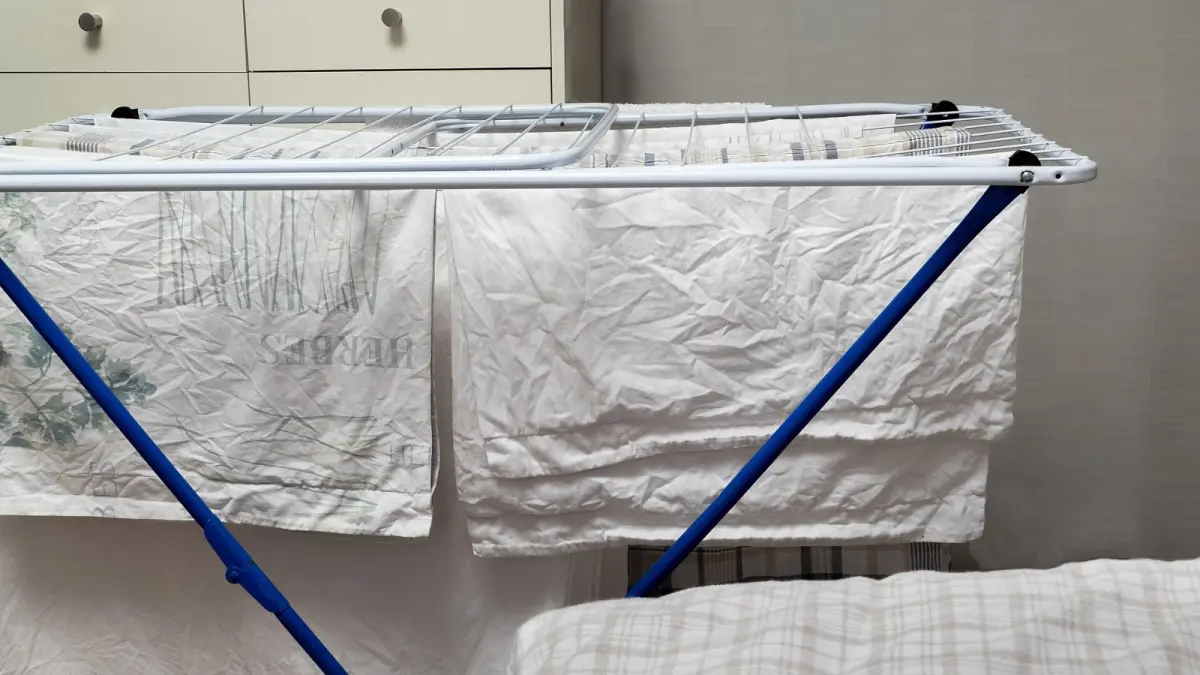
Drying laundry in an apartment during the cold season increases humidity and contributes to the formation of condensation and mold, especially in poorly ventilated rooms. This risk can be significantly reduced by following a few simple steps: choosing the right room, avoiding radiators, and watching for signs of dampness, according to PRO TV.
It’s best to set up a drying rack in a room that can be ventilated regularly or where there is ventilation. The bathroom is also a good option: the door is closed, and the window is left slightly open for a short time, so moisture doesn’t spread to the rest of the apartment. Don’t hang clothes directly on the radiator, as this prevents heat from circulating throughout the room, and the evaporated water ends up in the air anyway. A folding drying rack placed where air can circulate freely among the clothes works better.
Intensive spinning on a cycle suited to the fabric also helps. The less water remains in the clothes after washing, the faster they dry and the less moisture enters the room. Clothes should not be hung right up against each other. Those who regularly dry laundry at home should consider purchasing a dehumidifier sized appropriately for the room’s square footage.
Wipe away any droplets on the windows and windowsills with a dry cloth. You should also check the corners of rooms, exterior walls, and the spaces behind furniture where air circulation is minimal. If mold spots and a musty odor appear regularly, the cause may lie in the home’s ventilation, heating, or insulation. In that case, simply moving the drying rack or cleaning the spots won’t be enough.
The Dangers of Dampness in the Home
Doctors have long warned about the health risks of this practice. According to experts at the National Aspergillosis Center in Manchester, clothes left on dryers or hot radiators can increase indoor humidity by up to 30%. This is an ideal environment for mold spores, particularly the fungus Aspergillus fumigatus, which can cause potentially fatal lung infections. The warning came after the number of patients who had inhaled these spores began to rise, according to the University of Manchester.
The center’s director, Professor of Infectious Diseases David Denning, highlights the scale of this phenomenon and the amount of liquid released into the air during each wash cycle.
“It’s estimated that as many as 87 percent of us dry our clothes indoors during the winter. A single load of wet laundry contains nearly two liters of water, which is released into the room,” Denning notes.
Most people are immune to the fungus or have a healthy enough immune system to fight off the infection. In people with asthma, it causes coughing and wheezing. Those at greatest risk are people with weakened immune systems: cancer patients undergoing chemotherapy, people with AIDS, and those with autoimmune diseases. They may develop pulmonary aspergillosis, which causes irreversible—and sometimes fatal—damage to the lungs and sinuses.
Among the center’s patients was 43-year-old Craig Meiter from Bolton. For years, he had been drying his laundry in his bedroom. After contracting tuberculosis in 1997, his lungs weakened, and the effects of his childhood asthma worsened. A doctor diagnosed him with chronic pulmonary aspergillosis. Meater noticed that his coughing fits and night sweats worsened when laundry was drying on the radiator in his bedroom. Since he gave up this habit a year ago, his condition has improved significantly: he no longer takes medication, goes for checkups once every four months, and is riding his bike again.
For those who are unsure where to set up a drying area, the professor has a clear recommendation.
“My advice: if in doubt, dry your wet laundry outdoors, in a dryer, or in a well-ventilated room away from bedrooms and the living room. It’s better to be safe than sorry,” advises Denning.
The World Health Organization’s (WHO) recommendations on indoor air quality provide a more comprehensive evidence base. Microbial contamination in homes is caused by hundreds of species of bacteria and fungi that thrive in conditions of sufficient humidity. The most common health effects include respiratory symptoms, allergies, asthma, and immune system dysfunction. The WHO states that the primary means of protection is to prevent prolonged dampness and the growth of microorganisms on surfaces and within building structures, according to the WHO.
How to Keep Humidity Under Control
The cold season exacerbates the problem due to the physical properties of air: the lower the temperature, the less moisture it can hold. Therefore, in winter, moisture condenses on cold surfaces—such as the inside of windows—and creates conditions conducive to biological contaminants. In addition to drying clothes, long showers, boiling water, steaming food, and houseplants all increase humidity. Well-insulated, energy-efficient homes trap even more moisture, according to the U.S. Environmental Protection Agency (EPA).
The agency recommends installing exhaust fans in the bathroom and kitchen that vent air outside rather than into the attic, as well as venting the dryer exhaust outside. If condensation appears on the windows, turn off any humidifiers. Dehumidifiers and air conditioners help, but they need to be maintained so they don’t become sources of microorganisms themselves.
Cold surfaces where moisture condenses should be warmed up: insulate the walls and install additional interior window frames. Leaving doors open between rooms and to storage areas, as well as using fans and moving furniture away from corners, improves air and heat circulation.
It is recommended to monitor humidity levels with a hygrometer. The American Society of Heating, Refrigerating and Air-Conditioning Engineers (ASHRAE) recommends maximum indoor relative humidity based on outdoor temperature: 35% at approximately −7 °C, 30% at −12 °C, 25% at −18 °C, 20% at −23 °C, and just 15% at −29 °C.