
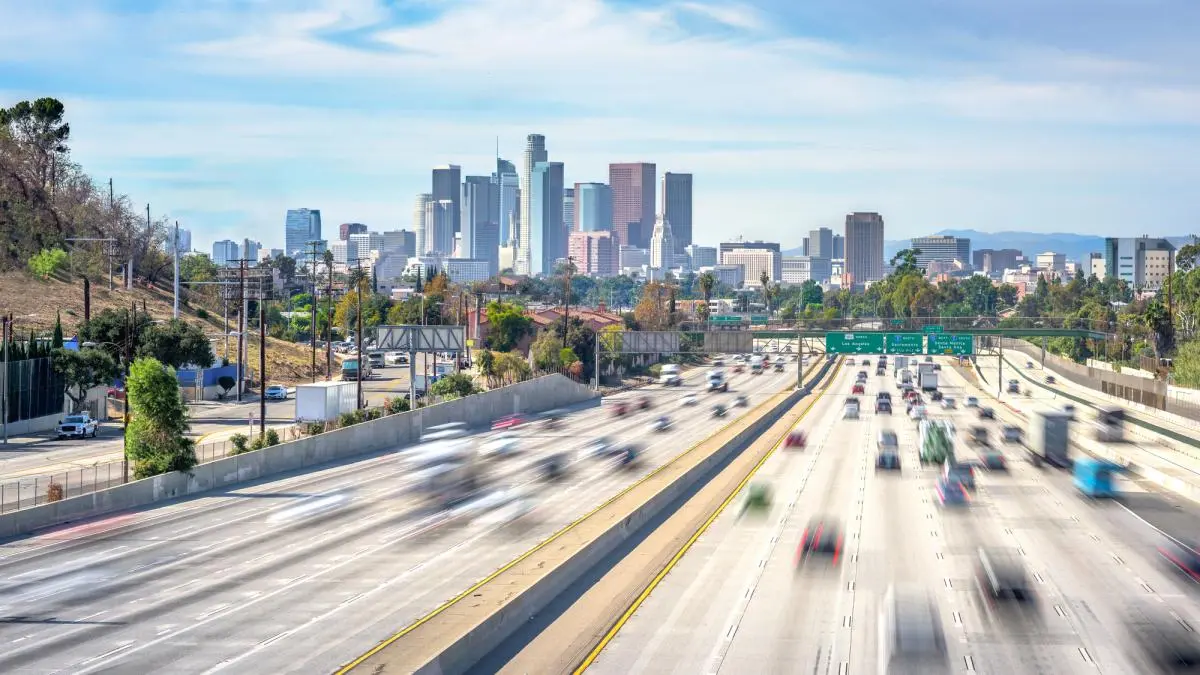
Scientists flooded Los Santos, a fictional city from GTA 5 modeled after Los Angeles, to vividly demonstrate the consequences of rising sea levels. According to the most pessimistic scenario, by the year 2500, sea levels will rise by 8.22 meters, and 6.5% of the city’s territory will be submerged, reports HVG.
The study by Paul Norenberg, a researcher at the University of Potsdam, and Yug Lantuy, a scientist at the Alfred Wegener Institute, was published in the scientific journal Geoscience Communication. It attracted attention amid the release of GTA 6, which Rockstar Games launched on November 19, 13 years after the fifth installment.
Using 3D terrain modeling, the researchers recreated the landscape of Los Santos. They then simulated two climate scenarios from the Intergovernmental Panel on Climate Change (IPCC) along the coast: RCP 2.6, which calls for a significant reduction in emissions, and RCP 8.5, which assumes very high emission levels.
Under the milder scenario, a storm surge by the year 2300 would flood 2.2% of the city’s area, but critical infrastructure would remain unaffected. Under the RCP 8.5 scenario, 5.1% of the territory will be submerged, and the total sea level rise will reach 5.18 meters. By the year 2500, the port, sewer systems, and coastal energy facilities will be at risk.
The authors emphasize that these are estimates, not exact figures. At the same time, Los Santos is so similar to Los Angeles that the results can be considered scientifically relevant.
Familiar Streets Underwater
Floods were simulated for the years 2100, 2300, and 2500, both with and without storm surges. For the storm scenarios, the researchers added 62.6 inches (about 1.6 meters) of water. This is exactly the record-breaking calm-water level recorded by the tide gauge in Los Angeles. The virtual flood simulation turned out to be very close to the results of scientific assessments for the actual city, according to The Cool Down.
Yug Lantui is convinced that conventional scientific formats do a poor job of illustrating exactly what people stand to lose.
“Although climate change directly affects us as people, it is often difficult to convey the spatial reality of these consequences to a broad audience. Abstract numbers, maps, and model projections of sea-level rise in centimeters or meters rarely convey the human scale of a flooded area or a familiar landmark,” Lantuy noted.
Paul Norenberg sees video games as a tool that has been missing from science communication.
“When this familiar, personally explored virtual landscape changes, players can perceive the consequences of climate change on an emotional level. This can bridge the gap in a way that conventional visualizations—such as models or maps—struggle to achieve,” Norenberg emphasized.