
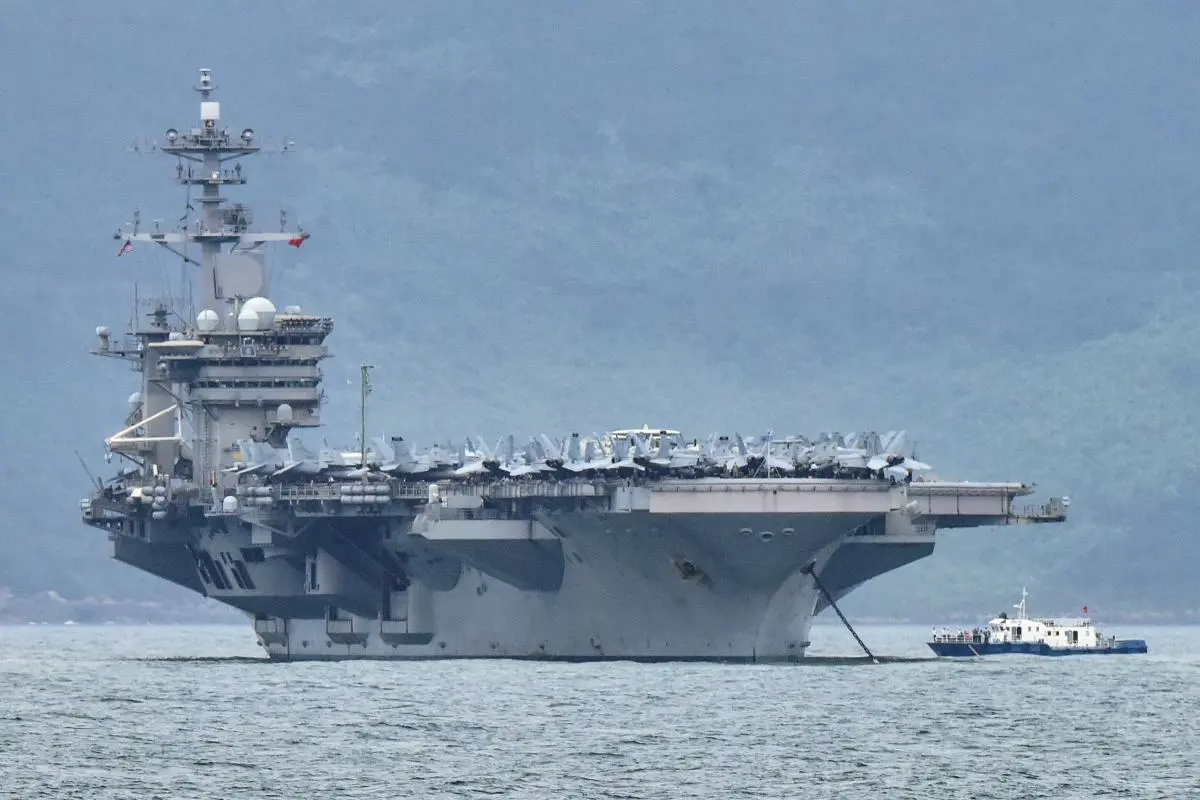
The former French aircraft carrier Foch, 265 meters long, which France sold to Brazil in 2000 for $12 million, has been lying at a depth of about 5,000 meters in the Atlantic Ocean for more than three years, along with tons of asbestos. The ship was never fully decontaminated, so on February 3, 2023, the Brazilian Navy (BN) sank it 350 km off the coast, according to Science et Vie.
The Foch served in the French Navy for 37 years and was replaced by the Charles de Gaulle in the late 1990s. Before the sale, the French side began removing hazardous materials but did not complete the work. Paints containing heavy metals, polychlorinated biphenyls (PCBs), and other toxic compounds remained in the ship’s structure.
Flying the Brazilian flag, the ship—renamed São Paulo—hardly ever went to sea: it was damaged by several fires, including a serious one in 2005, and lacked spare parts. It could not last more than three months without returning to the shipyard. Brazil abandoned plans to modernize the ship due to the cost; in 2017, the aircraft carrier was decommissioned from the fleet, and in 2018, it was dismantled.
The ship that no port would accept
In 2021, a Turkish company purchased the São Paulo for $1.9 million to scrap it in Alieze. In August 2022, the ship left Rio, but near Gibraltar, Ankara revoked its import permit. Civil society organizations also contested the list of hazardous substances on board. The aircraft carrier returned, but Brazil refused to allow it into port, and it remained at sea for months while its hull deteriorated.
The Brazilian government and the environmental agency Ibama attempted to stop the sinking, but a federal judge dismissed their lawsuit. Officially, there were 9.6 metric tons of asbestos and hundreds of metric tons of hazardous paints on board. Environmental activists considered these figures to be underestimated and warned of the presence of PCBs, cadmium, and mercury. The Basel Action Network called the sinking an “environmental disaster.”
“We proposed a solution, but there was no response”
The Foch/São Paulo Institute had been campaigning for years to turn the ship into a museum. Its president, Emerson Miura, stated that the military’s decision came as a surprise to the activists and was made in haste.
“According to the Navy, the ship’s hull was damaged, and it could have sunk at any moment. Before the sinking, we sent a letter to the Navy and the Ministry of the Environment. They did not respond. We proposed a reliable solution through an Arab company,” Miura told Naval News.
Brazilian journalist Jorge de Souza of UOL draws attention to the long-term risks to human health. He is convinced that dismantling the ship at a specialized shipyard would have been a much better option than the uncontrolled release of toxic materials into the water.
“What is most perplexing is that, in the case of the former Brazilian aircraft carrier, this was done even with full knowledge of what was on board: an unknown quantity of toxic materials, including tons of asbestos, a carcinogenic substance banned worldwide, and, most likely, also PCBs, a chemical compound that is even worse because it does not dissolve in water and enters the human body through food, such as fish,” de Souza emphasized.