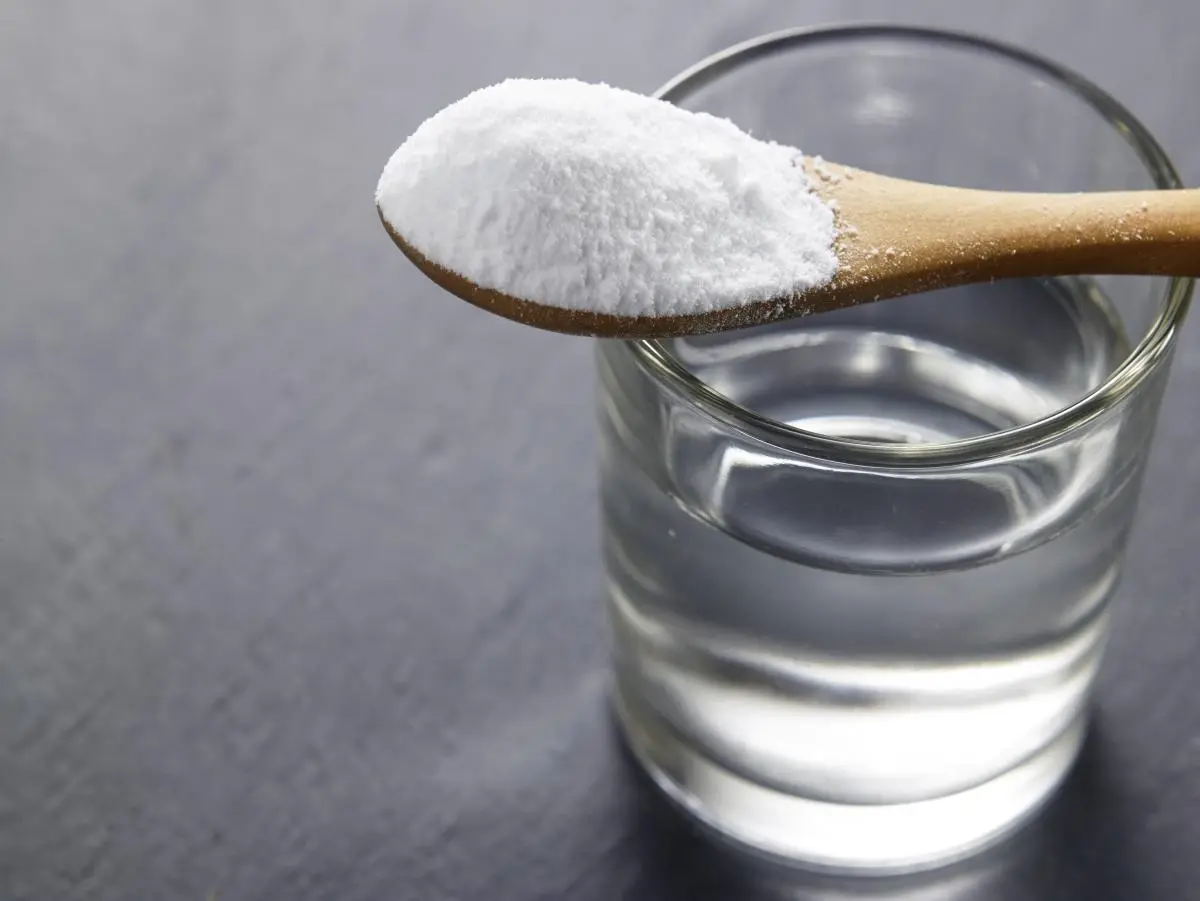
Baking soda can damage or even kill small weeds that have sprouted in cracks in walkways and sidewalks, but it is not a reliable or long-term solution. In addition, improper use can harm the surrounding soil, according to Southern Living.
The sodium in baking soda prevents the plant from absorbing water, causing the leaves and stems to dry out. This method works best on young weeds with shallow roots in narrow cracks. Larger plants may shed their leaves but survive underground and eventually sprout again.
To try this method, choose a dry day, as rain will wash the baking soda into the soil. Moisten the weeds slightly so the powder sticks better, and lightly sprinkle it on the leaves and stems, taking care not to let the baking soda fall onto the surrounding soil. Monitor the plants for wilting over the next few days, then pull them out along with as much of the root system as possible.
Why Baking Soda Isn’t a Panacea
It’s not recommended to reapply the treatment to regrown weeds: this causes sodium to accumulate in the soil, and the deep roots remain intact. Baking soda washed off the surface can harm neighboring plants and interfere with the germination of new ones. Moreover, it is not selective and affects grass and flowers just as much, so it is suitable only for occasional spot treatments away from lawns, flower beds, and trees.
Johannes Hock, president of Grass Pros, confirms that highly concentrated baking soda burns the surface of some weeds and is particularly effective against broadleaf plants that push through concrete or stone, according to Real Simple.
“It draws moisture out of plant tissues, and in some cases, that’s enough to make the weed turn brown and stop growing. But this only works when the weeds are exposed, small, and don’t have deep roots,” notes Hock.
According to the expert, baking soda doesn’t reach the root system, so the plant usually recovers, and at best, this is only a temporary solution.
What Works Better
As a more effective alternative without synthetic chemicals, Hock recommends spot-treating weeds with garden vinegar containing at least 20% acetic acid. This is not ordinary table vinegar: this concentrate is sold in garden stores, and it cannot be made at home.
“Because of its high acid content, you should always apply it while wearing gloves and safety goggles, and using a sprayer clearly labeled for weed control only. It can irritate the skin and damage neighboring plants, so spray only where there are weeds,” Hock emphasizes.
According to him, the best results can be achieved during the sunny and dry part of the day, when the solution dries quickly on the leaves and destroys the plant’s tissues.
For a longer-lasting effect, weeds should be pulled by hand, preferably after rain, when the soil is softer. Afterward, clean the cracks of dirt and fill them with a special sealant for concrete or asphalt, and fill the joints between the sidewalk tiles with polymer sand to make it harder for seeds to take root.