
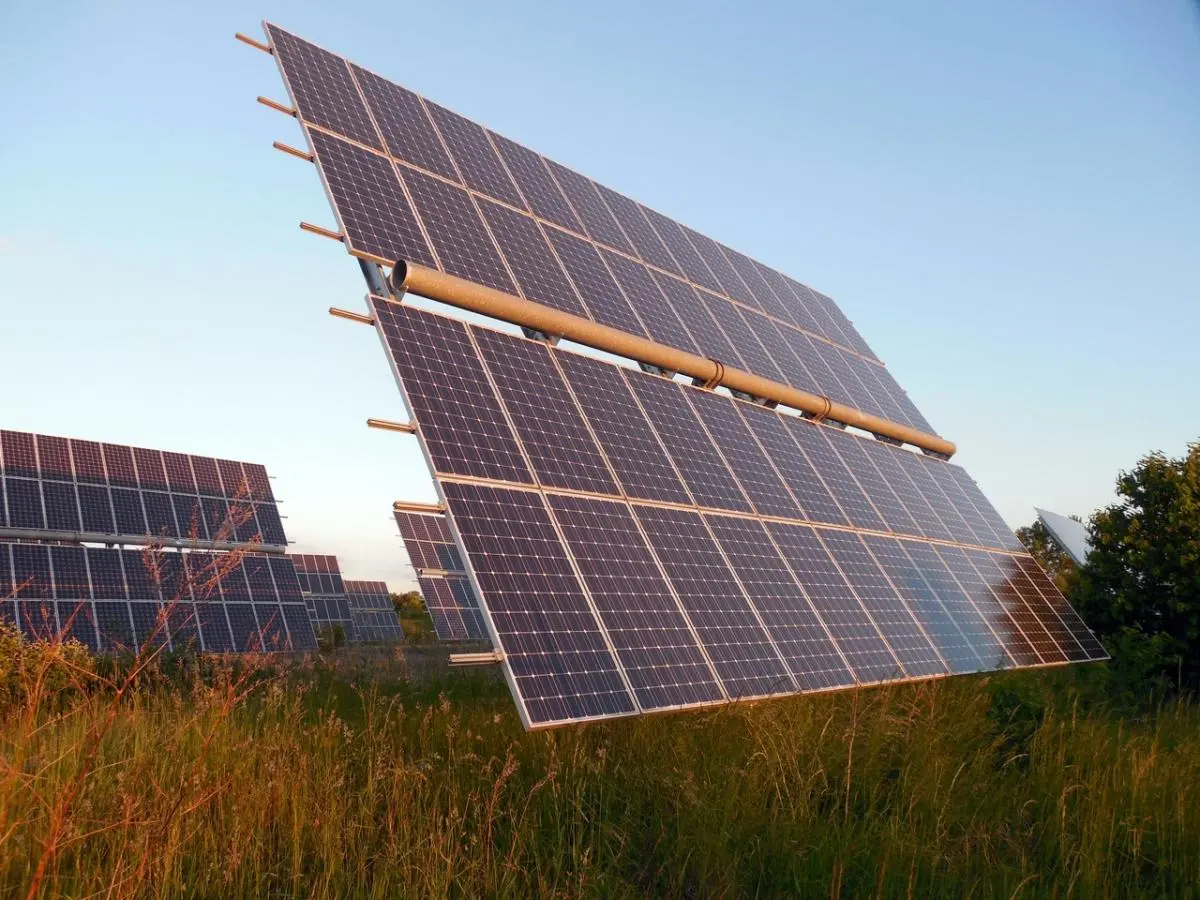
By the end of 2026, solar power plants will generate 10% of the world’s electricity and will officially surpass nuclear power. Demand for solar panels is rising amid the search for alternatives to oil, access to which has been complicated by the U.S. war with Iran, according to Futurism.
According to the British think tank Ember, solar generation barely surpassed nuclear generation for the first time in 2025. In the 12 months leading up to September 2026, solar power had already generated 13% more electricity. Since 2000, nuclear power generation has remained virtually unchanged, while solar power generation has increased approximately 2,700-fold, the BBC reports.
Yan Rosenov, a professor of energy and climate policy at the University of Oxford, notes that this outcome was not anticipated: authoritative forecasts, particularly those from the International Energy Agency, had underestimated this sector for years. According to him, they assumed linear growth and a slow decline in costs and were wrong on both counts.
“Solar energy is now the driving force behind the energy transition,” notes Rosenov.
A panel costs less than $100
Price has been the main driver of growth. The scale of Chinese production and excess capacity have driven the cost of modules down to a record low. Ember co-founder Dave Jones calls modern solar energy “outrageously cheap.”
“The panel itself is incredibly cheap. It costs well under $100… and will generate electricity for 30–40 years without any additional investment,” says Jones.
In 2025, solar power accounted for three-quarters of the increase in global electricity demand. In Pakistan, its share rose from less than 2% in 2019 to 24% today. In Africa, about 100,000 panels are installed every day, a trend fueled by rising diesel prices due to the wars in Ukraine and Iran.
The weak link: energy storage
Batteries are increasingly compensating for nighttime hours and cloudy weather. In California, during the first half of 2026, solar power plants, together with batteries, provided on average more than a quarter of evening peak consumption.
“Batteries have largely solved the daily problem of transferring midday sunlight to the evening,” Rosenov believes. At the same time, he acknowledges that long-term energy storage between seasons and during prolonged periods of cloud cover remains an unresolved problem.
This is precisely what proponents of nuclear power consider a key argument in its favor. Elmer Lewis, professor emeritus at Northwestern University, predicts that the share of nuclear generation in the U.S. power grid will grow, while the limitations of wind and solar power will become increasingly apparent as their share grows, according to Northwestern Engineering.
“The bigger challenge is the so-called ‘dark calm’: periods lasting days or even weeks when the sky is overcast and the wind is light,” Lewis warns. According to him, today’s large-scale energy storage systems are designed to operate for only a few hours.
Rosenov, however, believes that the development of solar energy is currently being held back not by the cost of panels, but by grid capacity, storage systems, and the pace of electrification.
“The main question is no longer whether solar energy will grow, but whether our power grids and institutions will be able to keep up with it,” the scientist emphasizes.