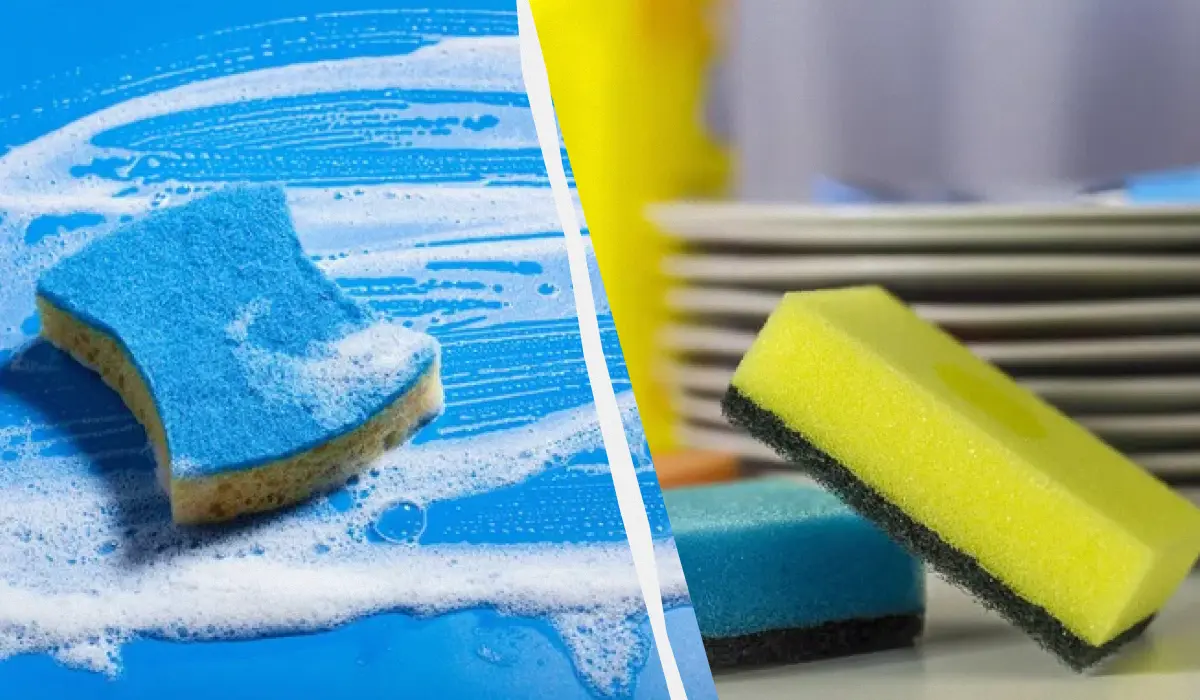
The dirtiest thing in an apartment isn't the toilet, but the kitchen sponge. During a study by NSF International, an American organization focused on public health, samples were taken from 30 household items in 22 households, and the toilet seat didn’t even make it into the top ten dirtiest items. Topping the list were the sponge and dishcloth: coliform bacteria were found in 77% of the samples, according to KertVár.
Second place went to the kitchen sink, where coliforms were found in 45% of cases. Third place went to toothbrush cups: coliform bacteria were found on 27% of them, staphylococci on 14%, and yeast and mold on 64%. Next on the list were pet bowls, coffee maker reservoirs, bathroom faucet handles, and stove knobs.
Coliform bacteria, which include Salmonella and E. coli, indicate possible fecal contamination. In addition to sponges and sinks, they were found on 32% of kitchen countertops and 18% of cutting boards. Bacteria thrive best in warm, moist environments. Smooth, cold surfaces—such as keys, money, keyboards, and video game controllers—have significantly fewer microbes, according to the NSF.
As Dense as in the Intestines
Microbiologists at the University of Furtwangen in Germany conducted a detailed analysis of 14 used kitchen sponges. The results astonished them.
“We found 362 different species of bacteria, and locally their density reached 45 billion per square centimeter. There is hardly any other environment on Earth with a similar bacterial density, except for the human gut,” said study lead author Markus Egert in a comment to NPR.
Wash or Throw Away
In sponges that owners washed regularly, the proportion of two dominant species—related to potentially pathogenic bacteria—was found to be higher. Therefore, the authors questioned the long-term effectiveness of such cleaning. They also noted that no single cleaning method reduces the bacterial count by more than about 60%, according to an article in *Scientific Reports*. German researchers recommend replacing sponges about once a week: no bacteria were detected in new, unopened sponges.
Jennifer Quinlan, a microbiologist at Drexel University, considers the conclusion that cleaning is harmful to be incorrect. According to her, there were only five “regularly cleaned” sponges in the sample, and the method used to clean them was described vaguely.
“We don’t want to make public health recommendations based on five sponges from Germany,” Quinlan emphasizes.
She advises replacing sponges every one to two weeks, avoiding their use with raw meat juices, and cleaning them every few days in the dishwasher with a drying cycle or by microwaving them on the “moist” setting for one minute. According to the U.S. Department of Agriculture, microwaving reduces the number of bacteria by about a million times.
“This doesn’t sterilize the sponge. But remember: the bacteria we want to eliminate are the ones that can make you sick,” the researcher emphasizes.