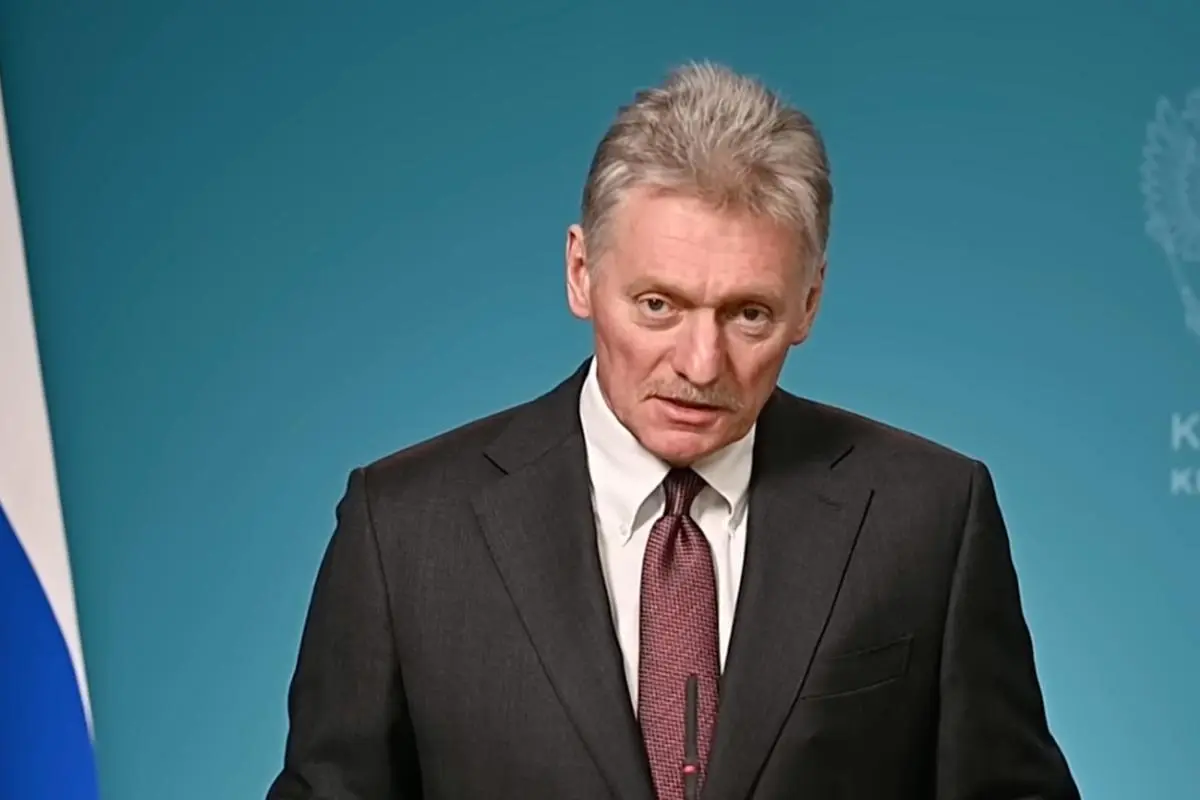
The Kremlin acknowledged that at a certain stage it will be impossible to discuss the security of Ukraine and Russia without Europe’s participation, but accused European countries of “indecisiveness” and “unwillingness” to negotiate. This was how Dmitry Peskov, spokesperson for Russian President Vladimir Putin, responded to U.S. President Donald Trump’s statement about a “large-scale agreement” that could affect all of Europe, according to TSN.
Peskov criticized the Europeans for still not having decided who should represent them in the negotiations. According to him, Russia has not received any ideas or concrete proposals from Europe regarding the future European security system.
“Major Deal” and Negotiations in Abu Dhabi
On Thursday, Trump met with Russian envoy Kirill Dmitriev in Washington, but did not disclose any details of their conversation. The U.S. president merely hinted that the agreements could encompass all of Europe. The Kremlin declined to comment in detail on Trump’s statement: “There are no details,” Peskov told reporters, according to ITV News.
“There will be a deal, it will be a big deal, and it will not only concern Ukraine,” Trump stated.
Jared Kushner, the U.S. president’s special representative, announced that the first trilateral talks between Ukraine, Russia, and the U.S. since February 2026 will take place next week in Abu Dhabi. If they yield results, Washington plans to expand the format to include European countries.
Kyiv Demands Clarity
Prior to this, two days of consultations were held in Brussels on post-war reconstruction, funding for 2027, and security guarantees for Ukraine. Representatives from the U.S., the U.K., France, Germany, the EU, the World Bank, and the investment firm BlackRock participated in the talks, according to Rustem Umerov, head of the Ukrainian delegation.
Volodymyr Zelenskyy emphasized on the 1+1 television channel that Ukraine needs not general promises, but a clear mechanism for allied action in the event of new aggression.
“It is important that this be clearly spelled out on paper. The issue is not about dozens of points, but simply about understanding the outcome: if Russia starts attacking again, what will happen? Who will do what, by what means, and when?” the president noted.
The European Commission, which hosted the first day of the Brussels meetings, urged not to expect a quick agreement. EC spokesperson Paula Pinho warned that the key obstacle is Moscow’s position.
“First and foremost, there needs to be a willingness on the part of the one who started the war, who committed the aggression. There is still a very long way to go here, because we have not seen any significant progress from that side,” Pinho said.
Security guarantees for Ukraine are to be provided by the so-called “coalition of the willing”—several dozen predominantly European countries, as well as Canada, Australia, and Japan. However, its members have not yet agreed on exactly what they are prepared to promise Kyiv. Of Zelenskyy’s three requests—military funding, a mutual defense mechanism similar to NATO, and sanctions against Russia—the first and third are already being implemented, while the second is unlikely to be approved, according to analysts at the Robert Schuman Foundation.