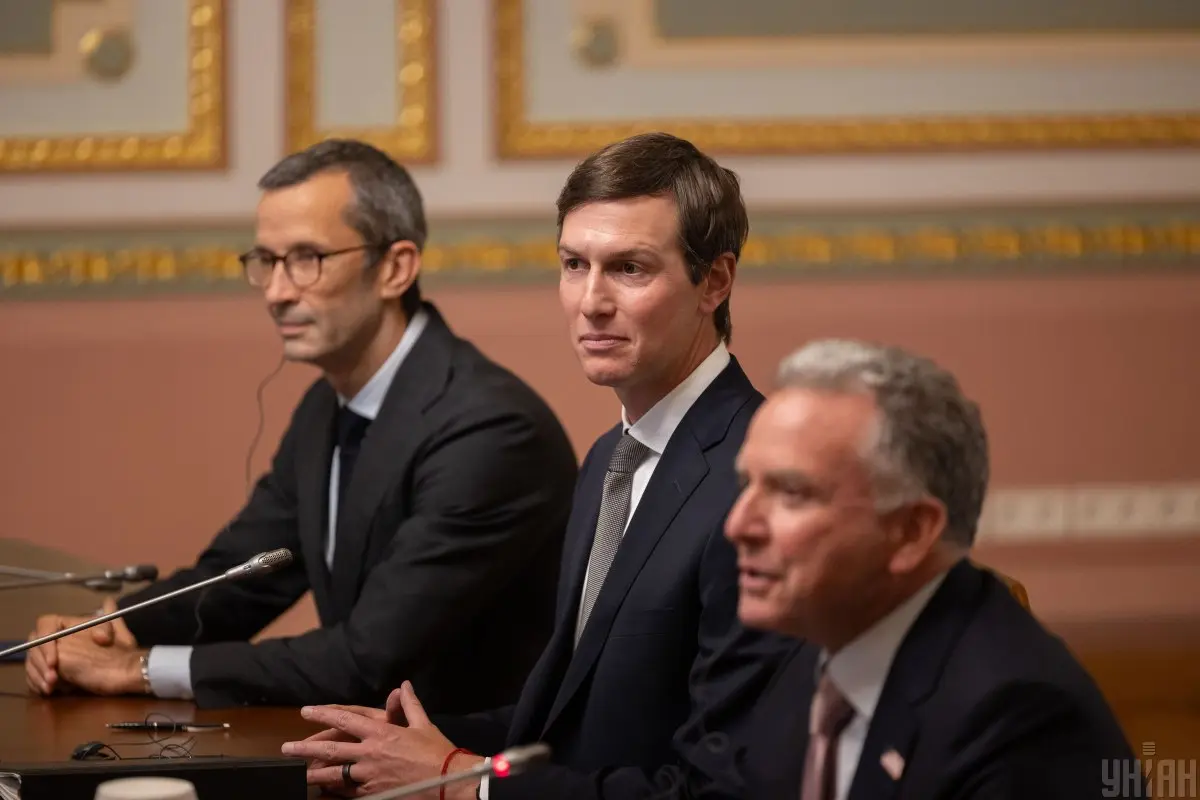
U.S. President Donald Trump’s special envoys, Steve Witkoff and Jared Kushner, proposed that Ukraine resume the transit of Russian oil and gas to Europe via Ukrainian infrastructure. The idea was voiced on October 9 at a confidential meeting at the Shell Bay Golf Club in Hallandale Beach, Florida, and drew sharp criticism from Kyrylo Budanov, head of the Office of the President. This was reported by the French newspaper Le Monde, citing information from sources.
According to Le Monde, Budanov “barely contained his anger” and immediately contacted President Volodymyr Zelenskyy. The head of state advised him not to give in to his emotions and to continue the dialogue, but the meeting had to be temporarily suspended.
“Regional Prosperity” at the Expense of Russian Resources
The American side viewed economic agreements with Moscow as the key to ending hostilities. Witkoff presented the concept of a “regional prosperity plan,” which was intended to align the economic interests of Ukraine, Europe, and Russia.
The envoys’ arguments were pragmatic. According to their logic, Kyiv would receive stable revenue from transit fees, while Europe would see a significant reduction in energy costs thanks to the resumption of pipeline deliveries.
Why Kyiv Rejected the Proposal
The Ukrainian delegation is convinced that the restoration of Washington’s business ties with Moscow through the return of Russian energy resources to the EU market creates the risk of critical dependence on Russia even before the war has actually ended. During the discussion, Budanov made it clear which model Ukraine is using as a guide for its postwar development.
“Our model is not Belarus, but Poland!” Budanov replied sharply.
After the meeting resumed, the parties moved on to other economic issues, specifically Russian diesel fuel. However, the incident in Florida highlighted deep differences between Washington’s vision for the region’s postwar economic integration and Kyiv’s desire to finally break free from its energy dependence on Russia.