
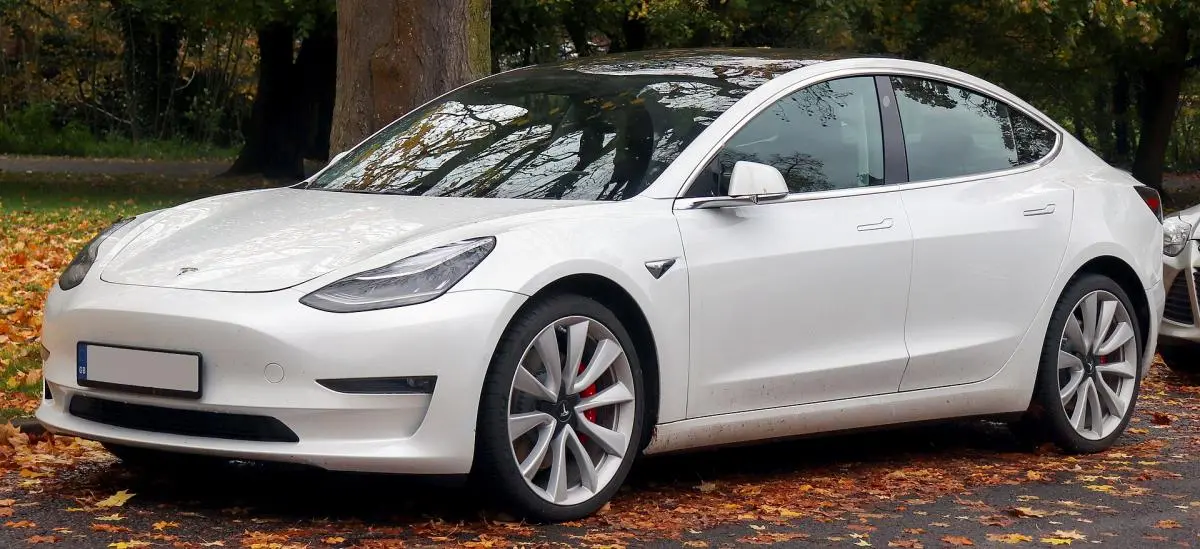
Electric vehicles with a charge indicator showing 0% can travel an average of 16.11 km before coming to a complete stop. The Leapmotor B10 demonstrated the longest range, covering 32 km after reaching “zero.” These results from the ECOBEST Challenge 2026, organized by the international organization Autobest, in which 15 models were driven until their batteries were completely depleted, were published by El País Motor.
Second place went to the Tesla Model Y with 31 km, and third place to the BMW iX3 with 26 km. The Xpeng P7+ posted the worst result: it came to a stop after just one kilometer. The BYD Atto 2 traveled 5 km, and the Audi Q4 e-tron covered 7 km. The average range increased compared to last year’s 11.1 km, but no one came close to the test record: in 2023, the Subaru Solterra traveled 45 km from a “zero” charge. The organizers emphasize that this range is not guaranteed and depends on driving conditions.
How the “empty” batteries were tested
The tests took place September 28–30 in Vairano near Milan at the Quattroruote test track, as well as on public roads: highways, secondary roads, and in the city. The cars were driven under normal conditions with the climate control and multimedia systems turned on at temperatures of 20–25 degrees. To minimize the impact of driving style, participants switched cars every 30 km and followed the lead vehicle. Once the battery level reached “zero” on the dashboard, the batteries were fully discharged on a closed track.
None of the models achieved the official WLTP-rated range. The Kia EV2 came closest to the claimed figure—about 95%, followed by the Audi Q4 e-tron (92.6%) and the Peugeot e-5008 (90.8%).
Last year, the variation in this test was even greater: ranging from 3 km for the BYD Dolphin to 36 km for the Kia EV3. At that time, Autobest advised against testing this range in practice and instead recommended charging in advance, according to Automotive World.
Why an electric car doesn’t run out of power unexpectedly
The British car review site Carwow, which has also tested electric vehicles down to zero range and beyond, claims that it’s quite difficult to completely drain the battery in real-world conditions. Testers sometimes had to drive around parking lots for 45 minutes at a time just to get the car to come to a complete stop. In addition, the cars use their navigation systems to automatically route themselves to the nearest charging station and limit energy consumption—particularly for climate control—according to Carwow.
“Unlike smartphones and laptops, all the electric vehicles we drove gradually reached 0%, and then drove farther than we expected before finally coming to a stop,” notes Carwow automotive expert Matt Watson.
“To get the battery down to 0%, you have to ignore a series of warnings on the dashboard and multimedia system screens—and sometimes even audible alerts!” he emphasizes.