
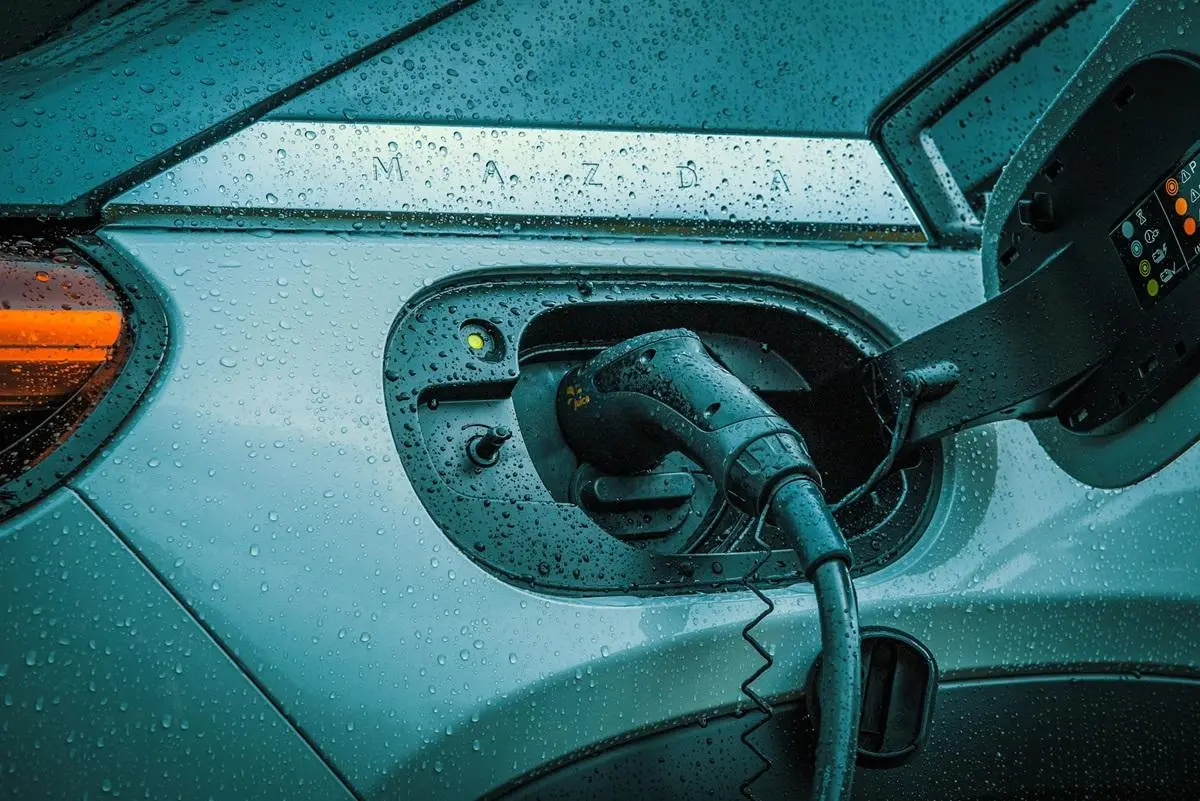
Charging an electric vehicle to 100% every day accelerates battery wear, so you should reserve a full charge only for long trips. Even before a trip, it isn’t always necessary: if you have less than 80% of your range left before the next convenient charging station, there’s no point in fully charging the battery, according to SlashGear.
Most modern electric cars have lithium-ion batteries, whose capacity decreases over time. In the range from 80% to 100%, the voltage reaches its maximum limits, and daily charging to the maximum constantly increases the strain on the battery. You should also avoid letting the battery discharge below 20%. The range between these levels is considered optimal for daily trips. The extreme values are justified only in special cases, such as during long-distance trips when the route depends on the availability of charging stations.
Laboratory data show that a high charge level affects battery aging. Researchers Matthias Lu and Thomas Blank tested 228 commercial lithium-ion cells over the course of more than a year. They note that lithium plating—one of the mechanisms of degradation—is most likely to occur during charging at low temperatures, high current, and high charge levels, according to the scientific publication.
Why 80% Is Enough on the Road
On the highway, drivers mostly use fast DC charging stations. For many models, charging from 10% to 80% takes about half an hour, but after 80%, the charging speed slows down dramatically. The last 20% can take just as long as the previous 70%. If a full charge isn’t needed for the next leg of the trip, it’s better to stop at 80%: this way, the driver saves time and preserves the battery.
The 80% Rule—Not for All Batteries
Nathan Gore-Brown, founder of the Australian battery diagnostics company Test EV, considers the 80% rule overly simplistic. For NMC batteries, manufacturers do indeed often recommend limiting daily charging to about 80%, but lithium iron phosphate (LFP) batteries, which are increasingly being installed in affordable electric vehicles, are designed for regular charging up to 100%. According to him, there is no one-size-fits-all percentage for all cars. At the same time, long-term storage of a battery—whether nearly discharged or fully charged—is harmful to it, writes carsales.
The expert’s main piece of advice is as follows: “Follow the manufacturer’s recommendations regarding how much to charge the battery and how often,” emphasizes Gore-Brown. According to him, this also allows the battery management system to balance the charge among individual cells.
Gor-Brown considers concerns about fast-charging stations to be exaggerated. Modern thermal management systems prepare the battery for charging in advance and maintain an optimal temperature during the charging session.
“The perception of this is likely greater than the actual impact on most cars,” the expert notes. However, he says that charging at home with alternating current is the gentlest option for the battery.