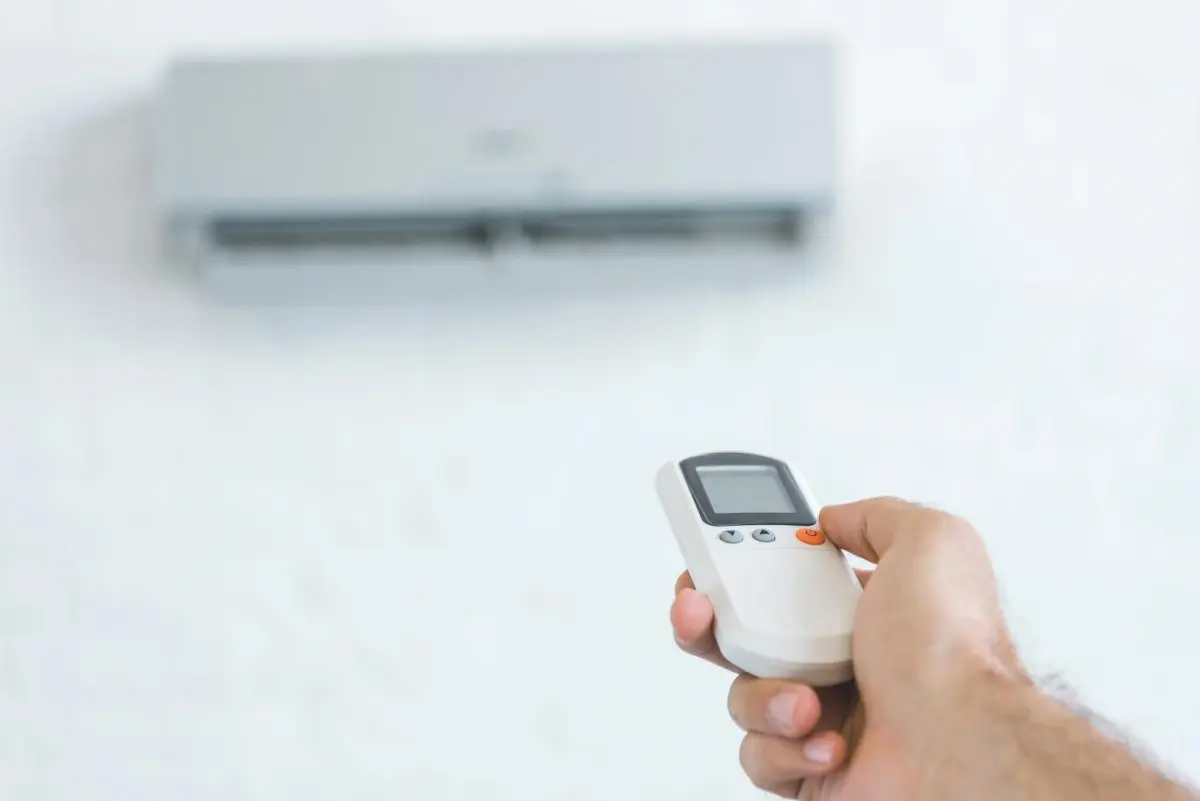
Many split-system air conditioners with a heating function have an “8°C” button on the remote control. During the winter, this button maintains a temperature of about 8 degrees Celsius in an empty house or room: the space doesn’t freeze, and the air conditioner consumes significantly less electricity than in normal mode. At the same time, the air conditioner’s sensor cannot “detect” the areas where freezing temperatures can cause the most damage, particularly water pipes, according to the Hungarian publication Kertészkedj.hu.
Manufacturers designed this feature for vacation homes, rarely used offices, and warehouses. Its name varies by brand. Most often, the button is labeled “8°C,” and sometimes “FP” (freeze protection). On Fujitsu units, the mode is called “10°C HEAT,” and on some Panasonic models, “+8/10°C HEAT” with a temperature selection option. On some remote controls, the mode is activated by holding down two buttons for a few seconds. On some European models, it is available only after switching the air conditioner to heating mode.
In this mode, the compressor starts when the air cools below 8 degrees and shuts off as soon as the temperature reaches 10. The fan operates automatically, and the temperature cannot be adjusted. According to the publication’s calculations, if the outside temperature is around zero, maintaining 8 degrees instead of 20 requires approximately 60% less heat.
“The ‘8 degrees’ button isn’t for energy-efficient heating, but rather for frost protection: it keeps non-residential spaces above zero; for people, that temperature is too cold,” the authors of the article emphasize.
This feature is also available in models sold in Ukraine. In particular, Midea describes the +8°C maintenance mode in its XTreme series split-system air conditioners as a way to protect walls and water pipes from freezing in summer homes, garages, or during winter vacations. According to the manufacturer, air conditioners in this series are capable of heating rooms when the outdoor temperature drops to -25°C, Midea reports.
A Blind Spot the Sensor Can’t Detect
The temperature sensor is built into the indoor unit, meaning it’s located near the ceiling, where the air is warmer than near the floor. Pipes in an exterior wall, under the sink, or in the bathroom can be significantly colder. In severe frost, they can freeze even when the air in the room remains above zero.
The American Red Cross and the U.S. National Weather Service recommend keeping the temperature in an empty house at least 13 degrees if there is water in the pipes. A setting of 8 degrees is safe only if the water has been shut off and drained or if there are no water pipes in the building. In other cases, it’s best to set the minimum temperature for normal heating—on most models, this is 16 degrees.
Before leaving, the publication advises turning off the water supply and draining it from the pipes, the toilet tank, and the water heater. Leave the doors of cabinets containing pipes open, and do not set the air conditioner to turn off automatically. It’s also important to consider the temperature limits for the equipment: for one Panasonic residential air conditioner, this limit is -15°C, and in severe cold, the outdoor unit may stop working.