
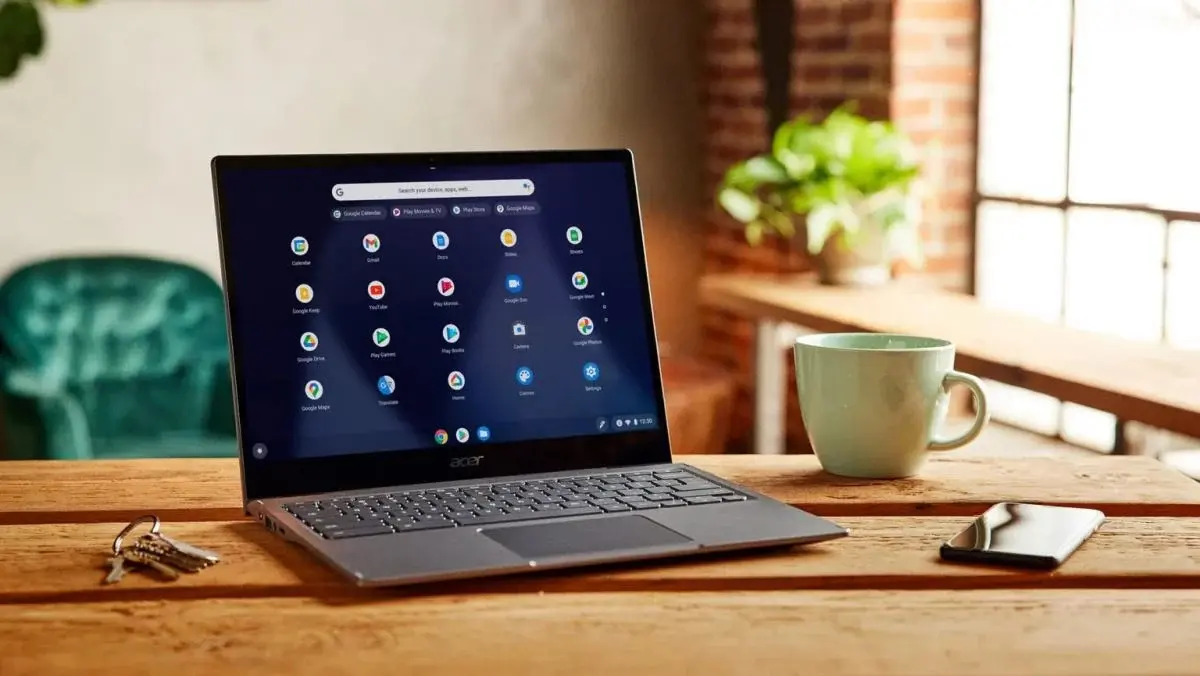
Owners of older computers that don't support Windows 11 or have already lost support can switch to Google's ChromeOS Flex for free. The system can be installed on standard PCs and Macs, and the company promises to continue updating ChromeOS until 2034, although it eventually plans to focus on a hybrid of Android and ChromeOS called Googlebook OS, according to CHIP.
The hardware requirements are modest: a 64-bit Intel or AMD processor, 4 GB of RAM, 16 GB of storage, the ability to boot from USB, and full access to the BIOS. Issues may arise with processors released before 2012 and Nvidia graphics cards older than 2014.
Installation requires the Chrome browser, a special extension, and a USB flash drive with at least 16 GB of storage. You can first test the system directly from the USB flash drive. A full installation will completely wipe the hard drive, so be sure to back up your data beforehand.
Guarantees apply only to verified models
Google tests ChromeOS Flex on specific models and guarantees that audio, display, networking, keyboard, touchpad, USB, webcam, and sleep mode will work on them. Bluetooth, touchscreens, auto-rotation, and SD card slots may have limitations even on certified devices. Other computers may also support the system, but stability after updates is not guaranteed, Google notes.
The issue of older PCs has become more pressing since October 14, 2025, when Microsoft ended support for Windows 10. Such computers continue to function but no longer receive security updates. Microsoft advises owners of machines that do not meet Windows 11 requirements to purchase a new device, the company emphasizes.
Not for Everyone
ChromeOS Flex is designed for browser-based computing and is closely integrated with Google services. Users who rely on traditional Windows applications will find the transition more difficult. Chris Tornett, former editor of Linux User & Developer magazine, believes the system’s primary audience is businesses and schools, while experienced enthusiasts are better off choosing Linux.
“But why would a tech-savvy user install a more limited version of ChromeOS on an old laptop when they could install a lightweight version of Linux, such as Lubuntu? It’s like owning a house and deciding to live in a tent in your own kitchen. It’s quirky, but not very smart,” Tornett asked rhetorically in a comment to Lifewire.