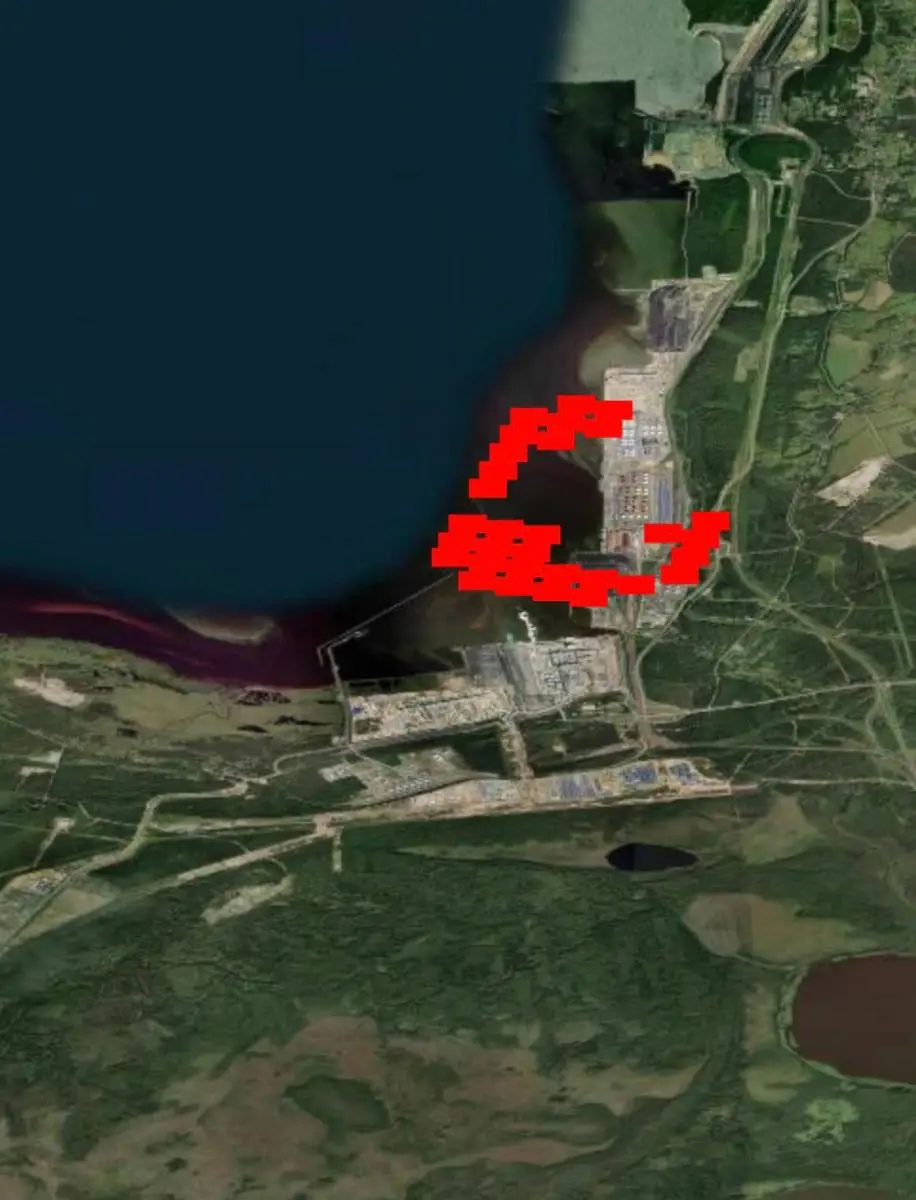
The "Kirishinefteorgsintez" oil refinery in Russia’s Leningrad Oblast suspended operations following a drone attack on November 9. The strike damaged the plant’s primary oil refining units and auxiliary infrastructure in the city of Kirishi, according to OBOZ.UA, citing the Telegram channel “Spy’s Dossier.”
Among the affected facilities are the ELOU-AVT-2 electric desulfurization unit, the AT-1 and AT-6 units, the fuel oil processing complex, and the Parex-2 unit. Two circulating water supply units and pipelines connecting the plant’s production units were also damaged.
On the night of November 9, explosions were heard in Kirishi, and several fires were reported on the refinery grounds. The Defense Forces’ previous attack on this facility took place in August.
“Putin’s Cash Cow”
A second strike on the plant following its restoration was entirely expected, according to military expert Colonel (Res.) Roman Svitan of the Armed Forces of Ukraine (AFU). The facility supplies not only Russia’s domestic market but also exports petroleum products through Baltic ports. “KINEF is Putin’s cash cow. It ranks among the top five largest oil refineries in Russia. In addition, its products are shipped, in particular, through Primorsk,” Svitan emphasized during an appearance on Channel 24.
According to the expert’s assessment, Ukraine has already managed to disable approximately one-third of Russia’s oil refining capacity. He is convinced that strikes against refining and exports could ultimately affect production as well: if the raw material cannot be refined or exported, Russia will face problems with the sale and storage of oil.
“There are several thousand oil wells, and most of them are located beyond the Urals. We simply won’t be able to reach them. But the wells can be shut down—and for a long time—if the Russians have nowhere to send their oil,” the expert noted.
Svitan warns that oil wells cannot simply be shut down and restarted the next day: their operation is linked to complex geological processes and maintaining pressure in the reservoirs. In his assessment, a prolonged shutdown of individual fields could cause problems that would take years to resolve.
“When the Russians are forced to shut down their wells, their oil industry will effectively be dead. And then we’ll see the consequences for the entire Russian economy,” Svitan predicted.