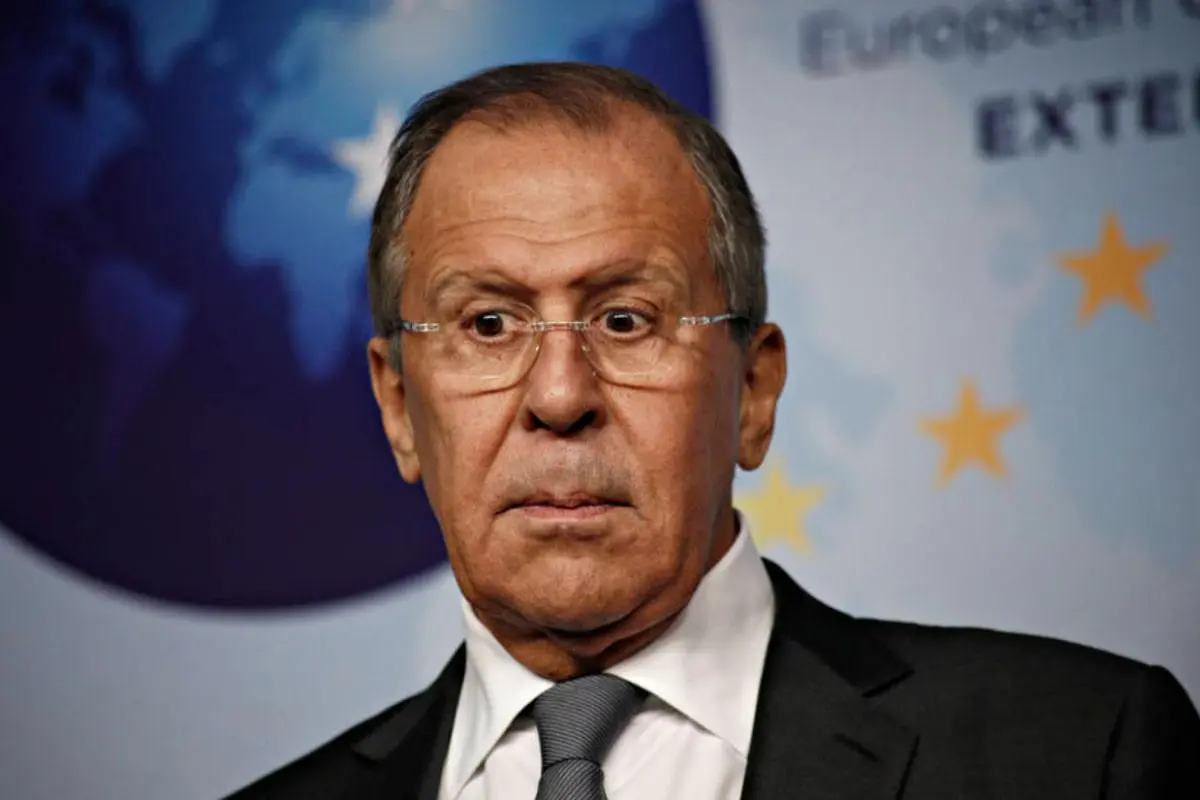
Russian Foreign Minister Sergey Lavrov stated that Moscow will not agree to an immediate cease-fire in order to hold talks on the “security architecture.” According to him, Europe is “trying to buy time” for the Ukrainian Armed Forces so they can rebuild their military capabilities, NV reports.
The Kremlin insists on a different sequence: first, an agreement; then, a cessation of hostilities.
“Russia will not agree to enter into ‘yet another ceasefire’ without understanding what will happen next. The idea of first establishing clear security guarantees is entirely reasonable,” Lavrov said, as quoted by the Russian news agency TASS.
The Russian foreign minister also criticized the position of Brussels and other EU capitals, which, he said, are demanding an immediate ceasefire. He recalled that European Commission President Ursula von der Leyen had rejected any discussion of the parameters of the security architecture until a sustainable ceasefire is established, and stressed that “Moscow will not agree to this.”
The Ukrainian side insists on the opposite sequence of actions. “The Ukrainian side’s key position is that the war must end first. Only then can we move toward shaping a new security architecture in Europe, which should ensure long-term stability and prevent a recurrence of aggression,” said a source in the Ukrainian delegation.
What Is Being Discussed in Abu Dhabi
On November 10, trilateral talks on ending the war began in Abu Dhabi. Prior to the meeting with the Russians, the Ukrainian delegation, led by Rustem Umerov, held consultations with representatives from the United Kingdom, France, Germany, Italy, NATO, and the European Commission, as well as with U.S. Special Envoys Steve Witkoff and Jared Kushner. Among its priorities, Kyiv cites the cessation of hostilities, reliable post-war security guarantees, economic recovery, and humanitarian measures.
Focus on a Broader Agenda
The two-day round of talks was the first in nine months. The Trump administration appears to have shifted its approach and is attempting to steer the conversation toward broader issues concerning NATO and the European security order in order to break the deadlock over territorial issues. For the first time, key European countries have directly joined the negotiations, according to ABC News.
Russian President Vladimir Putin’s demands remain unchanged: he wants Ukraine to cede the Donbas, agree to restrictions on its military, and accept assistance from European partners. Promises of normalized relations, eased sanctions, and business deals have so far failed to sway his position.
Sam Charap, a senior political analyst at the RAND Corporation, warns against overly high expectations. “I think they’re not blind and understand that actually reaching an agreement on these issues will take a very, very long time. We won’t have a new agreement on the European security architecture at the same time as a ceasefire,” he said.