
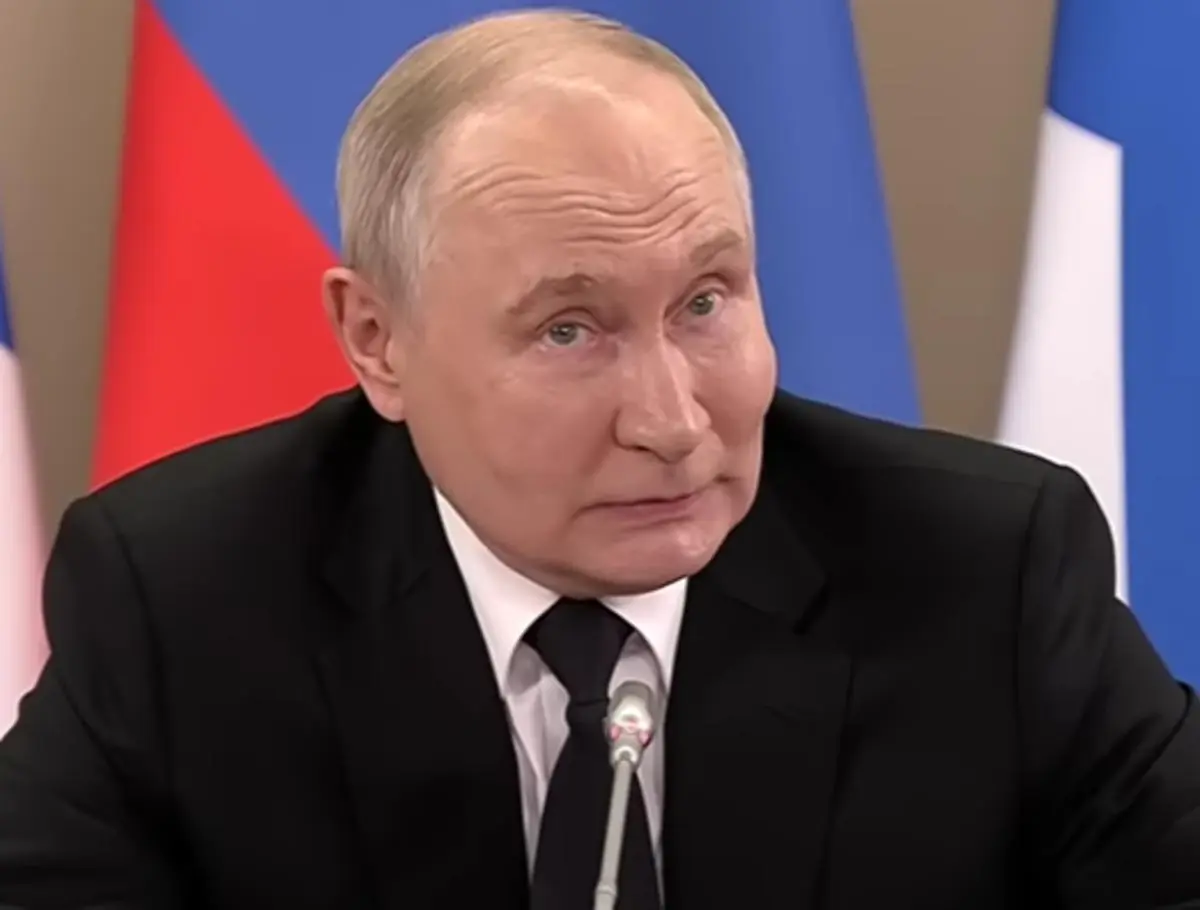
The Kremlin no longer believes that Donald Trump can force Ukraine to agree to peace on Russian terms. Consequently, Vladimir Putin plans to increase military pressure on Kyiv and its European allies and is preparing for a prolonged war, Adevărul reports, citing Bloomberg.
The agency’s sources point to the outcome of the US midterm elections as an important factor in Moscow’s calculations: a Republican defeat could weaken Trump’s political standing. Russia will also seek ways to lift US sanctions and convince the White House that economic relations can be restored without ending the war.
At the same time, Bloomberg considers it unlikely that a defeat in the congressional elections would push the Trump administration to support Kyiv and European capitals more actively.
"His room for maneuver to force Zelenskyy to agree to a deal could narrow. This, in turn, could allow Putin to intensify attacks on Ukraine's energy infrastructure," Bloomberg sources said.
Reportedly, following an inconclusive summit in Alaska in August 2025, the Kremlin increased military spending for 2026 by approximately $60 billion, bringing it to nearly $200 billion. The draft budget projects maintaining this level in 2027 as well.
Massive Strike on US Election Day
On the night of November 3, Russia attacked nine regions of Ukraine with 289 strike drones, 17 ballistic missiles, and 59 cruise missiles. As a result, emergency power outages were introduced across Ukraine. President Volodymyr Zelenskyy noted that the shelling coincided with the US midterm elections, writes AP.
"The Russians think America won't notice this signal of theirs. But we must notice and stop such terror. Ukraine must be helped to protect its skies; otherwise, Russia will never stop its missile strikes," Zelenskyy stated.
The Ministry of Energy reported 20 strikes on energy facilities across 10 oblasts. Three DTEK power stations were shut down. The previous day, Russian bombs destroyed a humanitarian aid distribution point and a shelter in the village of Komyshuvakha, Zaporizhzhia Oblast. The death toll there rose to 31, with more than 45 people reported missing.
Negotiations in Abu Dhabi
Trilateral talks between Ukraine, the US, and Russia are scheduled for November 10–11 in Abu Dhabi. According to Bloomberg, Putin is not yet ready to abandon his maximalist territorial demands. Later this month, he may meet with Trump in China at the APEC summit, which neither Ukrainians nor Europeans will attend. However, Moscow does not expect any breakthrough.
Trump’s special envoy, Steve Witkoff, confirmed the dates for the Abu Dhabi meeting. The parties will discuss post-war security guarantees, de-escalation, and humanitarian matters.
Zelenskyy identified Kyiv’s priorities as halting strikes on the energy grid, unblocking Black Sea grain exports, and expanding prisoner swaps. Asked whether he believes the US can end the war, the president replied: "President Trump is still the president."
Emily Ferris, a research fellow at the Royal United Services Institute (RUSI) in London, warns that if Russia continues to press its territorial claims, the American president could shift focus from Ukraine to Iran.
"This could jeopardize US military aid to Ukraine on the pretext that these funds should be directed against Iran or used to bolster Israel's air defense systems," Ferris emphasized.
s emphasizes.