
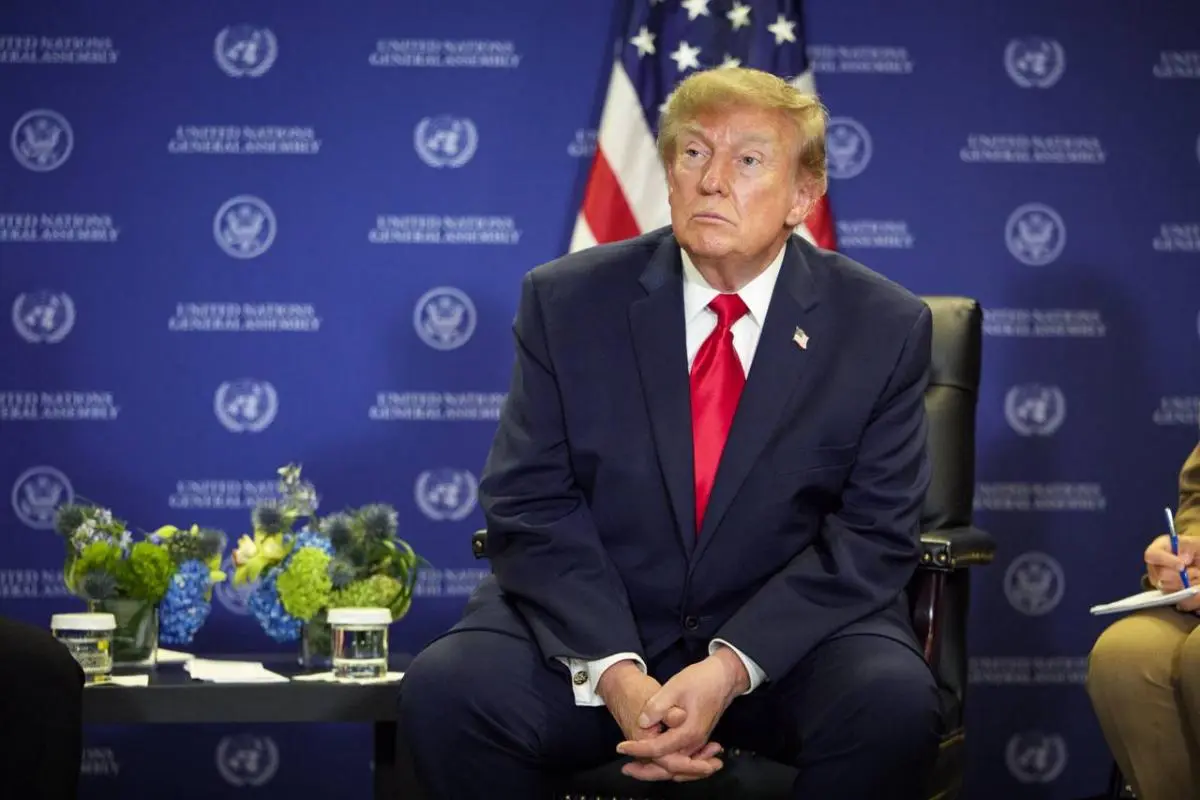
U.S. President Donald Trump publicly stated that Russia was “not doing anything out of the ordinary” and was “behaving normally toward Ukraine” on the very day that six people, including three children, were killed as a result of a Russian strike on a park near Kharkiv. The day before, Moscow had attacked Kyiv with more than a dozen ballistic missiles, marking yet another manifestation of the White House’s policy, which recently approved Elon Musk’s proposal to limit the operation of the Starshield satellite system used by the Armed Forces of Ukraine (UAF) to repel attacks, according to The Telegraph.
Despite the current president’s obvious sympathy for Vladimir Putin, Republican Party representatives continue to demonstrate complete loyalty to Trump’s agenda, abandoning their former convictions in order to maintain political influence. This behavior by the Russian leader’s former opponents has drawn sharp criticism from analysts, who see it as a betrayal of traditional values.
“This is scandalous. This is outrageous,” said Secretary of State Marco Rubio, commenting on allegations linking the Trump administration to the disabling of the Starshield system.
The Transformation of the Conservative Movement
The modern Republican Party is undergoing a profound internal transformation, forcing researchers to reconsider whether it remains the standard-bearer of traditional conservative ideas. While during the Ronald Reagan era the party was founded on deregulation, tax cuts, and opposition to Soviet communism, today’s MAGA (Make America Great Again) agenda increasingly demonstrates a departure from these principles, according to Stanford University experts, as reported by the Stanford Daily.
Although some politicians are trying to reconcile the legacy of William Buckley and Reagan with Trump’s populism, there are fundamental differences, especially in foreign policy. History Professor Pedro Regalado emphasizes that Trump’s favorable attitude toward authoritarian leaders such as Vladimir Putin or Xi Jinping is the direct opposite of how a classical conservative would act.
“Many Republicans view China and Russia as enemies, and the fact that Trump calls Xi Jinping ‘brilliant’ is very much at odds with conservative principles,” Regalado noted.
At present, the future of the right wing of American politics remains uncertain, as the party is torn between traditionalists who view Trump as the lesser evil compared to progressive ideology and those who see him as a threat to democratic institutions. Future developments will depend on personnel appointments within the administration and on whether the Republican Party can maintain its ideological integrity after the election.