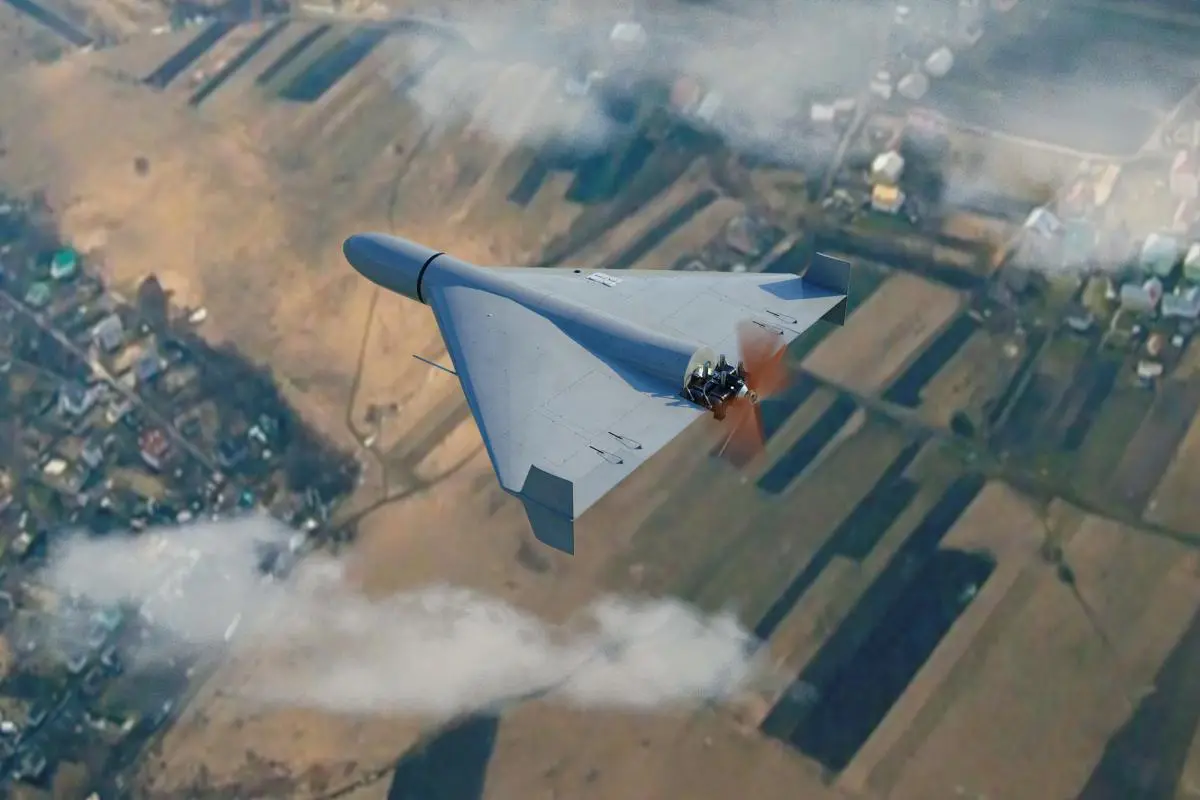
The Ukrainian company Fire Point has developed technology that allows its long-range strike systems to carry out missions against targets in Russia and in the occupied territories of Ukraine without relying on SpaceX satellite communications. The company’s CEO, Iryna Terekh, discussed this in an interview with Reuters published on October 30, according to United24.
According to Terekh, the company has found technological workarounds to maintain its strike capabilities despite restrictions imposed by the U.S. operator. “Fire Point systems are designed to complete their mission without satellite communication,” she emphasized, adding that navigation independent of external signals remains a development priority.
At the same time, the alternative technology provides only 15–20% of the capabilities Ukraine would have if Starlink provided full coverage over Russia. Terekh is convinced that unrestricted access could radically change the situation regarding strikes on high-value targets, particularly Russian ballistic missile launchers.
In October, SpaceX restricted satellite communications for 10 days for Ukrainian drones flying at speeds exceeding 160 km/h. This disrupted the drones’ operations and communications during strike missions; communications at high speeds were later restored. Terekh called on Ukraine and the U.S. to conclude a proposed agreement on satellite communications, as a country’s ability to defend itself should not depend on frequently changing rules.
Navigation that cannot be jammed
The company has previously prioritized resistance to electronic warfare. Explaining how the Flamingo cruise missiles work, Terekh said that their navigation system combines a CRPA antenna, an inertial navigation system, specialized software, additional data sources, and sometimes visual navigation. “It’s important for us to provide a navigation solution that is completely resistant to electronic warfare, jamming, spoofing, and any other interference—and we’ve done just that,” she noted in an interview with TWZ.
Initially, Fire Point purchased navigation equipment for drones from a major Western company, but Russia soon learned how to jam it using electronic warfare measures. The company then developed its own software, according to the AP.
The FP-7 and Protection Against “Shutdown”
At the same time, Fire Point is developing its own ballistic missiles. The FP-7 tactical missile, with a range of about 300 km, was first used in combat on October 1. According to Terekh, it is capable of striking “Iskander” launchers, which have time to change position while slower strike drones are flying toward their targets. This could prevent strikes on Ukrainian cities and be less expensive than intercepting missiles with Patriot systems.
Separately, Terekh emphasized that domestic production of ballistic missiles eliminates the risk that foreign governments could remotely disable the weapons using a technological “kill switch.”