
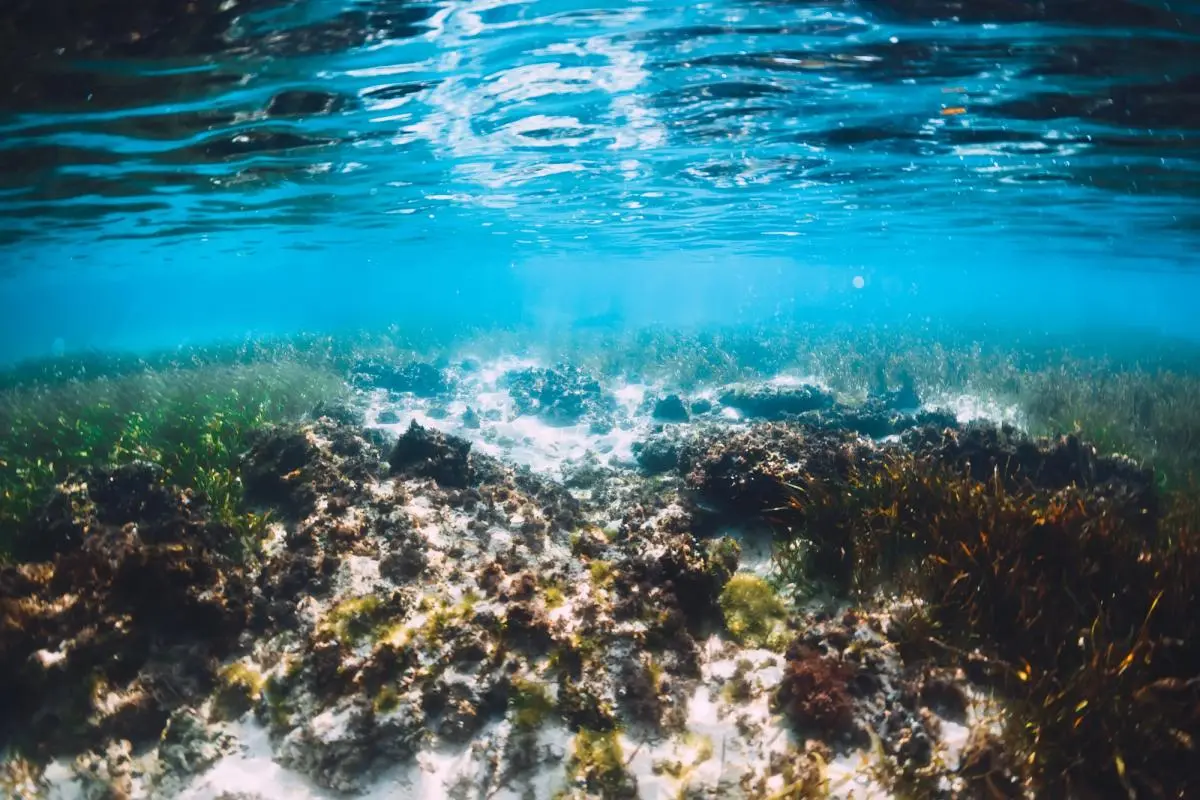
A vast area of the Pacific Ocean between Hawaii and California has become noticeably bluer and greener over the past two decades. Scientists at the University of Bergen in Norway suggest that the cause may be an increase in the amount of microplastics in the Great Pacific Garbage Patch. This is according to a study published in the journal Communications Earth & Environment, as reported by Antena 3, citing CNN.
The researchers analyzed satellite data from 2002 to 2022. They observed a significant increase in brightness in the blue and green light spectra within and near the patch compared to neighboring areas of the ocean. The authors concluded that the water likely took on a cyan hue—that is, a bright blue-green color.
The researchers also modeled possible causes of the change. Natural factors, such as a higher abundance of phytoplankton or a different phytoplankton composition, did not explain the observed pattern. However, when plastic was added to the model, the likelihood of this specific hue appearing increased significantly.
“We were able to identify a specific light spectrum—a particular color—that is typically produced by microplastics,” said study co-author Shi Chitem, a doctoral student at the University of Bergen.
At the same time, she acknowledges that it still needs to be proven that the hue in the satellite images is caused “directly and exclusively by plastic.” The next step should be an expedition to the spot to take direct measurements. This is a complex and expensive process.
What the Satellites Saw
The article notes that the findings are based on three independent 20-year datasets of satellite data: MODIS, GlobColour, and CCI. All of them show a blue-green glow in the water within and near the spot. These are particles smaller than 300 micrometers. It is nearly impossible to measure them directly in the water or remove them from it. Previous laboratory experiments have shown that even as little as 2 mg of microplastics per cubic meter of water can change the color of the ocean enough to be detected by a satellite sensor, according to the Nature publication.
A patch invisible to the naked eye
The patch is not a solid island of trash, as it is often imagined. According to a 2018 estimate, at least 79,000 metric tons of plastic are floating across an area of 1.6 million square kilometers. Microplastics account for 94% of the approximately 1.8 trillion fragments in this area, according to the BBC.
The NOAA Marine Debris Program describes this zone as a constantly shifting mass that moves with the currents.
“We know it consists of tiny microplastics, almost like pepper soup, with larger items—fishing gear and the like—scattered throughout,” said program representative Dianna Parker on a NOAA podcast.